
Related videos:
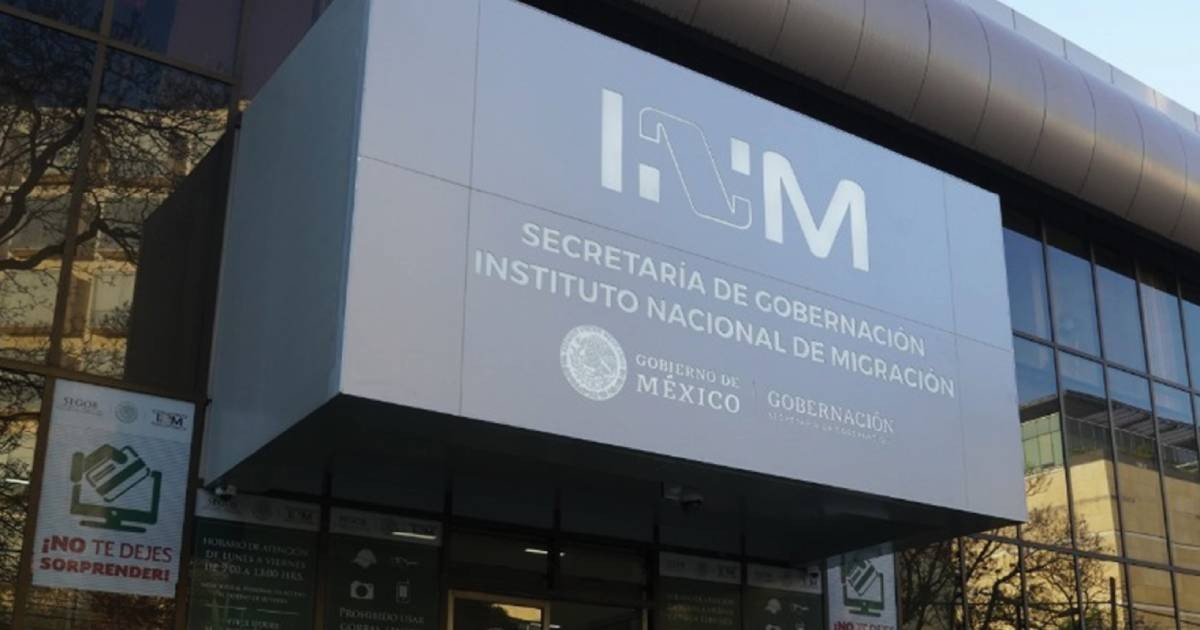
The National Migration Institute (INM) of Mexico issued an official informational card this Wednesday denying that it has conducted immigration raids in Mexico City, in response to a wave of complaints and the viral comparisons to the Immigration and Customs Enforcement (ICE) of the United States.
"The National Migration Institute states that it does not conduct raids, and that it has not carried out any type of raid as mentioned by some users and media on social networks," the document notes, published on the INM's account on Facebook.
The INM justified its actions by stating that it "responded to a request for cooperation made by the competent authorities of CDMX with the intention of preventing any criminal acts," and reaffirmed its "commitment to respecting the human rights of all individuals."
The denial contrasts with multiple testimonies and videos documenting operations in at least eight neighborhoods and boroughs of the capital since April 30.
One of the most documented cases is that of a Cuban citizen detained on the night of May 4 in a building in the San Rafael neighborhood, Cuauhtémoc borough, along with ten other migrants.
Her husband, Alexis, a Mexican citizen, reported that the agents—from the Navy, traffic police, auxiliary police, and the INM—refused to identify themselves and did not present any official order.
The Cuban was transferred to the "Las Agujas" Immigration Station in Iztapalapa and later relocated to the state of Veracruz.
On May 5, at least 15 agents from the INM entered a building in the Guerrero neighborhood without a court order. The Jesuit Network with Migrants Mexico also documented raids on private homes of young Venezuelans in the Doctores neighborhood, who were then taken to "Las Agujas" and later to the "Siglo XXI" station in Tapachula.
The organization described the operations as "a deeply militarized scheme of migration control" involving the INM, the Army, the Navy, the National Guard, and the Citizens' Security Secretariat of Mexico City.
Civil organizations link these operations to a policy of "order and cleanliness" of public space in preparation for the 2026 World Cup, whose venues in Mexico include Mexico City, Guadalajara, and Monterrey. Regarding this, the Jesuit Network warned: "An international event cannot be used as an excuse to legitimize practices of harassment, criminalization, and expulsion of migrant people."
The paradox did not go unnoticed on social media: Mexico has publicly criticized ICE raids under the Trump administration while replicating similar practices in its own territory. The phrase "They complain about ICE and are the same" went viral as a summary of the outrage.
The situation is particularly dire for Cubans. Since February 2026, the Trump administration has deported approximately 6,000 Cubans to Mexico, with two or three flights weekly to Chiapas and Tabasco. Over 10,000 Cubans remain stranded in Tapachula without consular support from the Cuban embassy, and between 1,200 and 1,500 have marched in a caravan towards the capital in search of better conditions, which explains their increased exposure to these operations.
The ICE increased its detentions of Cubans by 463% between October 2024 and the end of 2025, according to the Cato Institute.
The Jesuit Network summarized the structural contradiction of the system: "The irregularity that the State uses as justification to detain these individuals is an irregularity that the State itself has produced and perpetuates," referring to the collapse of the asylum system in Mexico which leaves tens of thousands of migrants in legal limbo for more than ten months.
Filed under: