
Related videos:
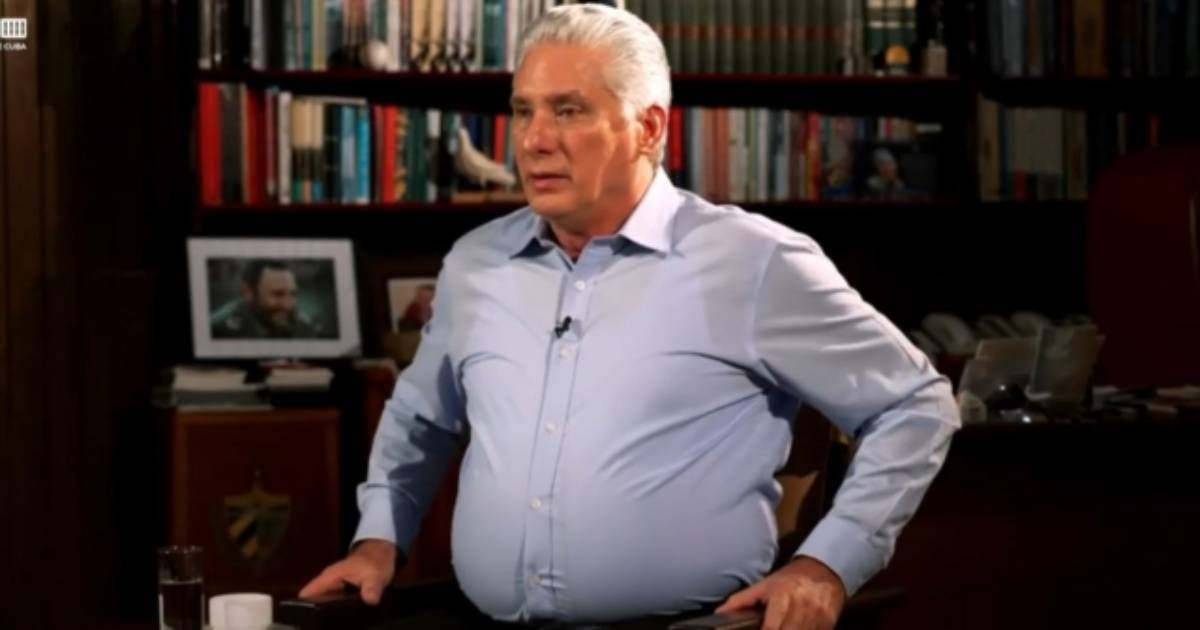
Miguel Díaz-Canel reacted this Thursday to the new sanctions announced by Washington against Cuba with a message in which he acknowledged that the measures "worsen the already difficult situation" of the country, but assured that at the same time they "strengthen our determination to defend the Homeland, the Revolution, and Socialism."
The Secretary of State Marco Rubio announced this Thursday the new sanctions under Executive Order 14404, signed by President Donald Trump on May 1.
The measures designate GAESA —the military conglomerate that controls between 40% and 70% of the formal Cuban economy— along with its executive president, Ania Guillermina Lastres Morera, and the state mining company Moa Nickel S.A.
Rubio described GAESA as "the heart of the Cuban kleptocratic system" and warned that "additional appointments can be expected in the coming days and weeks."
In his publication, Díaz-Canel described the sanctions as "unilateral aggression" and "the harmful interference of American imperialism," stating that the Cuban people "understand, just as the rest of the world does," that the only ambition of the island is "to live in peace, masters of its own destiny."
The rhetoric of the Cuban ruler has been escalating since the beginning of May.
Last Saturday, he wrote that "no aggressor, no matter how powerful, will find surrender in Cuba," and on Sunday, he warned of an "imminent military aggression" from the U.S. during an International Solidarity Meeting with Cuba.
The chancellor Bruno Rodríguez Parrilla also reacted yesterday, labeling Rubio's statements as "cynical, hypocritical, and deceitful", describing the sanctions as "illegal and abusive" with "genocidal intent."
The immediate consequences of the measures were felt right away.
The Canadian company Sherritt International —partner in Moa Nickel— has suspended all its operations in Cuba, announced the resignation of its board of directors, and initiated the repatriation of its employees. Its shares fell by 30% during the day.
The U.S. set a deadline until June 5 for foreign companies and financial institutions to cease their operations with GAESA, under the threat of secondary sanctions.
The new measures add to accumulated pressure that, since January 2026, has resulted in over 240 sanctions against the regime, the interception of at least seven tankers heading to the island, and a reduction of 80-90% in Cuba's energy imports.
This context exacerbates a crisis that was already severe: power outages have surged to 25 hours a day in more than 55% of the territory, and the Cuban economy is projected to contract between 6.5% and 7.2% in 2026, according to projections by CEPAL and The Economist Intelligence Unit.
While the regime appeals to revolutionary rhetoric, Rubio made it clear that the maximum pressure strategy against Cuba has not concluded: new appointments could come before the deadline of June 5.
Filed under: