
Related videos:
The American president Donald Trump announced this Friday a three-day ceasefire between Russia and Ukraine, which will be in effect for 48 hours, from May 9 to May 11, and includes two key points.
First of all, the truce includes the total suspension of all military activity between both countries, Trump explained.
Furthermore, it establishes an exchange of approximately 1,000 prisoners of war for each side, according to what he posted on his social media.
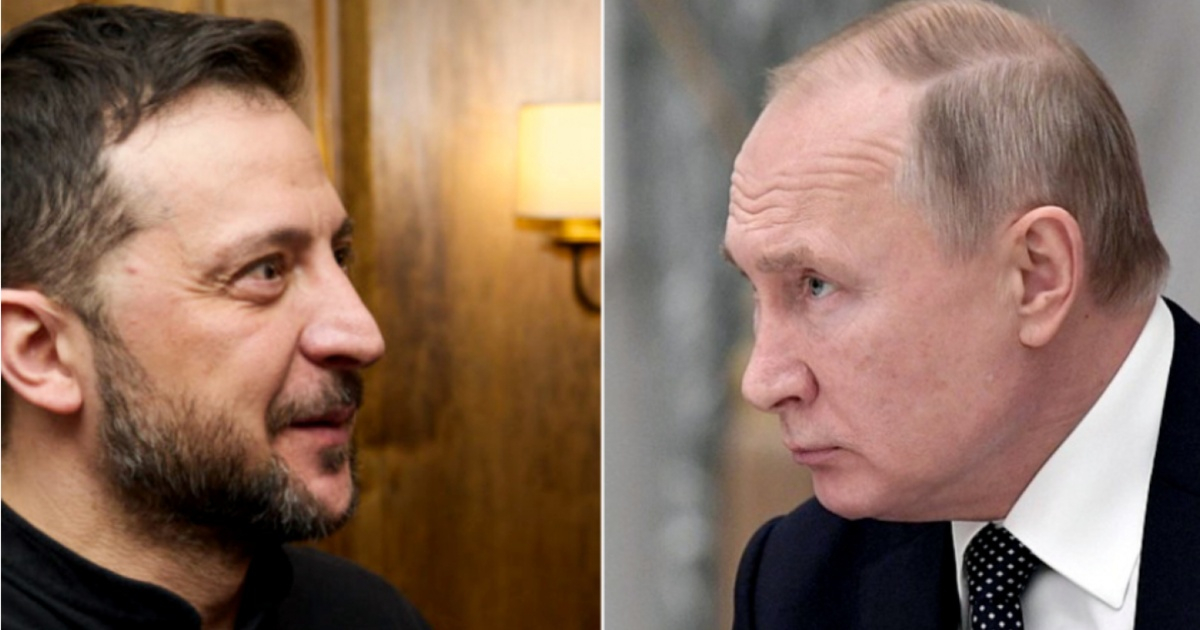
Trump stated that he made the proposal and both Vladimir Putin and Volodymyr Zelensky accepted.
He described the agreement as "the beginning of the end of a very long, bloody, and fiercely fought war, the largest conflict since World War II."
He added that "conversations continue" to achieve a definitive end to the conflict.
The chosen dates are not coincidental: May 9th is the Victory Day in Russia, when the country commemorates the 81st anniversary of the defeat of Nazi Germany in World War II, a date of immense symbolic significance that Putin has historically used for impactful diplomatic or military gestures.
The announcement comes in a context of mutual skepticism. Russia had already unilaterally declared a ceasefire for May 8 and 9 starting from May 3, linked to its military parade in Red Square. The Russian Ministry of Defense warned that any violation would receive "a strong response" with possible large-scale retaliatory attacks against Kiev.
Ukraine had responded with skepticism. On April 30, Zelensky questioned the Russian proposal: "They want the parade to go smoothly for a few hours and then resume the attacks." Ukrainian Foreign Minister Andrii Sybiha called the Russian offer for May 9 a "manipulation" and stated that Kyiv had not received any official offer.
The groundwork for this announcement was laid on April 29, when Trump endorsed the idea of a ceasefire for May 9 during a more than 90-minute phone call with Putin. The Kremlin described that conversation as "friendly and professional." Trump summarized the exchange in his usual style: "We had a good chat; I've known him for a long time."
This ceasefire is the most concrete support from Washington since Trump resumed the presidency in January 2025. In March of that year, Ukraine accepted a U.S. proposal for a 30-day ceasefire, and Putin also formally accepted it, expressing gratitude for Trump's mediating role.
However, the negotiations stalled in June 2025 when Russia presented maximalist demands: the formal handover of Crimea, Donetsk, Lugansk, Zaporiyia, and Kherson, the lifting of Western sanctions, and Ukraine's renunciation of war reparations. Ukraine, for its part, demanded the withdrawal of Russian forces and the return of deported children.
The Orthodox Easter truce on April 11 and 12, 2026, also failed to take hold: both sides accused each other of violating it, although analysts noted that there were no advancements on the front or massive drone attacks. Zelensky then denounced that "there wasn't even a symbolic attempt to cease fire."
A structural difference continues to block any lasting agreement: Ukraine is seeking a temporary ceasefire as a first step toward negotiations, while Russia and the U.S. are aiming for a permanent peace deal that would involve territorial concessions. The war between Russia and Ukraine has now lasted over 1,500 days, and Putin has proposed direct talks with Ukraine for May 15 in Turkey, which could be the next test to see if this ceasefire leads to something more than a symbolic pause.
Filed under: