
Related videos:
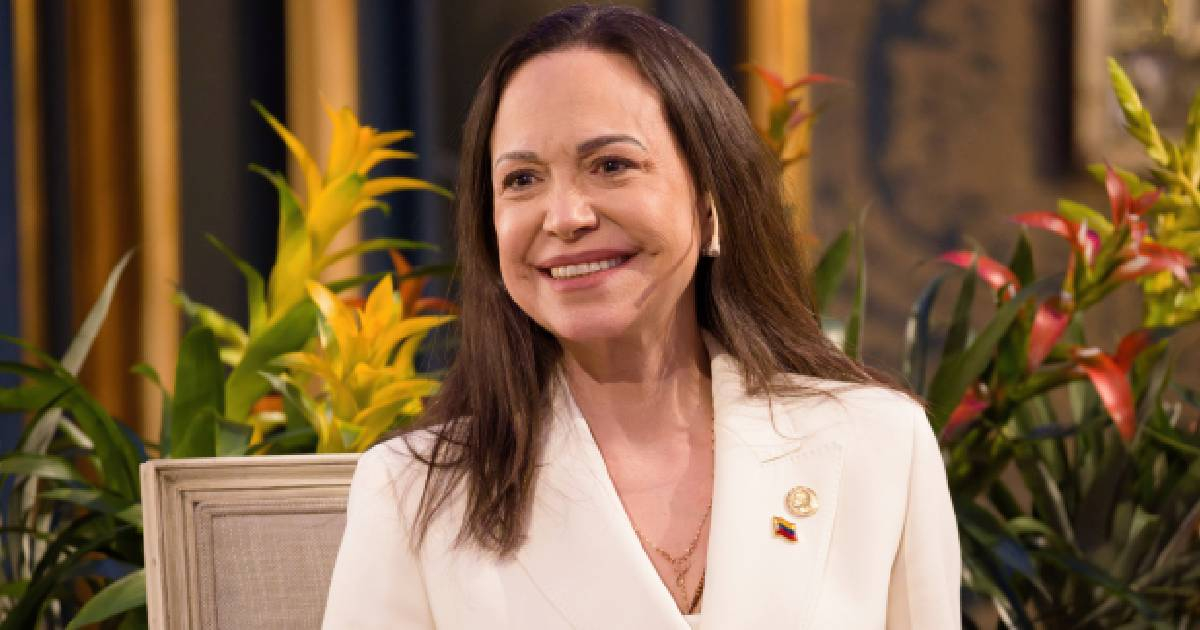
María Corina Machado, Nobel Peace Prize laureate and leading opposition figure in Venezuela, stated emphatically this Saturday that the Chavista dictatorship "is going to come to an end," in a extensive interview published by the Spanish newspaper El País dated in Washington.
Machado operates from a modest office in the U.S. capital, more than 100 days after chavismo was struck but still in power, under the interim presidency of Delcy Rodríguez, following the capture of Nicolás Maduro by U.S. forces on January 3, 2026.
Regarding her return to Venezuela—promised for months but still without a specific date—the opposition leader responded directly to journalist Boris Muñoz: "The position of the United States and other allies undoubtedly carries weight. It is a matter of coordination. My return helps ensure that the process flows properly, which is why it is important that the timing is right."
When the journalist asked her if there was any objective condition that would prevent her from returning, she replied, "None." And when asked if she could pack her bag the next day and leave, she said, "No one but me wants that to happen." Machado had announced in March her return in weeks, a promise that, as of May 2026, remains unfulfilled.
Without ambiguity, she characterized the current regime as a dictatorship. "If the Executive controls the Judiciary, the Legislative, and the Electoral branches, what is that?" she asked rhetorically. And she answered herself: "Obviously" a dictatorship, thus rejecting the thesis of Chilean intellectual Fernando Mires that Venezuela would no longer be classified as either a dictatorship or a democracy.
The economic situation described is devastating: an annual inflation of 650% and 86% of the population living in poverty. "Venezuelans have learned the hard way that the economy cannot be resolved without political change," he stated. He acknowledged that more than 600 political prisoners have been released since January, although "hundreds still remain in prison."
Regarding the elections, he ruled out the possibility of them occurring in 2026 and pointed out that technically, it requires about 40 weeks from the appointment of a new National Electoral Council. "The important thing is to get started now," he insisted. The State Department had already expressed its expectation that Machado would return and participate freely in the elections.
Machado defended Trump and Marco Rubio's three-phase plan that leads to free elections, describing it as "correct and urgent." Regarding what she conveys to the U.S. president in their direct discussions, she was clear: "We have a great opportunity ahead for the Americas and there is a moment we cannot waste." She added, "I say publicly the same thing I say privately." Regarding the possibility of negotiating with Delcy and Jorge Rodríguez, she warned, "What we will not accept is another farce."
The words of Machado resonate with special intensity for Cuba. Following the capture of Maduro, the Island lost its supply of between 25,000 and 30,000 barrels of Venezuelan oil daily —two-thirds of its imports— leading to blackouts of more than 20 hours a day and hundreds of protests since January 2026. The Castro regime, which for years sheltered chavismo in exchange for subsidized oil, now faces its greatest vulnerability in over thirty years.
Machado concluded the interview with a phrase that encapsulates his conviction and applies to both Caracas and, implicitly, Havana: "One day before, one day after, this regime will inevitably come to an end. What truly matters is this emerging Venezuela and how we ensure the construction of institutions that will last for centuries."
Filed under: