
Related videos:
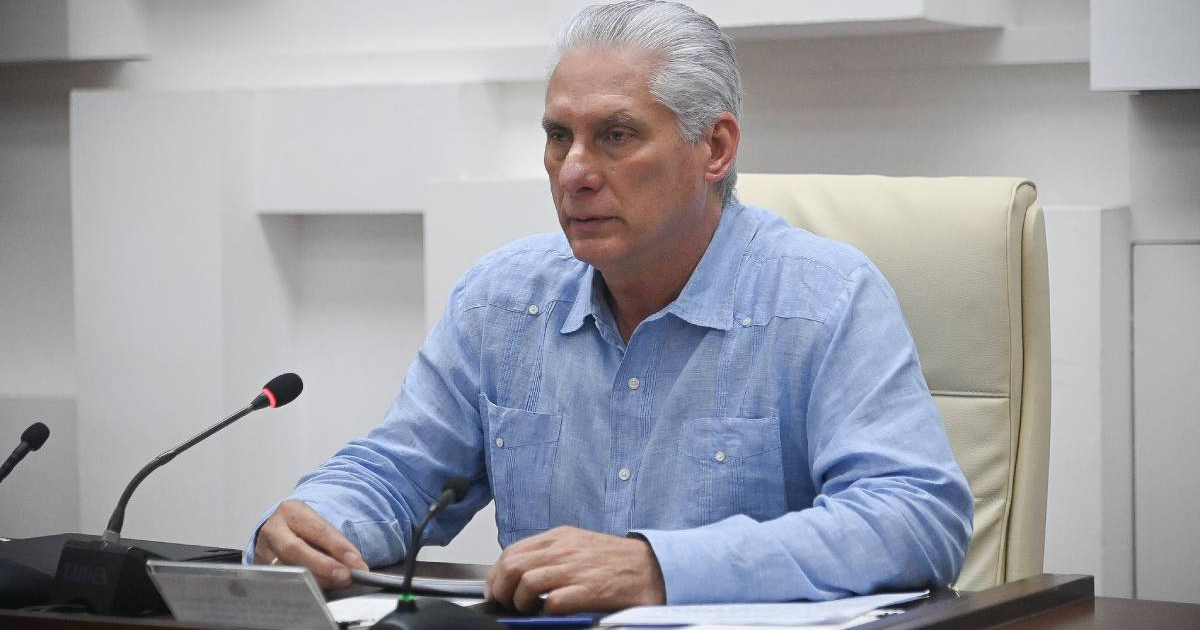
Miguel Díaz-Canel published a message this Thursday on his X account formally accepting the possibility of receiving humanitarian aid from the United States, setting priorities as "fuels, food, and medicines".
"The priorities are more than clear: fuels, food, and medicines," he noted.
He said that "If there is truly a willingness from the U.S. government to provide assistance in the amounts it announces and in full compliance with universally recognized practices for humanitarian aid, it will not find obstacles or ingratitude from Cuba."
The message comes one day after the Department of State publicly formalized a offer of 100 million dollars in humanitarian aid for the island, conditioned on it being distributed through the Catholic Church and independent humanitarian organizations, without the mediation of the Cuban state.
The turnaround in Havana is remarkable: just two days earlier, Chancellor Bruno Rodríguez Parrilla had described the proposal as a "fable" and a "100 million dollar lie," while Deputy Minister Carlos Fernández de Cossío characterized it as a "dirty political deal."
However, this Thursday, Rodríguez Parrilla softened his stance and stated that Cuba "does not have a practice of rejecting foreign aid" and is "willing to consider the specifics of the offer."
The shift in discourse occurs amid an unprecedented energy crisis: on Wednesday, the available electricity was only 1,230 MW compared to a demand of 3,250 MW, with a maximum impact of 2,113 MW.
Díaz-Canel acknowledged yesterday that the situation of the electrical system was "particularly tense" and attributed the lack of 1,100 MW to the unavailability of fuel.
In his message, Díaz-Canel described the U.S. offer as "inconsistent and paradoxical" since, in his view, the U.S. "collectively punishes" the Cuban people. He took the opportunity to emphasize that "the damage could be alleviated in a much simpler and more efficient manner by lifting or easing the blockade, as it is known that the humanitarian situation is coldly calculated and induced."
The ruler also emphasized that "the working experience with the Catholic Church is rich and productive," referring to the distribution model that Washington is now proposing to scale up to 100 million dollars.
That model has a specific precedent: after Hurricane Melissa made landfall on October 29, 2025 as a Category Three storm east of Chivirico and affected more than 2.2 million people, the U.S. channeled nine million dollars through Caritas and the Catholic Church.
As of May 8, 82% of the initial donation of three million had been executed, benefiting around 8,800 families in Santiago de Cuba, Holguín, Las Tunas, Granma, and Guantánamo.
The offer also includes free satellite internet via Starlink for Cuba, as formalized by the Department of State on Wednesday.
This Thursday, Secretary of State Marco Rubio stated in an interview with NBC that "what is happening in Cuba is unacceptable" and that Washington has "over 100 million dollars" in aid available, accusing the regime of obstructing it.
Filed under: