
Related videos:
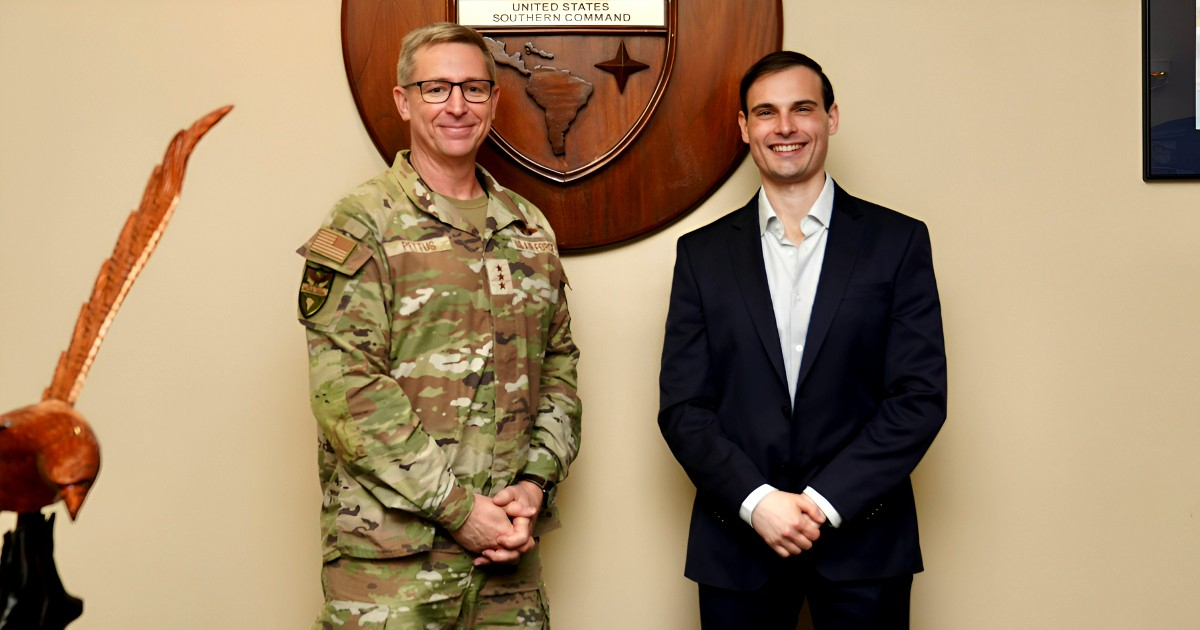
Jeremy P. Lewin, acting Under Secretary of State and one of the principal advisors to Secretary Marco Rubio, demanded this Saturday that the Cuban regime returns to the people the resources that the military conglomerate GAESA has accumulated over decades in secret bank accounts abroad.
In a statement published on his X account, the Under Secretary of State for External Assistance, Humanitarian Affairs, and Religious Freedom marked a new level of pressure from Washington on Havana.
"The communist system of Cuba is a cruel lie. While the people suffer from hunger, poverty, and repression, the regime's corrupt elites have channeled the country's resources into a secret network of bank accounts abroad for their personal benefit. Enough already!", wrote Lewin, before adding the phrase that encapsulates the political demand of the Trump administration: "The regime must return these resources to the Cuban people".
Lewin specified that the new sanctions by Rubio against GAESA, announced on May 7 under Executive Order 14404 signed by Trump on May 1, are the first to explicitly target the illicit funds of the conglomerate abroad and the foreign financial entities that harbor them "anywhere in the world."
The magnitude of what Washington is claiming is colossal. According to the executive order itself, GAESA has accumulated between 18,000 and 20,000 million dollars in foreign assets, and its revenues "probably exceed more than three times the budget of the Cuban State."
Internal documents leaked in August 2025 revealed $14.467 billion in international bank deposits and profits of $2.1 billion on revenues of $5.563 billion, a margin of 38%.
Rubio himself described the conglomerate as “a private company that has more money than the government itself” and stated that it does not allocate resources to the population.
GAESA controls between 40% and 70% of the formal Cuban economy —hotels, gas stations, supermarkets, currency exchange houses, the only internet service provider on the island, and the International Financial Bank— and operates in complete opacity: in 2024, the state auditor was dismissed after 14 years in the role for publicly admitting that she had no access to its finances.
Lewin's demand has precedents in political transition processes. Following the fall of Gadafi in 2011, the UN Security Council froze over 34 billion dollars in assets belonging to the Libyan regime.
In Romania, following the fall of Ceaușescu in December 1989, the State regained control of the assets of the regime, albeit incompletely.
The Stolen Asset Recovery Initiative (StAR) from the World Bank and UNODC states that the most successful processes combine forensic audits, international cooperation, rapid freezing, and legal reforms.
What distinguishes the Cuban case is that the U.S. applies this pressure on a regime still in power, not during a post-fall transition, which makes Lewin's statement a political warning as well as a technical roadmap for asset recovery.
Pressure is intensifying on multiple fronts simultaneously: the shipping companies Hapag-Lloyd and CMA CGM have suspended bookings to Cuba following the sanctions; the director of the CIA met in Havana with high-ranking officials of the regime’s Intelligence; and the Department of Justice announced a federal indictment against Raúl Castro for the downing of the Brothers to the Rescue aircraft in 1996.
Foreign companies have until June 5, 2026, to cease their operations with GAESA or face secondary sanctions, an ultimatum that turns Lewin's demand into a countdown with tangible consequences for the regime's financial framework.
Filed under: