
Related videos:
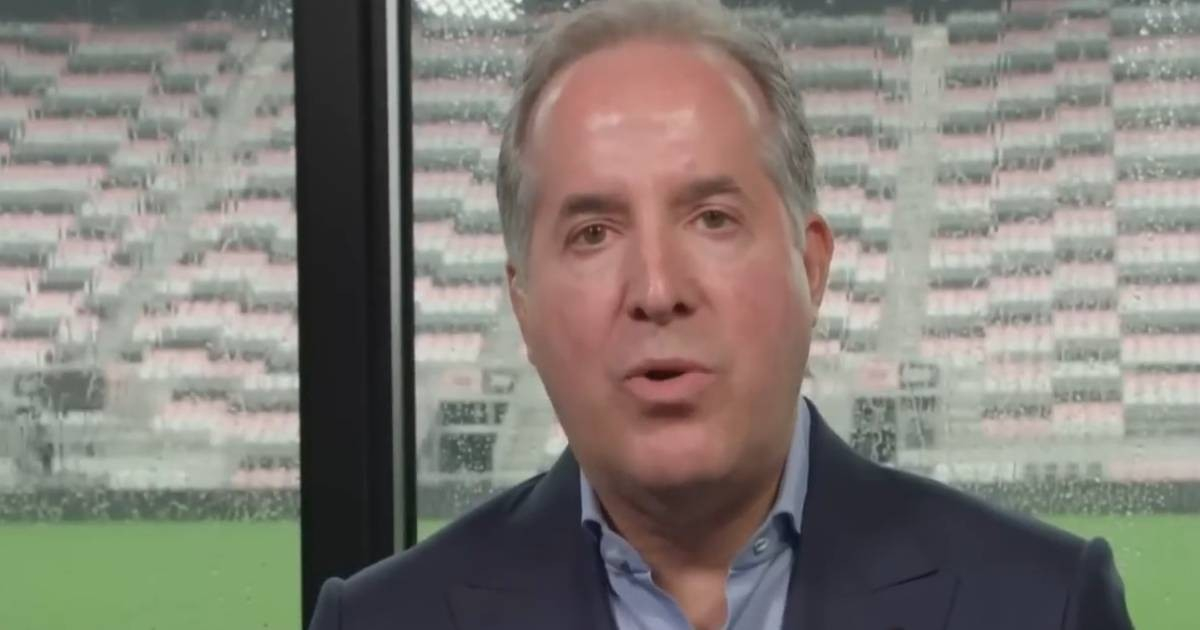
Jorge Mas Santos, president of the Cuban American National Foundation, presented in an interview granted to El País his detailed vision for the reconstruction of Cuba after Castroism, stating that change could arrive "before the end of summer" in 2026 or even "in weeks."
The interview took place a day after CIA Director John Ratcliffe visited Havana last Thursday, which Mas interprets as "part of a very clear strategy from President Donald Trump and Secretary of State Marco Rubio."
But he was categorical about the starting point: "In reality, we have to start from practically zero because the system and the political structure do not work." However, far from viewing this as an obstacle, he described it as an opportunity: "I see the economic reconstruction of Cuba not as difficult but as super easy."
To support this vision, the foundation prepared two documents. The first is a Roadmap for a prosperous, democratic, and free-market Cuba, which proposes modernizing the banking system, eliminating the income tax, and promoting tax exemptions for companies with at least 10% national capital. The second is a "Draft Fundamental Law for the Democratic Transition," prepared in collaboration with the Association of Cuban American Lawyers, consisting of 28 pages, a preamble, 115 articles, and nine transitional provisions.
Regarding financing, Mas was straightforward: "If 40, 50, 60, 70, or 80 billion are needed, whatever the number, it won't be a problem." He noted that the Cuban exile community and international investment funds would provide the capital, as long as there is a legal framework that protects investments.
But he rejected the idea that Cuba could follow the model applied in Venezuela: "What Trump did with Venezuela worked for Venezuela, but it doesn’t apply to Cuba, because Cuba is a failed state." He explained that there are no functional institutional structures on the island, which makes a controlled transition with figures of the regime still in power impossible.
He also dismissed the idea of returning to the model that existed before the Castro dictatorship: "It makes no sense to go back to that; it's a different world." Instead, he advocated for "the economic miracle of Cuba," a country with "first-level technology," an open economy, a multiparty democratic system, and a close trade alliance with the United States.
Regarding a potential military intervention, Mas left no options off the table: "No option can be ruled out regarding what can or cannot be done in Cuba." And when asked if Cuba could become the 51st state of the United States, he replied: "That's premature. I don't dismiss it, but the future must be determined by the Cubans through the ballot box."
But he also anticipated an imminent judicial charge against Raúl Castro, 94 years old, for the downing of the planes from Hermanos al Rescate in 1996, which resulted in the deaths of four Cuban Americans. "I expect an announcement regarding the charges on Wednesday," he said, referring to May 20. The leader of Hermanos al Rescate expressed skepticism until there is a formal indictment.
The businessman, who met with Trump at the White House in March during the reception for the MLS champion Inter Miami, emphasized the coordination of the exile community: “Never has there been such a close, coordinated relationship as there is today.”
When asked if he had ever seen such imminent change, Mas replied without hesitation: "Never, thanks to the conviction and leadership of President Trump and Secretary Rubio. They have committed themselves to fulfilling what they have promised."
Filed under: