
Related videos:
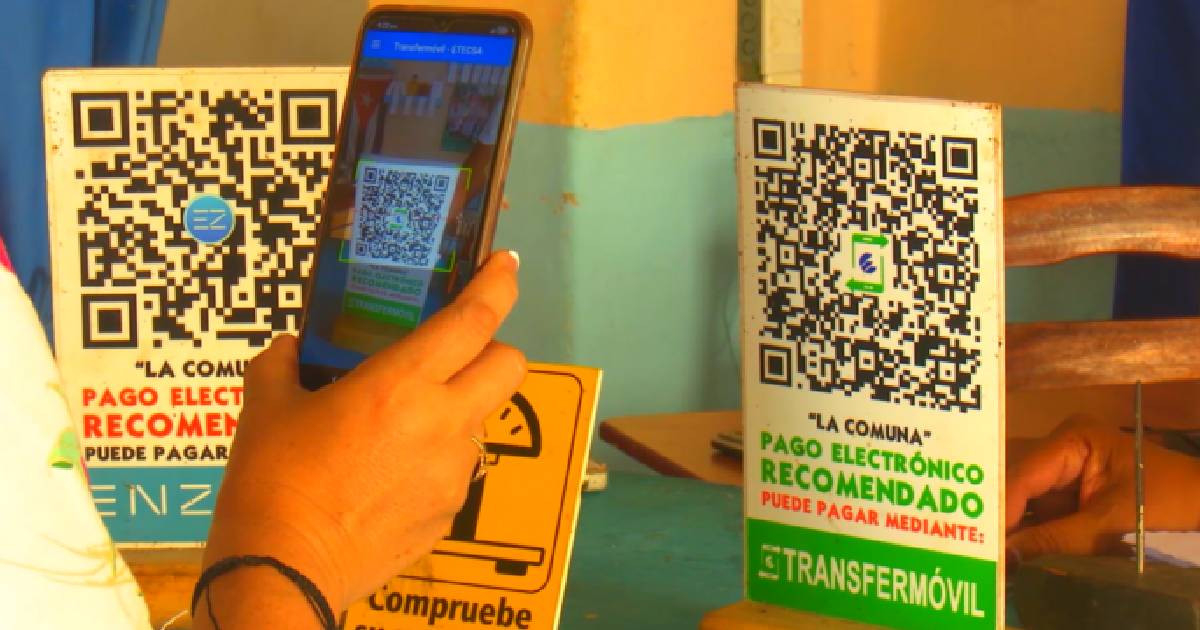
The Central Bank of Cuba (BCC) insists on moving towards the digitalization of payments on the island, while its own officials acknowledge that the process faces structural obstacles that make it practically unfeasible under the current conditions in the country.
Ian Pedro Carbonell Karel, director of macroeconomic policies at BCC, warned this Sunday on the Economic Observatory program of CMKS Radio Guantánamo that the process of banking does not "close" when citizens withdraw their money from the bank to operate in cash.
"If after you have your money in the bank account, the use you give to that money in the bank account is to convert it into cash for cash transactions, then the process of banking really doesn't conclude there," the official stated.
Carbonell demanded that all businesses and stores, both state-owned and private, provide electronic payment methods as a condition for advancing in the official policy.
The official himself admitted, however, the central contradiction of the process. "If electronic payment is not easier to make or faster than paying in cash, of course it won't take hold," he acknowledged.
The reality in the streets of Cuba directly contradicts that narrative. The official press acknowledged in April that "cash remains the undisputed king of daily economy," with illegal surcharges of up to 20% for electronic payments standardized in much of the country.
The point of sale terminals remain inoperable, the cafeterias lack connectivity, and businesses respond with phrases that have become commonplace, such as "there's no system," "cash only," or "if it's a transfer, there's a surcharge."
In Cienfuegos, citizens and self-employed workers reported in April that the radio bases of the state-owned and sole Telecommunications Company of Cuba S.A. (Etecsa) ran out of fuel, leaving entire municipalities without mobile coverage.
A small business owner summarized the structural trap that entrepreneurs find themselves in. "It's not that we don't want to accept transfers, but when it comes time to buy those products from the small and medium enterprises, they won't accept any kind of transfer. When you make all your sales that way, the numbers just don't add up and you end up going bankrupt," she explained.
In Santiago de Cuba, the police arrested individuals this month who were charging up to a 50% commission for converting transfers into cash, reflecting the worsening liquidity crisis.
The most visible impact falls on the more than 1.7 million Cuban retirees, who receive pensions ranging from 3,056 to 4,000 pesos a month, less than 10 dollars. Most of them lack smartphones and must stand in long lines for hours in front of bank branches across the country.
In Holguín, dozens of retirees crowded into bank branches this month to collect pensions, with lines starting as early as five in the morning. "Another month… The same problem," summarised a digital creator who documented the scene.
The regime initiated the banking system in August 2023 with Resolution 111/2023 from the BCC, which set a cash transaction limit of 5,000 pesos and required all economic actors to accept electronic payments. However, the reality did not change, even though the government shut down 476 establishments in April 2024 after conducting over 8,000 inspections.
Filed under: