
Related videos:
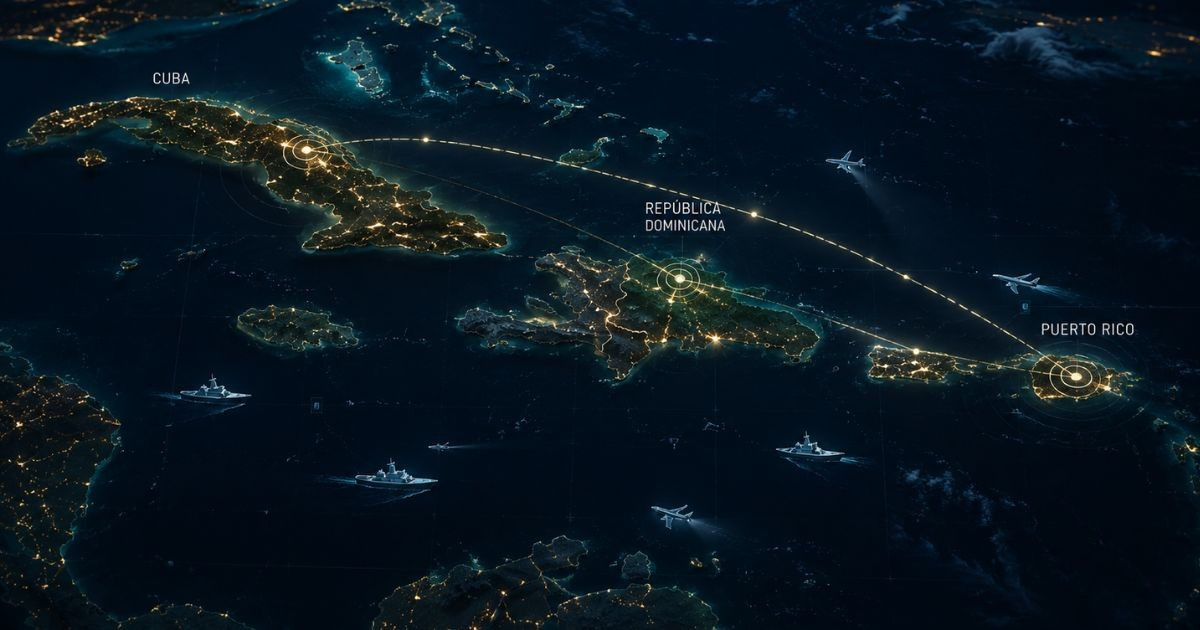
The Secretary of Public Security of Puerto Rico, Brigadier General Arthur Garffer, anticipated that the island will experience a significant increase in the presence of U.S. military forces by sea, air, and land in the coming weeks, in the context of a possible intervention in Cuba that could include the arrest of former dictator Raúl Castro.
Garffer made these statements during the Memorial Day ceremonies at the National Cemetery of Bayamón, in an interview with Telemundo Puerto Rico that garnered significant regional attention.
"I understand that we are possibly witnessing the end of the Cuban communist dictatorial regime in the coming weeks," said the general, who compared the current scenario to the buildup prior to the intervention in Venezuela.
Garffer noted that the recent federal indictment against Raúl Castro is one of the "new pieces on the board."
On May 20, a federal grand jury in the Southern District of Florida formally charged Castro with ordering the shootdown of two planes from the organization Brothers to the Rescue on February 24, 1996, a crime that led to the deaths of four Cuban Americans: Armando Alejandre Jr., Carlos Costa, Mario de la Peña, and Pablo Morales.
The charges include conspiracy to murder U.S. citizens, destruction of aircraft, and four counts of homicide, with penalties ranging from life imprisonment to the death penalty.
The Secretary of State Marco Rubio declared Castro a "fugitive from justice" after the accusation, and Garffer was categorical about the possibilities of a voluntary surrender: "The moment Cuba hands over Raúl Castro, they admit defeat. So I don't think that's an option; therefore, an extraction is possible."
The general emphasized the strategic role of Puerto Rico and the Dominican Republic in any military operation.
He indicated that the Dominican government recently extended its permission to Southern Command to conduct aerial operations in its territory, and that there are contracts to maintain tanker aircraft in that country: "We have maintained contracts with the Dominican Republic to have tankers primarily in the Dominican Republic, and there are seven other countries in the Caribbean Basin that are also involved."
"Puerto Rico will be highly active at all times, just as we were before the build-up to Venezuela," he added.
This announcement comes in the context of a sustained escalation of military presence in Puerto Rico since February 2026, with the deployment of F-35 fighter jets, MQ-9 drones, marines, and logistical ships in locations such as Ponce.
Governor Jenniffer González Colón supported in February any action by President Trump to "liberate" Cuba, even if it involved a military intervention from the island.
Garffer also described the economic pressure on the Cuban people as part of the strategy: "This pressure gradually does two things. First, the people grow tired. And second, it creates a rift between the people and the existing government."
Cuba is experiencing its worst energy crisis in decades, with electrical deficits exceeding 2,000 MW in May 2026, exacerbated by the cessation of oil supplies from Venezuela, Mexico, and Russia between late 2025 and April 2026.
In October 2025, Southern Command had already created a joint task force in the Caribbean, described as the largest U.S. military deployment in the region in three decades, officially aimed at anti-narcotics efforts but clearly intended as a geopolitical pressure tactic against Cuba.
Filed under: