
Related videos:
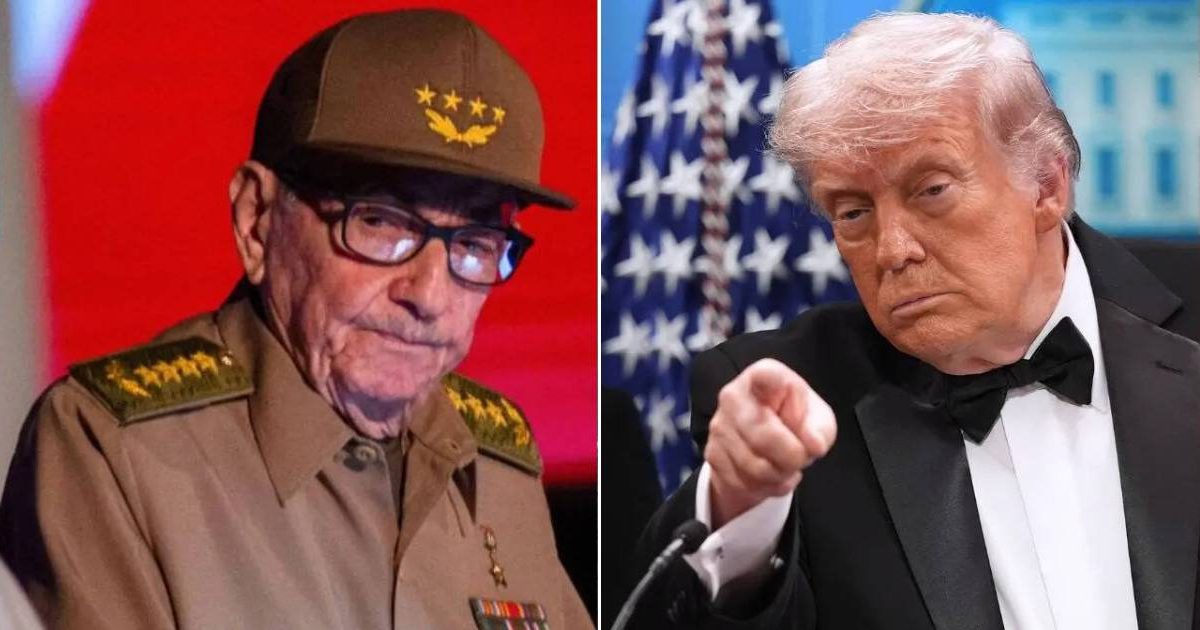
Raúl Castro described the measures of the United States government towards Cuba as a "suffocation policy" in its "failed attempt to destroy the Revolution," in a letter addressed to the National Institute of State Reserves on the occasion of the 45th anniversary of that institution.
The message, dated May 28 and read during the political-cultural event held in honor of the organization, represents one of the most direct statements from the former leader against Washington in recent months.
In the letter, Castro wrote: "In these 45 years, you have fulfilled your mission, almost always in silence. It is enough to mention the hardest moments of the COVID-19 pandemic, or the current suffocating policy of the United States government in its failed attempt to destroy the Revolution."
The text comes days after the U.S. leveled a formal accusation against him for the shooting down of two Brothers to the Rescue planes in 1996.
Also, after Secretary of State Marco Rubio sent a message in Spanish to the Cuban people offering a "new relationship" with Washington, 100 million dollars in food and medicine channeled through the Catholic Church, and blaming GAESA—the regime's military-business conglomerate—for the crisis the island is facing.
Raúl Castro's letter can be seen as a direct response from the historical Cuban leadership to that American diplomatic and media offensive.
The INRE event was chaired by Major General José Amado Ricardo Guerra, a member of the Political Bureau and Secretary of the Council of Ministers, alongside the Deputy Minister of the Revolutionary Armed Forces, Army Corps General Joaquín Quintas Solá, Hero of the Republic of Cuba.
In the message, Castro connected the founding of INRE in 1981 to Fidel Castro's strategic vision and emphasized that "as long as there is a strategic reserve, the Homeland will have the means to defend itself."
He also emphasized the role of the institution as an "irreplaceable material pillar" in the face of adversities such as the embargo, natural disasters, and pandemics, concluding with a quote from José Martí: "In foresight, Martí said, lies all the art of saving."
The context in which the letter arises is one of maximum bilateral tension. On January 29, 2026, President Donald Trump signed an executive order declaring a national emergency regarding Cuba and imposing tariffs on countries that supply crude oil to the island, a measure that exacerbated the blackouts and the energy crisis in Cuba.
Raúl Castro presided over the central event of May Day at the José Martí Anti-Imperialist Tribune, in front of the United States Embassy in Havana, where he presented himself as "another fighter, against the enemy and our own mistakes."
The letter to the INRE is its second significant public manifestation in May 2026 and the most explicit in its anti-American message, while the regime reacts to Rubio's pressure with acts of repudiation and defiant statements.
Last Wednesday, Rubio reiterated from the White House: "We want something good for the Cuban people," which the regime interpreted as new pressure before Castro signed his letter.
Filed under: