
Related videos:
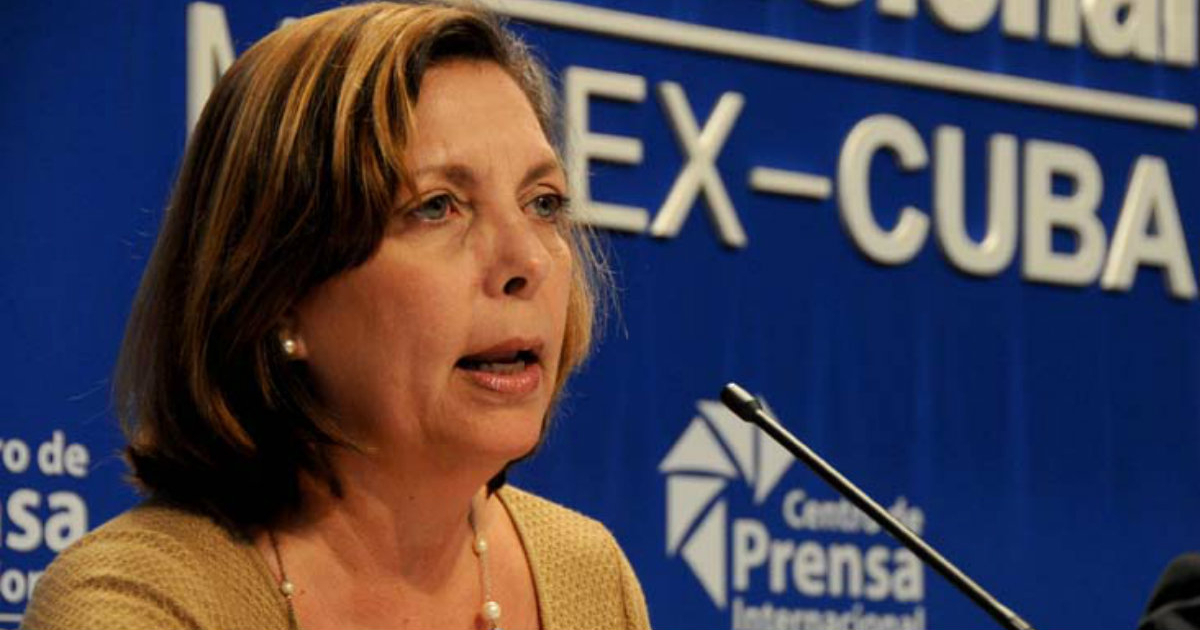
The Deputy Minister of Foreign Relations of Cuba, Josefina Vidal Ferreiro, warned yesterday at the Parliamentary Public Hearing "Cuba Wants Peace," held at the National Capitol in Havana, that the pressure from Washington on the island is already an ongoing reality: "The aggression against Cuba is not pending materialization. It is not the threat of a possible future, but an act that is already in full execution."
In her address to Cuban deputies, Vidal stated that "this aggression has escalated exponentially during the current year and continues to intensify," and described the economic warfare imposed for over six decades as having hardened "in an unprecedented manner in recent months, with the adoption of increasingly aggressive and ruthless measures."
The vice minister described an ongoing energy crisis lasting over five months that has impacted electricity generation, public transportation, healthcare services, food production, and the supply of drinking water.
Regarding the secondary sanctions announced by Washington, Vidal was straightforward: "These new and illegal measures of coercion aim to strangle the Cuban economy and completely disconnect it from external sources of financing, foreign investment, and supplies of essential goods for survival."
He called them, in summary, "a plan to induce a forced humanitarian crisis."
This context of maximum pressure includes the Executive Order 14404, signed by Trump on May 1, which expanded secondary sanctions against the military-business conglomerate GAESA and set June 5 as the deadline for foreign companies to sever ties with Cuban entities. The Spanish banks with operations in Cuba are already preparing for this deadline.
Vidal also rejected the criminal charges filed on May 20 against Raúl Castro for the downing of two planes from Brothers to the Rescue in 1996, which resulted in the deaths of four Cuban Americans. He described them as a "crude and fraudulent accusation" that "lacks any legal or moral foundation" and characterized them as "the most recent and blatant pretext" to justify an armed action.
The Cuban regime had already deemed that accusation a “scoundrel act” when it was announced by interim Attorney General Todd Blanche in Miami.
The deputy minister warned that "the risk of a military aggression against Cuba grows each day" and that there is no justification for such an action, which "would definitely result in destruction and the death of Cubans and Americans."
Regarding the possibility of dialogue, Vidal reiterated Cuba's willingness to negotiate, but with clear boundaries: no interference in internal affairs, no imposition of the economic model or the constitutional order. The day before, he had acknowledged that there are no advances in the negotiations with Washington and questioned the seriousness of the process.
He cited Díaz-Canel to conclude his position: "We are a country of peace. We do not promote war, we do not like war; we foster solidarity and cooperation among peoples, but we are ready to defend the peace that we desire."
Since January 2026, the Trump administration has imposed more than 240 sanctions against Cuba, while the island's energy imports are estimated to have fallen by between 80% and 90%, resulting in blackouts of up to 20-25 hours a day that punish the population.
Filed under: