
Related videos:
A new potable water leak reported this Saturday in Havana once again highlights the deterioration of a crumbling water infrastructure, as hundreds of thousands of residents struggle to survive amid blackouts, shortages, and long waits to access an increasingly scarce resource.
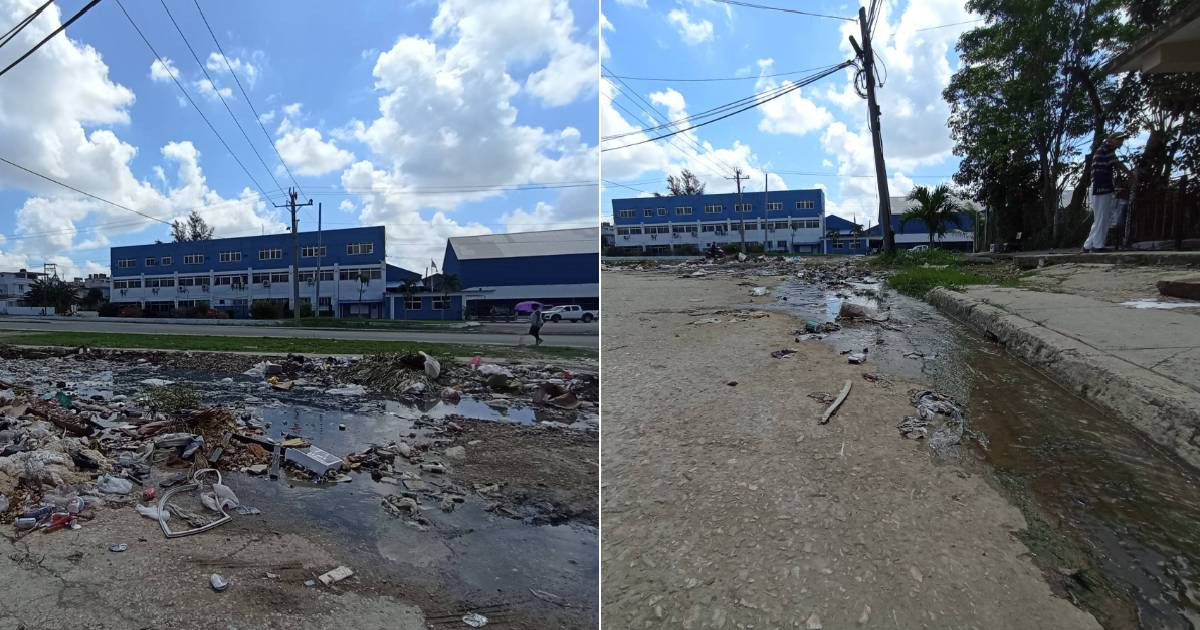
According to the complaint shared on his Facebook account by citizen Mario Hui, it appears that front loaders used to clean up the landfill may have damaged a pipeline that supplies the Palatino water tanks.
The images of drinking water being lost among waste and debris encapsulate one of the most visible contradictions of the current Cuban crisis: while thousands of families go for days without service, valuable water resources continue to be wasted due to negligence, lack of maintenance, and poor institutional coordination.
The incident is not isolated. It is part of a documented pattern of damage to the water network caused by Public Services equipment during garbage collection operations, within the context of an unprecedented water crisis in the Cuban capital.
In early May, Hui himself shared the alert from residents on Vento Road, near the Casino Deportivo in the Cerro municipality, who warned that dump trucks and front loaders were operating on the Albear canal, the 19th-century hydraulic work that supplies about 15% of the capital's water.
The neighbor Herminia Watson Brown then pointed out that there was already a hole from which the canal could be seen. "If they keep going, they're going to break it, and now the trucks are also on top of it; there's negligence everywhere," she stated.
Hui was more emphatic at that moment. "It is not designed for transit, parking, or operations with heavy equipment, due to the significance of the ancient and delicate construction made nearly two centuries ago by engineer Francisco de Albear."
Earlier, in April, a backhoe from Municipal Services damaged a main pipe in La Lisa, which left families in the Novia del Mediodía popular council without water for more than 10 days. The Water Company of Havana was notified, but on the fifth day, they only conducted an inspection and promised to return without resolving the issue.
The backdrop is a structural crisis of historic magnitude. In the middle of this month, the president of the National Institute of Hydraulic Resources, Antonio Rodríguez Rodríguez, confirmed that 376,055 people in Havana lacked regular access to drinking water: 66,961 due to breaks in the network and more than 309,000 because of blackouts that render the pumps inoperable.
The Minister of Energy and Mines, Vicente de la O Levy, acknowledged that power outages in the capital exceeded 20 to 22 hours daily, which makes the Albear channel, operating by gravity without electricity, one of the few components of the water system that functions during the outages.
The scarcity has triggered a black market for water where illegal pumps, known as "water thieves," are sold for up to 36,000 Cuban pesos, and private tankers range between 18,000 and 26,000 pesos.
Social tension has resulted in protests with barricades, bonfires, and pot-banging in multiple neighborhoods, and even a physical assault on the Baptist pastor Vladimir Valladares in Luyanó on May 23, during a dispute over the distribution of a water truck.
The citizen Frank Alberto Hernández summarized the widespread perception: "It’s the fault of the government, both municipal and provincial, as well as the national government. It’s a chain of blame that has been dragging on for years. The one in charge is someone appointed by someone else for their political merits, not for their knowledge."
Filed under: