
Related videos:
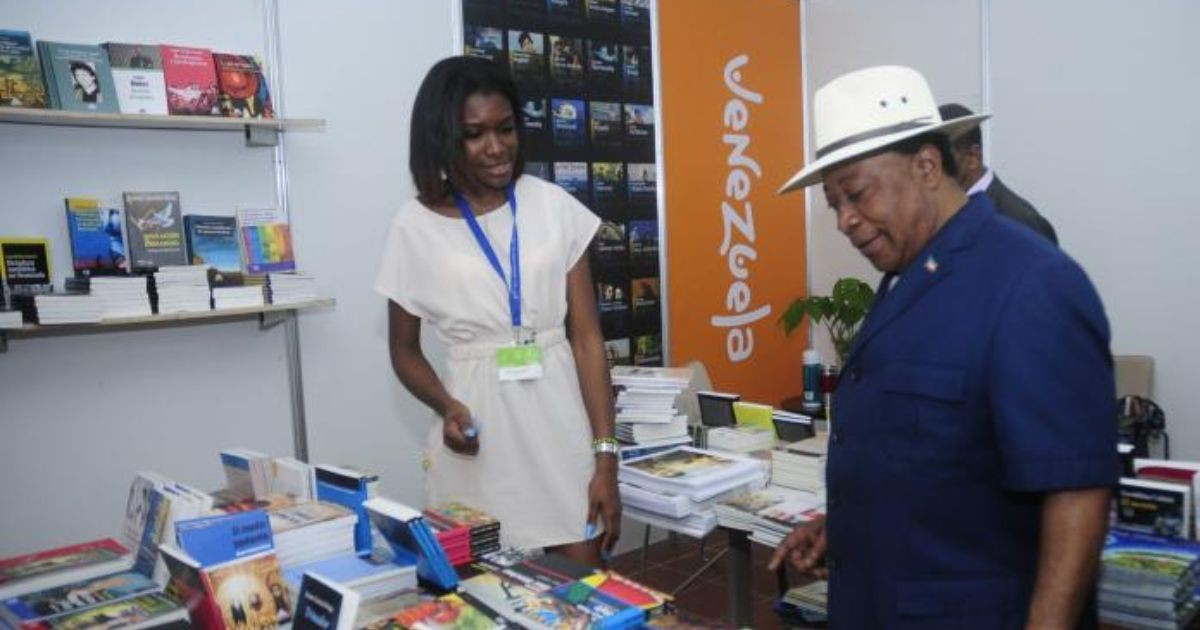
The Cuban Institute of the Book (ICL) and the Cuban Book Chamber announced this Sunday that the details of the 34th edition of the Havana International Book Fair (FILH) will be presented on June 4 at the International Press Center in the capital, as reported by the Cuban News Agency.
The event had been postponed on February 7, 2026, just five days before its scheduled opening on the 12th of that month, amid a severe energy crisis that forced the regime to announce emergency measures: limiting fuel purchases, reducing national trains, and imposing restrictions on worker transportation.
At that time, the ICL attributed the suspension to an "extraordinary situation" caused, according to the official narrative, by the "genocidal blockade" imposed by the United States and the sanctions from the Trump administration, and promised that "the new date for this important cultural event will be announced in due course."
Four months later, the Organizing Committee resumes the fair with statements that implicitly acknowledge the severity of the moment: the event will take place, as reported by ACN, "in extremely complex and difficult times."
What the statement does not mention is that Cuba is currently in worse conditions than when the fair was suspended. In May 2026, the Minister of Energy and Mines, Vicente de la O Levy, publicly admitted that the country had “absolutely no fuel oil, nor absolutely any diesel”.
The electricity deficits exceeded 2,100 MW on several days in May, with blackouts lasting up to 20 and 24 hours daily in various regions of the country.
Between December 2025 and the end of April 2026, Cuba received only one fuel ship, while it needs eight per month to sustain its economy. Russia sent an emergency shipment of 100,000 tons of crude oil at the end of March, distributed in April, which is barely enough for seven to ten days of consumption.
The CEPAL projects a contraction of the Cuban GDP by 6.5% for 2026, while the Economist Intelligence Unit estimates a decline of 7.2%, according to data from analysts who describe a terminal scenario for the island's economy.
In this context, the 34th edition of the FILH will be dedicated to the centenary of Fidel Castro (1926-2016), in line with the regime's declaration that 2026 is the "Year of the Commander-in-Chief's Centenary." Russia, the main emergency oil supplier for Havana, will be the guest of honor, a choice that clearly reflects Cuba's political alignment and energy dependence on Moscow.
The fair will also honor the work of two figures in Cuban social sciences: the poet, storyteller, and literary critic Marylin Bobes, recipient of the José Antonio Fernández de Castro National Cultural Journalism Award, and the philosopher José Bell Lara, a Doctor of Philosophical Sciences and a tenured and consulting professor at the University of Havana.
The decision to resume the fair follows a documented pattern of the regime: to maintain its agenda of cultural and political events despite the crisis. Other festivals such as Cubadisco, the Romerías de Mayo, and the Piña Colada Festival were held this year with changed venues or reduced formats. The closure of Cubadisco 2026 was suspended at the National Theater and moved to the Pabellón Cuba amid power outages of up to 22 hours a day in Havana.
The concrete details of the 34th FILH—dates, venue, and program—will be announced on June 4th at the International Press Center, as millions of Cubans continue to face an unprecedented energy and multidimensional crisis.
Filed under: