
Related videos:
The Chilean journalist and writer Patricio Fernández published an opinion article this Sunday in the newspaper El País, in which he argues that the failure of the Cuban revolution is "an undeniable fact" and urges the Latin American left to acknowledge it as a necessary condition to regain political credibility.
Under the title "Burying the Cuban Revolution, a Task for the Left," Fernández outlines a historical journey of 67 years that begins with the revolutionary victory of 1959 and concludes with Cuba in 2026: a country facing humanitarian collapse where, according to the author, "it is very likely that the Cuban Revolution will soon come to a complete end."
The text outlines the various stages of the process: the romantic period of the 1960s, the so-called Quinquenio Gris of the 1970s—when the Padilla case in 1971 ushered in a period of cultural persecution and the sending of artists, poets, and dissidents to forced labor camps known as the UMAP—and the relative stability of the 1980s, supported by Soviet subsidies.
That stability was shattered with the execution of General Arnaldo Ochoa, Colonel Tony de la Guardia, Captain Jorge Martínez, and Major Amado Padrón, who were executed at dawn on July 13, 1989, in what is known as Case Number One. Fernández notes that the most widespread interpretations suggest it was a political purge, as Ochoa represented a potential threat to Castro in light of the advance of Soviet reformism.
With the fall of the USSR in 1991 came the Special Period, which the author describes as a catastrophic situation in which "they ran out of oil, blackouts began, and in the absence of food, they even ate the cats." It was during this time that the verb "resolver" emerged, referring to the search for informal — and generally illegal — solutions to everyday needs in a country where structural corruption became a mechanism of survival.
Fernández is particularly emphatic when assessing the institutional legacy of Castroism: "If any expertise was developed by the Revolution, it was the control of its inhabitants through state security, intelligence, and counterintelligence." He adds that "while Fidel was alive, what was supposed to be the government of the people only served to glorify an individual."
On the economy, the author is equally direct: "On the island of the Revolution, nothing is produced at this point. Not even sugar. In its most fertile fields, marabú grows, a weed that has turned into forests." He concludes that the regime "has sold an idea and no concrete product," as if its leaders believe the world should pay them for preaching a way of life that they cannot sustain.
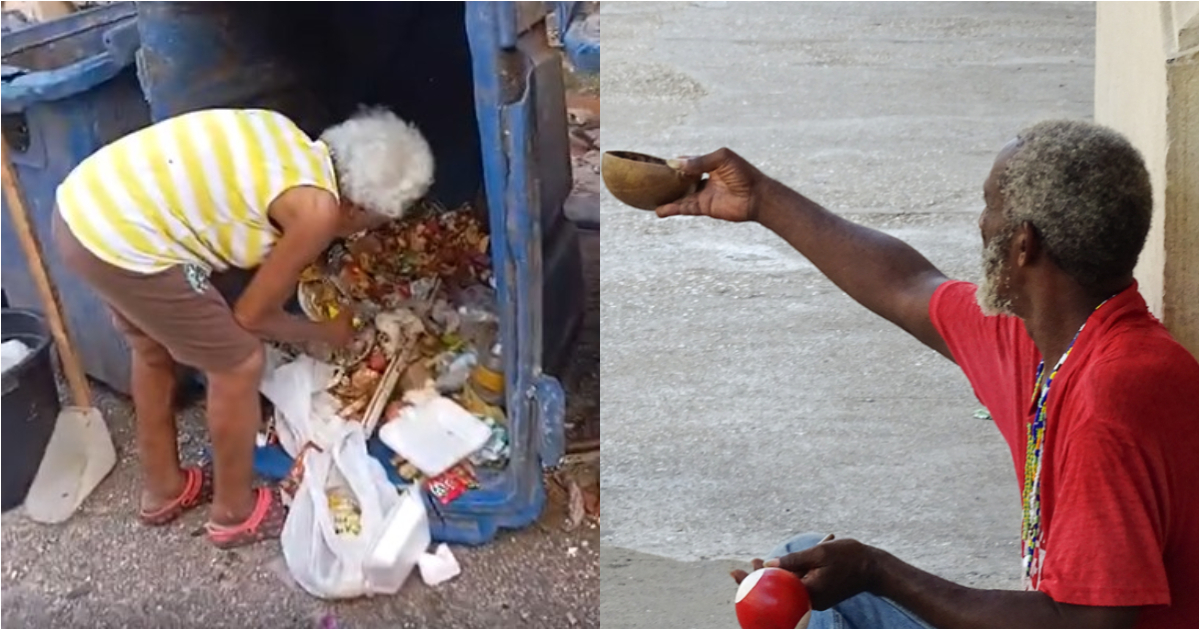
The Cuba that Fernández describes in 2026 is one of documented humanitarian emergency. Miguel Díaz-Canel admitted in May that the electricity crisis was "particularly tense", with a projected deficit of more than 2,000 MW for the nighttime peak. The Food Monitor Program reported that same month that 96.91% of the population lacks adequate access to food and that 33.9% of households reported that at least one member went to bed hungry at least once in the previous 30 days.
The article also refers to the visit of the CIA director, John Ratcliffe, to Havana on May 14, when he met with regime officials and with Raúl Guillermo Rodríguez Castro, Raúl Castro's grandson. Fernández interprets that meeting as the regime accepting "a tip from the empire that extorts it to survive for another couple of weeks."
The author, writing from a critical leftist perspective, does not shy away from the responsibility of his own ideological camp: "Only ideological blindness justifies such indifference." He concludes with a call to acknowledge the failure not only to rescue the population suffering from it, but so that "the idea of community regains its value" in a proposal that is "intelligent, credible, and trustworthy."
The Cuban population, which exceeded 11 million inhabitants in 2022, fell to just over eight million in 2023 according to the economist and demographer Juan Carlos Albizu-Campos, as a consequence of the massive emigration caused by decades of accumulated misery under the regime.
Narrator, journalist, and political analyst, the Chilean Patricio Fernández is a prominent voice in contemporary Latin American journalism. He also has an in-depth understanding of Cuba, a country he has visited several times. In 2018, he published the book Cuba. Journey to the End of the Revolution.
Filed under: