
Related videos:
The spokesperson for the Russian Ministry of Foreign Affairs, María Zajárova, stated this Wednesday that the relationships between Moscow and Havana are untouchable and rejected the idea that Washington could interfere in them, during her speech at the St. Petersburg International Economic Forum.
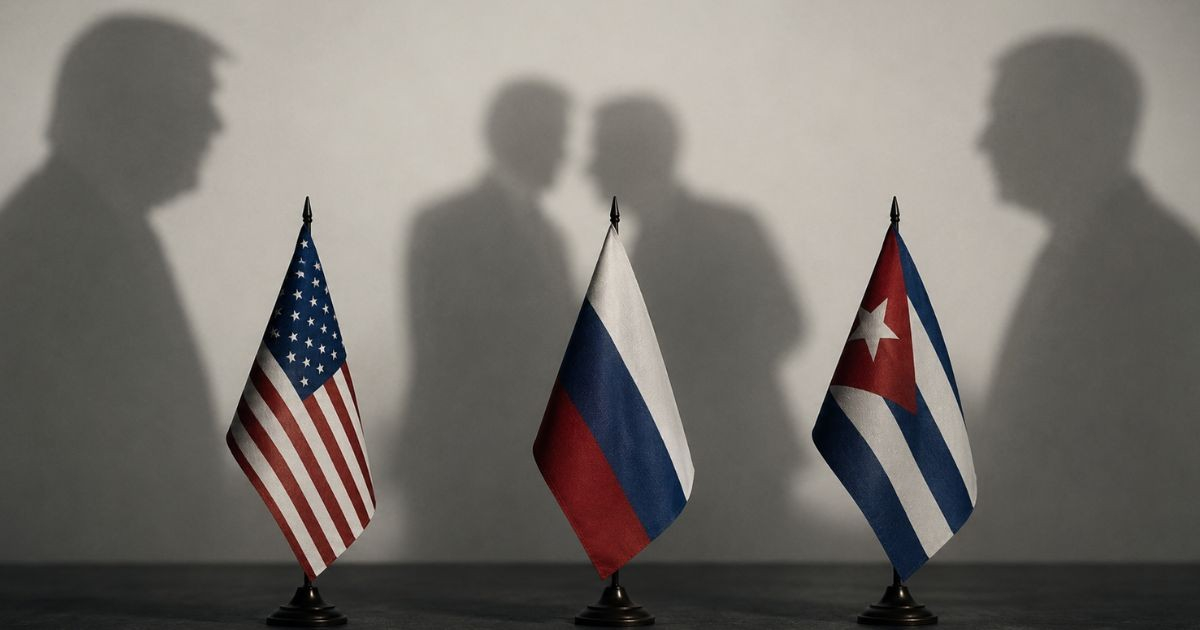
Zajárova expressly requested that the relationship between Russia, Cuba, and the United States should not be viewed as a geopolitical "triangle," emphasizing that the ties between Moscow and Havana have their own distinctive character that no third party can influence.
"It seems to me that we should not view this as a triangle. We have absolutely unique relationships, historically established, with the Island of Freedom, which defends its independence. Cuba does not seek to expand its zones of geopolitical influence, Cuba does not pursue its ambitions in other parts of the world, Cuba defends its national sovereignty," the official declared.
Zajárova added that Russia is developing its relationship with Cuba based on mutual understanding, respect, friendship, and assistance, and she stated categorically that "no one can influence the interaction between the countries."
The diplomat also described the U.S. embargo as "the most powerful instrument of suffocation" that the island has endured for decades, stating that Cuba survives and develops despite the sanctions, trade wars, and what she referred to as "hybrid aggressions."
The statements come at a time of heightened tension between Washington and Havana.
Since January 2026, the Trump administration has accumulated more than 240 sanctions against Cuba, reinserted the island onto the list of state sponsors of terrorism, and deployed the aircraft carrier USS Nimitz in the Caribbean on May 20 as part of operation Southern Seas 2026.
The Kremlin spokesperson, Dmitri Peskov, declared on May 21 that the embargo has "catastrophic consequences for ordinary people" and that the U.S. naval deployment in the Caribbean "could worsen their situation."
The context that Zajárova rejects, however, has a real basis.
The Russian Deputy Foreign Minister Serguéi Riabkov confirmed on Monday that Cuba is a topic in the bilateral contacts between Moscow and Washington, although he warned that the approaches "differ radically."
Riabkov also announced joint projects between Russia and Cuba in energy, metallurgy, transportation, agriculture, biopharmaceuticals, and biotechnology, as well as a special mechanism for subsidizing interest rates to finance Russian investments on the island, with a business disposition exceeding 1,000 million dollars.
Washington has conditioned any diplomatic progress on the Cuban regime severing its security ties with Russia and China, closing listening stations, and releasing political prisoners.
The dialogue remains stagnant: Cuban Deputy Minister Josefina Vidal acknowledged at the end of May that the channel with Washington "is open" but without "much progress," and Secretary of State Marco Rubio admitted that he also does not see significant advances in the negotiations.
The chancellor Serguéi Lavrov stated on April 15 that he would not "speculate on the possible consequences" of the threats from the United States towards Cuba, thereby avoiding any explicit military commitment, although in May he promised "political, diplomatic, and material support" to the regime in Havana.
Filed under: