
Related videos:
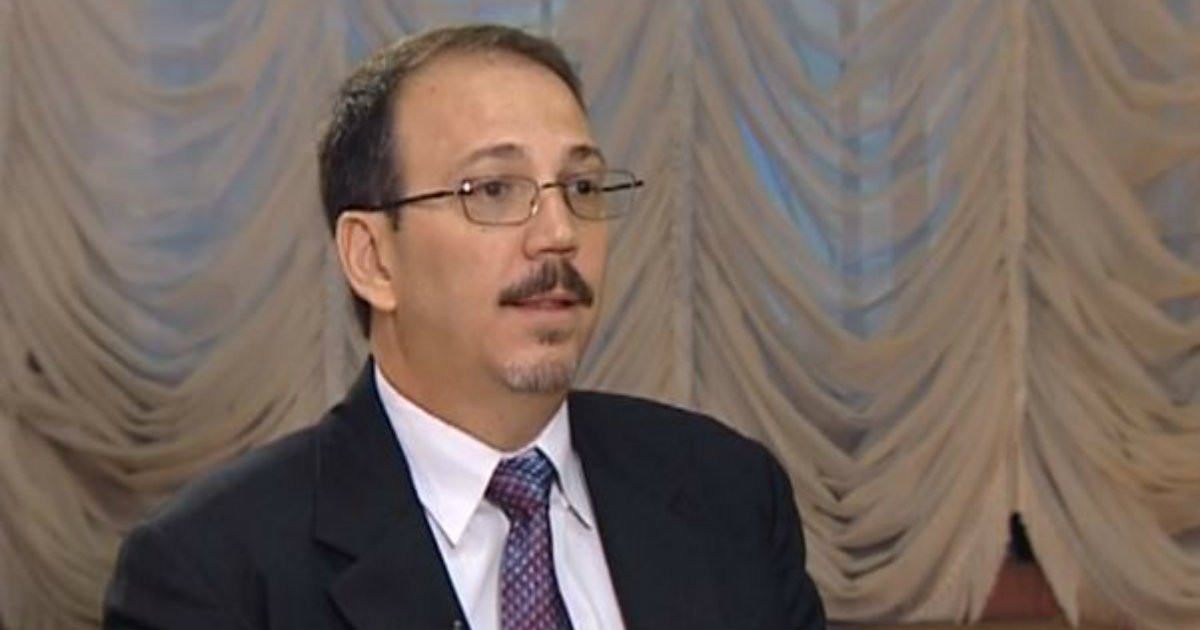
Alejandro Castro Espín, known as "El Tuerto" and son of Raúl Castro, along with his son Raúl Alejandro Castro Calis, were added last Wednesday to the Specially Designated Nationals List of the Office of Foreign Assets Control (OFAC) of the U.S. Department of the Treasury, in the third and most extensive wave of sanctions under Executive Order 14404.
This is the first time Alejandro Castro Espín has appeared directly on that list, a designation that carries particular political weight: he was the principal Cuban negotiator in the secret talks with the Obama administration that led to the restoration of diplomatic relations in 2015.
With the rank of brigadier general, Castro Espín served as coordinator of the National Defense and Security Council of Cuba until 2018. Despite his extremely low public profile, analysts and media regard him as one of the most influential operators within the regime's security and intelligence apparatus. His nickname comes from an eye injury sustained during military maneuvers in Angola.
Alongside him, his son, Raúl Alejandro Castro Calis, born on May 16, 1995, in Havana, was sanctioned, directly linked to his father in the official designation by OFAC. Both were included under the CUBA-EO14404 program.
This third wave of sanctions, the most extensive to date, also included President Miguel Díaz-Canel and his wife Lis Cuesta Peraza, as well as Díaz-Canel’s stepson, Manuel Anido Cuesta, residing in Madrid. The simultaneous designation of Díaz-Canel and his family members marks the first time that Washington has directly sanctioned the Cuban head of state.
Among the designated entities are the Ministry of the Revolutionary Armed Forces (MINFAR), the Committees for the Defense of the Revolution (CDR), the Cuban Institute of Friendship with the Peoples (ICAP), its travel agency Amistur Cuba S.A., and the mining company Minera La Victoria S.A.
The Secretary of State Marco Rubio justified the measures by indicating that they aim to “the extensive and violent network of radical action of the Cuban regime and the actors who implement and finance it.”
The appointment of Castro Espín also has a strategic interpretation: his nephew Raúl Guillermo Rodríguez Castro, known as "El Cangrejo" and grandson of Raúl Castro, was not included in any of the three waves of sanctions.
The OFAC also published FAQ 1258, warning that non-U.S. persons —including foreign financial institutions— are at risk of secondary sanctions for engaging with those designated under EO 14404.
Since January 2026, the Trump administration has imposed over 240 new sanctions against Cuba, as part of a maximum pressure policy that Rubio himself described before Congress last Tuesday as open "to a negotiated situation that puts Cuba on a path towards democracy, prosperity, freedom, and normalcy."
Filed under: