
Related videos:
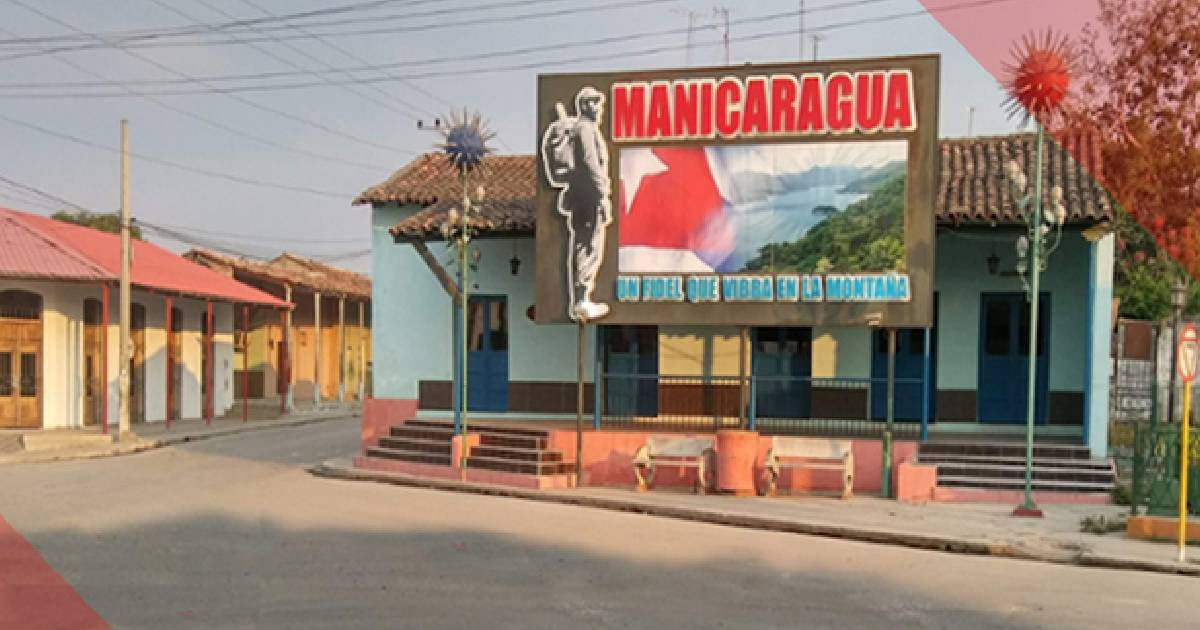
The president of the Municipal Assembly of the People's Power of Manicaragua, Madelaine Hernández García, sparked a wave of criticism and mockery on social media this Friday by posting on Facebook that the electric service "has been restored, complying with the established 2 hours," after the municipality had endured more than 42 hours without electricity.
The message, published on behalf of the Municipal Assembly of the territory, also urged the population to obtain information only through "official channels" in order to "help prevent false news," a request that the residents interpreted as an attempt to silence criticism.
The official had informed a few hours earlier, in another post from the Municipal Administration Council, that the municipality had been without electricity for 42 hours and that the outage could extend up to 50 hours, due to "the shutdown of the country's two main generating plants."
He explained that, once the service is restored, the supply would be a maximum of two hours per circuit, prioritizing the old block 4—where vital services are located—and then block 2, in the center of the village. The water service was also halted during the blackout.
During the morning of this Friday, two thermoelectric plants disconnected from the National Electric System, including Antonio Guiteras in Matanzas, one of the country's most powerful plants, which has recorded at least nine breakdowns so far this year.
The neighbors strongly refuted the official version in the comments of the post itself. Several pointed out that the electricity did not arrive even after an hour and 20 minutes, with intermittent outages that prevented them from making the most of the promised time.
"That didn't reach 2 hours; it was 1 hour and 33 minutes," wrote a neighbor. Another one calculated: "2 hours are 120 minutes; if you subtract 50 minutes of back and forth, it's 1 hour and 10 minutes. They should resume classes," she noted.
A neighbor insisted on the instability of the service: "The power didn't arrive for even an hour and 20 minutes, not counting the interruptions and the 20 minutes it was turned off at the beginning. Respect the people and stop lying."
The intermittent outages, popularly known as "take and put," have led to another recurring complaint: appliances get damaged when they are plugged and unplugged repeatedly. "When they turn on the refrigerator, they cut the power," protested a resident.
A Nicaraguan woman questioned the practical usefulness of such little service time: "How do they cook hard peas and keep insulin cold for diabetics?"
The official responded in the comments that "all equipment must be unplugged when the power is restored and gradually plugged back in," which generated even more outrage.
"Disrespect. Take away his phone and the data they provide him," replied a resident.
This pattern of an official posting an official version on social media that is massively contradicted by citizens in the comments is repeating all over Cuba.
The Electric Company of Holguín acknowledged on June 2 that the population would receive only three hours of electricity per day, while tourism received priority allocation; that statement was deleted after the wave of criticism.
Manicaragua has a direct history of social unrest due to power outages. In October 2024, residents protested with cookware outside the municipal government headquarters, and six of them were sentenced to prison terms ranging from five to six years by the Provincial Court of Villa Clara.
Two days ago, the correspondent in Cuba for the American television network CNN described the situation on the island as "quickly uninhabitable for many," after only having an hour of electricity that day in the neighborhood of Havana where he resides.
Filed under: