
Related videos:
The 2026 FIFA World Cup begins this week with the usual promise of sporting excitement, but also under an international atmosphere charged with geopolitical tensions that make the tournament much more than just a football competition.
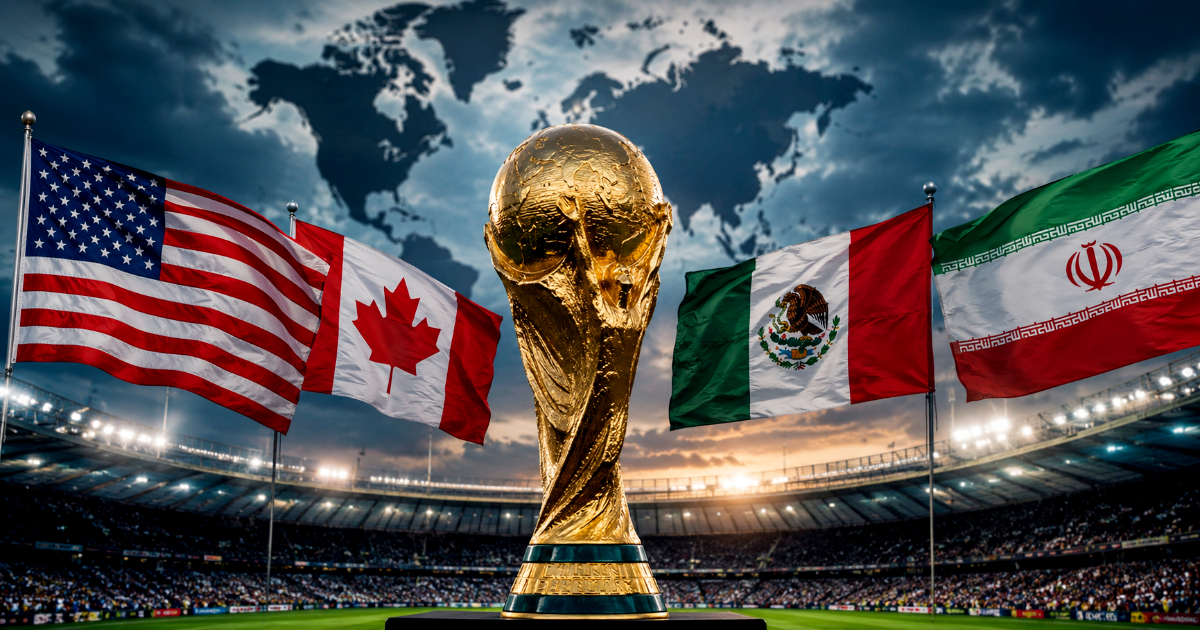
Organized jointly by the United States, Canada, and Mexico, the championship arrives at a particularly complex moment for international relations, according to Bloomberg.
The three host countries have ongoing differences in trade, immigration, and border security issues, while Washington continues to exert significant political and economic influence in the region.
This is joined by the conflict between the United States and Iran, which has already surpassed one hundred days of clashes and intermittent negotiations. Although a possible match between both teams in the knockout stages would be statistically unlikely, the possibility has sparked interest due to the political symbolism of a meeting between two nations at odds on the international stage.
History shows that the World Cup often reflects the tensions of each era. Since its inception in 1930, the tournament has served as a showcase for national rivalries, ideological disputes, and significant historical moments.
One of the most memorable examples occurred in Argentina in 1978, when the host nation won the title amidst a military dictatorship that used the event as a tool for international projection. In 1990, West Germany lifted the trophy just a few months after the fall of the Berlin Wall, a symbol of the process that would culminate in the reunification of the country.
Football emotions have also been accompanied by episodes of strong nationalist sentiment. The 2006 final between France and Italy was marked by the famous headbutt from Zinedine Zidane to Marco Materazzi, an incident that transcended the sporting realm and became a part of the collective memory of world football.
In this edition, politics once again takes center stage. The immigration restrictions brought about by the administration of President Donald Trump have caused concern among fans and organizations associated with the event.
Meanwhile, FIFA has been the subject of controversy after awarding Trump an unprecedented "Peace Prize", a decision that sparked mixed reactions both inside and outside the sports world.
Meanwhile, the United States approaches the tournament from an unusual position: that of a team with moderate expectations compared to traditional powerhouses like Argentina, France, Spain, Brazil, or England. However, the host country will try to leverage the advantage of playing at home during a particularly symbolic year, coinciding with the 250th anniversary of American independence.
As has happened on numerous occasions, the World Cup promises to provide not only goals and entertainment but also an accurate snapshot of the political moment the world is experiencing. And while the focus will be on the ball, the events off the field could end up being just as significant as those that happen on it.
Filed under: