
Related videos:
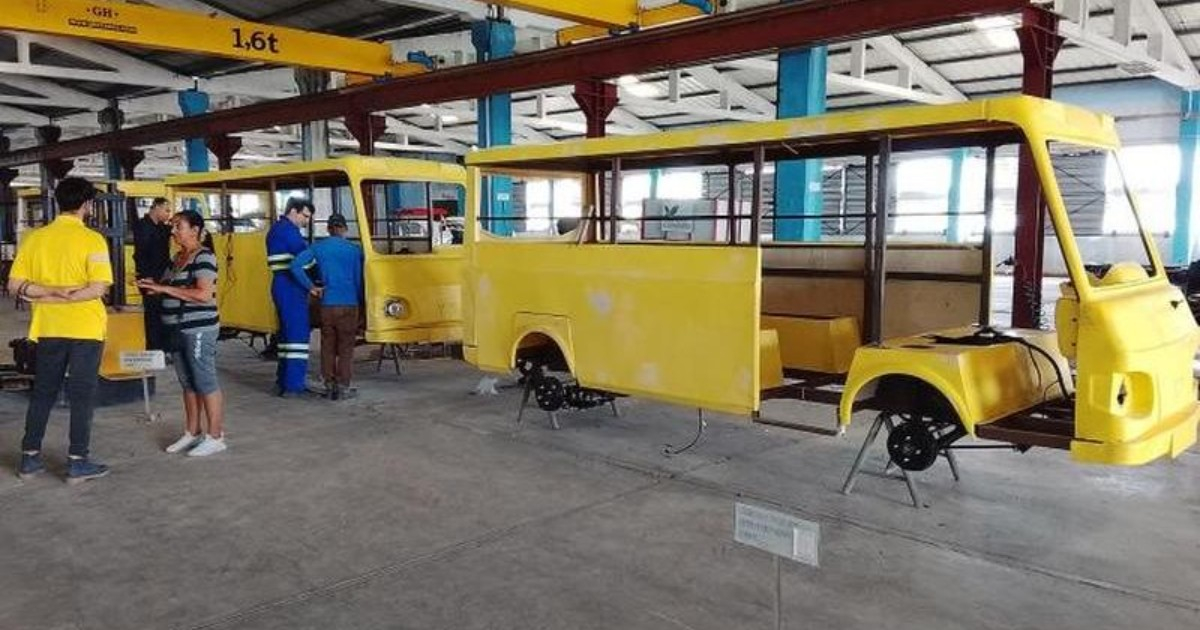
The province of Sancti Spíritus resumes the production of ecomobiles —locally manufactured electric minibuses— with the aim of building another 50 units similar to those already in operation, amidst the worst fuel crisis that Cuba has faced in decades.
José Lorenzo García, delegate of the Ministry of Transportation in the province, confirmed that "the production of Ecomobiles is resuming to continue easing passenger transportation during this very difficult time the country is experiencing."
The production takes place at the Coronel Francisco Aguiar Rodríguez Military-Industrial Company, located in Sancti Spíritus, funded by the Public Transport Development Fund of the Ministry of Transport.
The goal of 50 new units is similar to the fleet already in operation, which mainly operates in the provincial capital and in municipalities such as Trinidad, Yaguajay, and Cabaiguán.
The ecomobiles operate with a fare of 10 Cuban pesos and provide service on high-demand urban routes.
One of their main features is that they operate on electricity and do not require diesel or gasoline: they run on electricity, making them an alternative in light of the collapse of conventional transportation.
The program started in April 2023 with the first prototype, and the first five vehicles began operating in June 2024. By September 2025, there were already 28 units in the provincial capital and five in Trinidad.
In November 2025, the company itself inaugurated the first solar charging station in Cuba, an experimental charging infrastructure with an initial capacity for one microbus at a time.
Among the program's objectives is "to create the material conditions to have a system that allows the charging of minibuses utilizing solar energy," as reported by Escambray.
The announcement comes at a critical time for transportation in Cuba. On May 13, Energy Minister Vicente de la O Levy publicly acknowledged that Cuba had no fuel reserves: "We have no fuel, no diesel, just associated gas."
Two days later, the Ministry of Transport announced drastic cuts in buses, trains, and ferries effective June 18: interprovincial buses will operate only three times a week, trains once every two weeks, and the ferry to the Isle of Youth only on Saturdays.
Cuba went four months without receiving imported oil from December 2025 to April 2026, following the interruption of shipments from Venezuela and Mexico. The only temporary relief was a Russian shipment of 730,000 barrels that arrived on March 31, which was depleted by early May.
The scale of the ecomobile program, however, is clearly insufficient in light of the magnitude of the crisis: 50 units for an entire province where, according to reports from September 2025, "people must walk long distances every day as they no longer have hope of being able to travel in one of these means of transport, whose capacity is very limited."
Filed under: