
Related videos:
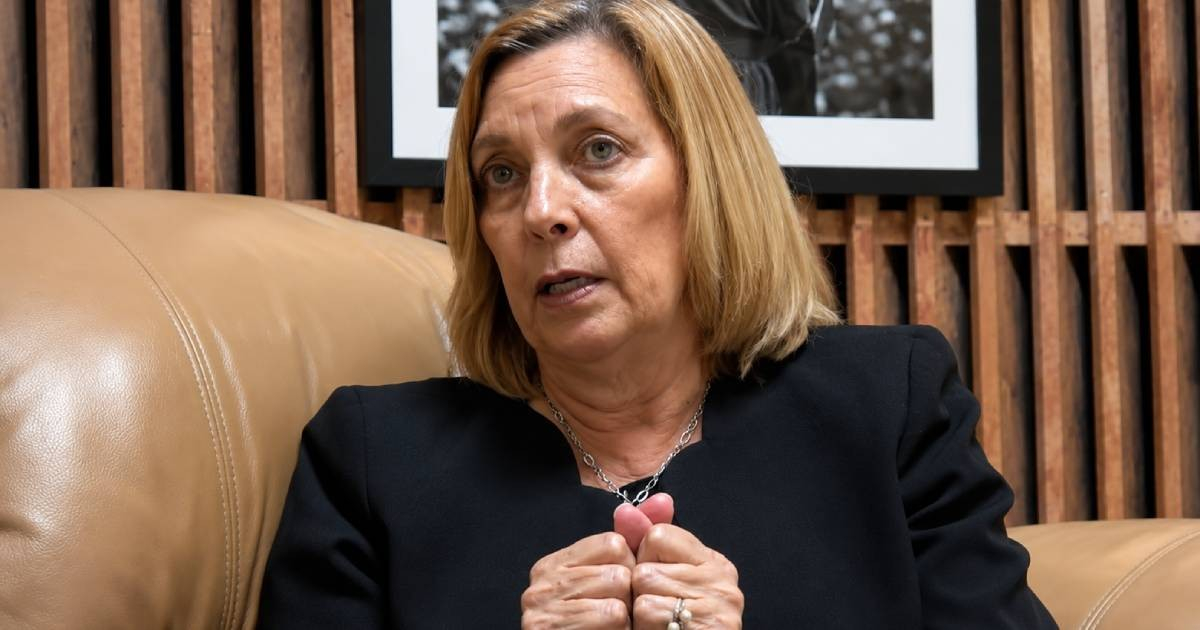
Cuba's Deputy Minister of Foreign Affairs, Josefina Vidal, stated that the regime is preparing to defend the country militarily against what it considers real threats from the United States, although she insisted that Havana does not desire a conflict with Washington.
“Nobody would ever want a conflict with the United States, but we are very aware of the threats and we are preparing to defend our country,” the diplomat stated in an interview with The Canadian Press during an official visit to Ottawa.
Vidal stated that the warnings about a possible action against the Cuban regime cannot be ignored.
"There are real threats of military action against Cuba, and they are public. We cannot ignore them. That is why Cuba is preparing," he stated.
The statement comes in the midst of rising tensions between Havana and the administration of Donald Trump, which has intensified economic pressure on the island since the beginning of 2026. In recent months, U.S. officials have advocated for a tightening of sanctions, and some analysts have speculated about regime change scenarios similar to the operation that culminated in the capture of Nicolás Maduro in Venezuela in January of this year.
During his stay in Canada, Vidal met with representatives from the federal government, parliamentarians, and business leaders to discuss the impact of U.S. measures and explore avenues for cooperation with Ottawa in light of the current situation.
The official described the sanctions imposed by Washington as a “collective punishment” against the Cubans and claimed that the goal of U.S. policy is to exacerbate the internal situation of the country.
"The purpose behind that measure is to push us Cubans and Cuba into a humanitarian crisis," he stated in reference to the restrictions imposed on the supply of fuel to the island.
Vidal acknowledged that the economic and social situation has notably deteriorated in recent months. Among the consequences, he mentioned reduced commercial hours, the suspension of surgical interventions, issues with water supply, and the temporary closure of schools or the shift of classes to remote learning formats.
However, international organizations and various governments have warned that the humanitarian crisis is already impacting large sectors of the Cuban population, while the island's authorities continue to struggle to ensure basic services and energy supply.
Energy vulnerability is one of the main challenges for the regime. Cuba produces about 40% of the fuel it consumes and relies on imports to meet the rest of its needs, a situation that has left it particularly exposed to the tightening of U.S. sanctions.
In this context, Vidal expressed regret over the impact that the restrictions have had on foreign companies operating on the island. He cited as examples the departure of the Canadian hotel chain Blue Diamond Resorts, which ceased its operations in Cuba last May, and the reduction of activities announced by the mining company Sherritt International.
The deputy minister highlighted, in contrast, the support provided by Canada in recent months. Ottawa committed eight million dollars in food aid in February and another 5.5 million in April for humanitarian assistance projects, including the installation of solar panels at medical centers.
"Canada has been part of the group of countries that have reached out to Cuba during a very difficult time, and we appreciate it. It is greatly appreciated," he expressed.
Despite the deterioration of relations between Havana and Washington, Vidal assured that the regime keeps the door open for dialogue.
"I have to admit that there hasn't been much progress in this dialogue. But we still believe it is the only alternative and the only option for seeking solutions," he noted.
The official's statements align with recent remarks from Canadian authorities regarding the political situation in Cuba. On June 11, Mark Richardson, a representative of Global Affairs Canada, stated before the Senate that there are "hundreds of political prisoners" on the island and advocated for the need for political and economic reforms. Organizations such as Freedom House continue to rank Cuba among the countries with the lowest levels of civil and political freedoms.
In light of the growing international pressure, Richardson summarized Ottawa's official position: "Canada's firm preference is for a peaceful transition, led by Cubans, that respects international law, including the principle of state sovereignty."
Filed under: