
Related videos:
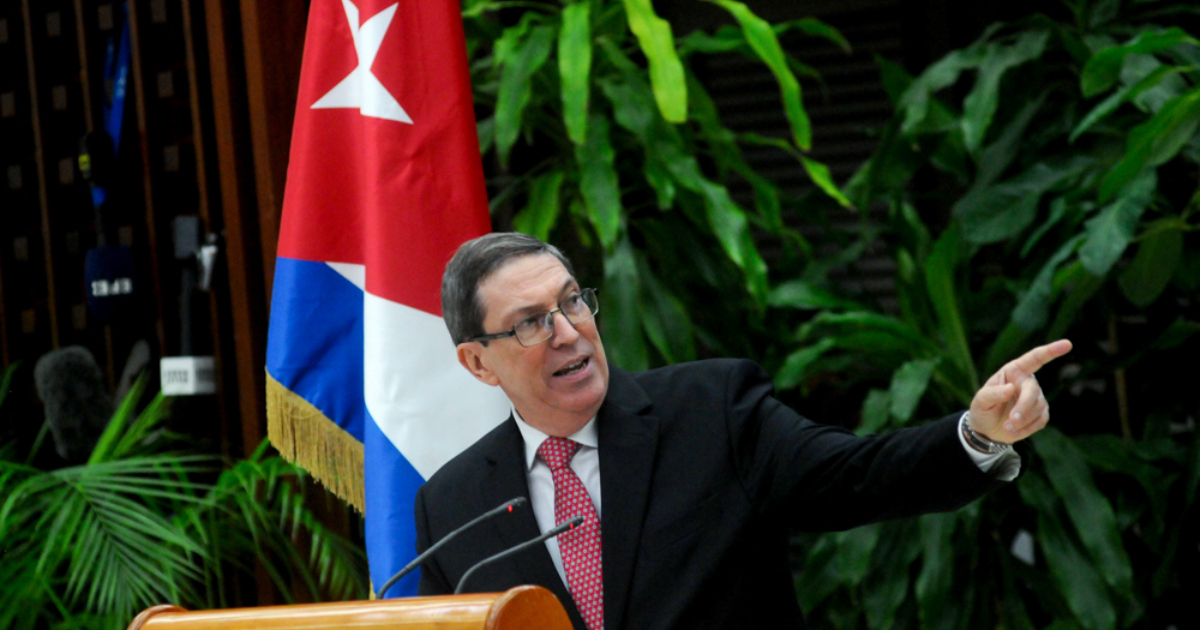
The Cuban Foreign Minister Bruno Rodríguez Parrilla resorted to the rhetoric of sovereignty on Saturday to reject any opinions from Washington regarding Havana's internal decisions.
The message posted on his X account came a day after the government itself admitted the partial failure of its economic model to the National Assembly.
"The U.S. government, the executioner of collective punishment against the Cuban people, has no political, legal, or moral authority to judge the steps we are taking," wrote the Minister of Foreign Affairs.
Rodríguez went further and even dismissed the idea that Washington has the right to comment on internal reforms on the island.
"Your opinion on what needs to be done to overcome old deficiencies and adapt our indigenous socialist model to the new national and international realities doesn't matter either," Rodríguez said.
The message concluded with a statement of principles: "Cuba is beyond the borders of the United States. Cuba has conquered, defends, and will always defend its sovereignty with great effort and full determination, and it rejects, with equal resolve, any foreign interference in its internal affairs."
On Thursday, the National Assembly of People's Power held an extraordinary session in which Prime Minister Manuel Marrero Cruz presented 176 economic reform measures organized into 23 strategic axes, including the authorization of private banking, private exchange houses, greater openness to foreign investment, and the elimination of the cap of 100 workers for micro, small, and medium enterprises (mipymes).
Marrero acknowledged contradictions in the new measures before lawmakers, in what the government presented as the largest attempt at structural reform since the Special Period.
The response from Washington was immediate: the U.S. described the reforms as "superficial smoke signals."
Rodríguez's speech follows a pattern that repeats throughout 2026. In January, he stated that the Cuban people are willing to "give their lives" to defend sovereignty against Trump's threats.
In March, it was declared that Cuba accepts a "serious and responsible dialogue" with the United States, but only without interference in its internal affairs. In May, it was reported to the UN about a possible military aggression and it was warned that the sanctions had reduced Cuba's energy imports by between 80% and 90%.
The pattern is consistent: every time the internal crisis intensifies, the chancellor ramps up the narrative of confrontation with Washington, shifting the focus towards the embargo and sovereignty just as the government itself implicitly acknowledges that the economic model is not working.
Filed under: