
Related videos:
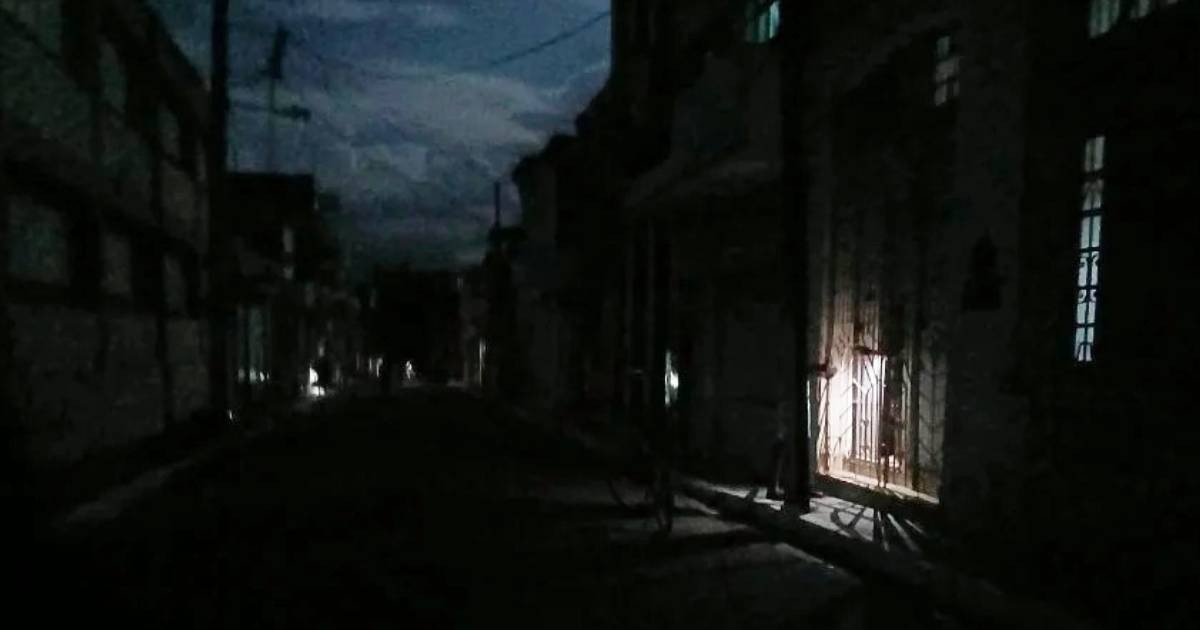
A failure in the transmission line between Rente and Santiago de Cuba left the entire province of Granma without electricity this Tuesday, after a voltage drop triggered the automatic shutdown of the 110 kV line that supplies power to the province, as reported by the Granma Electric Company.
The state entity confirmed that "the technical teams of the Electric Union are working on identifying and correcting the failure to restore the supply as soon as possible."
The incident occurs at a time of extreme fragility for the Cuban electrical system. This Tuesday, the national generation deficit reached 1,709 MW, with a mere availability of 1,080 MW compared to a demand of 2,790 MW.
Granma is one of the provinces most affected by the energy crisis in 2026.
Some circuits have reported outages of up to 72 consecutive hours, and local residents have publicly demanded "at least three hours of electricity" from local leaders.
The transmission infrastructure in eastern Cuba has experienced a series of collapses.
In February 2026, the shutdown of the Felton and Renté thermoelectric plants triggered a massive blackout that affected Holguín, Granma, Santiago de Cuba, and Guantánamo.
That same month, the disconnection of the 220 kV substation in Holguín left the entire eastern region in a state of permanent vulnerability.
On March 16, 2026, Cuba experienced a total national blackout that lasted 29 hours and 29 minutes, and on May 14, the National Electric System collapsed again with a record deficit of 2,113 MW.
The root of the problem is structural: around 60% of the generating units in the eight thermoelectric plants in the country are out of service, and Cuba only generates a third of the electricity it needs to meet national demand.
Although Granma has four solar parks, their generation is intermittent and depends on an initial signal from the grid to start up, so they cannot compensate for the collapse of the grid when it completely fails.
The response from local authorities of the Communist Party has been widely criticized: in the face of prolonged blackouts, the first secretary of the PCC in Granma, Yudelkis Ortiz, chose to send mobile cinema to communities without electricity, a measure that many Cubans deemed inadequate and out of touch.
The Cuban government warned in December 2025 that the current year would be challenging due to the deterioration of the energy system, but the magnitude of the crisis has exceeded even those bleak projections: the country has experienced at least seven total system collapses in the last 18 months.
Filed under: