
Related videos:
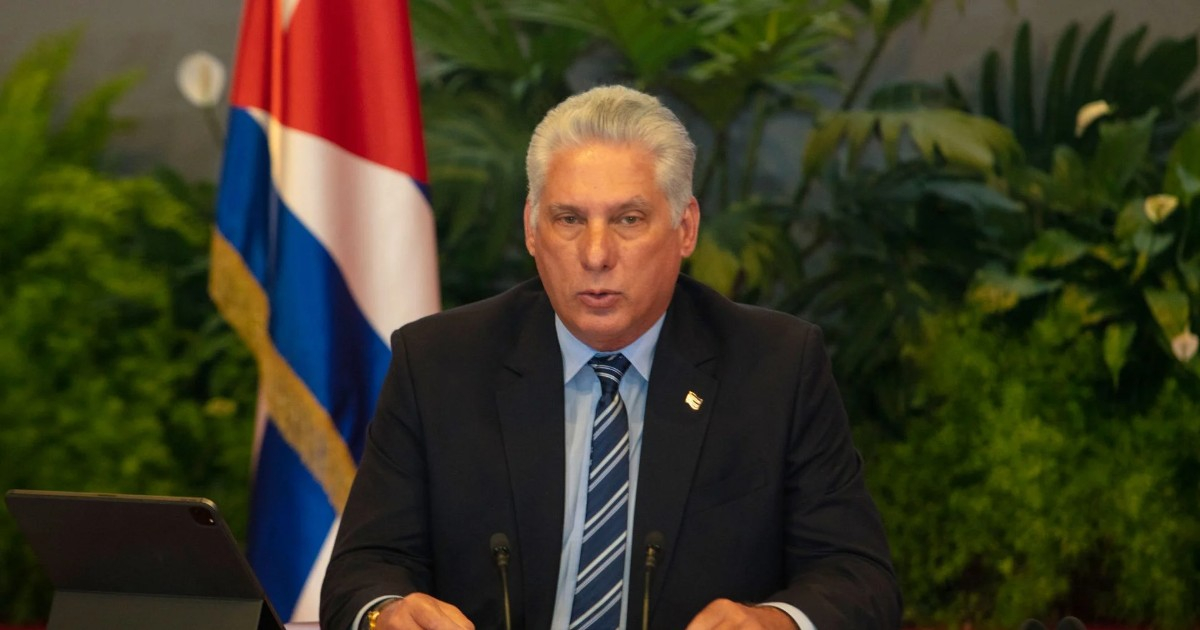
Miguel Díaz-Canel published a thread on his social media this Wednesday, in which he accused Washington of waging a "ruthless war" against Cuba and asserted the regime's ability to remain standing despite the sanctions, in a message that coincided with a new round of restrictive measures imposed the same day by the Trump administration.
In the thread posted on X and Facebook, the Cuban leader stated that "the aggression from the U.S. against Cuba is relentless and intensifies in the face of the impotence of not seeing us defeated."
Díaz-Canel described the U.S. measures as deliberate attacks on "sources of income, access to financial pathways, fuel supplies, and technology transfers," with the aim of "depriving the country of its ability to meet the fundamental needs of our people."
The message concluded with a challenging phrase directed at Washington: "The U.S. government relies on the belief that no country can function and survive under such relentless warfare. The effect is concrete and brutal, of that there is no doubt; but they are surprised by our capacity to resist and create."
The statements come in the context of the most intense pressure escalation on Cuba since the 1990s.
Since January 2026, the Trump administration has imposed more than 240 sanctions against the island, supported by two executive orders: 14380, dated January 29, which established tariffs and secondary sanctions on those who supply oil to Cuba, and 14404, signed on May 1.
On June 4th, the Department of the Treasury directly sanctioned Díaz-Canel himself, his wife Lis Cuesta Pedraza, his stepson Manuel Anido Cuesta, Raúl Castro, and his son Alejandro Castro Espín, as well as five key Cuban entities, including the Ministry of the Revolutionary Armed Forces and the Committees for the Defense of the Revolution.
This Wednesday, the US imposed a new round of sanctions against five additional Cuban entities and one person linked to the island, according to CNN en Español.
The rhetoric of resistance from Díaz-Canel contrasts sharply with the devastating reality faced by the Cuban population. Cuba is experiencing power outages of up to 22 hours a day and an electricity generation deficit that exceeded 2,174 MW in May, when the regime confirmed that the island had run out of diesel and fuel oil reserves.
The UN declared the situation a humanitarian emergency in April 2026. More than 96,000 surgeries have been postponed, one million people rely on tanker trucks for water supply, and 33.9% of households are experiencing chronic hunger.
The public stance of Díaz-Canel, however, has not always been so combative. On March 29, before the Plenary of the Communist Party, the leader himself acknowledged that "resistance alone is not enough" and admitted that there are "obstacles that do not come from outside or from the blockade."
On June 6, at the Karl Marx Theater during Raúl Castro's 95th birthday, Díaz-Canel raised a warlike tone by warning: "If the homeland is attacked, we will respond in legitimate defense. And if they attempt to enter... there will be a determined and firm confrontation."
Filed under: