
Related videos:
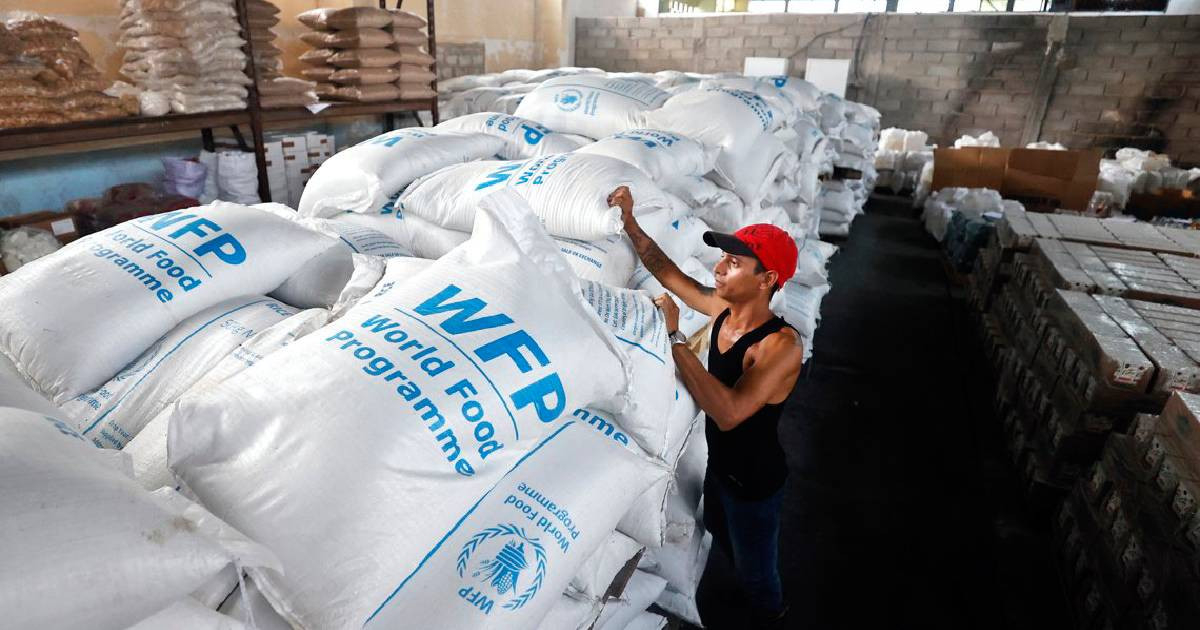
The foreign minister Bruno Rodríguez Parrilla celebrated this Friday the approval of the Strategic Plan of the World Food Program (WFP) for Cuba 2026-2030 as a "resounding victory," which includes 116 million dollars in food assistance and was backed by 29 votes in favor and only two against in the Executive Board of the organization.
"Despite its immense and spurious pressures, the U.S. was isolated in the Executive Board of that UN body, which approved, by 29 votes in favor and only two against, the Program that will allow for the continued cooperation of that agency with Cuba during the period from 2026 to 2030, for an amount of 116 million USD for food security," highlighted on his X account the head of Cuban diplomacy.
The voting took place in Rome during the annual session of the PMA Executive Board, held from June 23 to 26. According to the regime, the United States attempted to exert pressure to block the program but found itself isolated alongside Morocco as the only vote against it.
The Director of International Organizations at the Cuban Foreign Ministry, Alejandro González Beheramás, took advantage of the outcome to criticize Washington: "The U.S. government is not the least bit concerned about the fate of the Cuban people."
However, the citizen reaction on social media was one of rejection and sarcasm towards the regime's triumphalist narrative. Numerous Cubans questioned whether that aid truly reaches those who need it.
"What percentage of those foods will go to the Cuban family's plate, donated, not sold? You are starving the Cuban people; you don't let them produce, you don't let them fish, you don't let them sell," wrote a user.
Another pointed out, "A resounding victory for the Cuban dictatorship begging for crumbs around the world to see who takes pity, because they are a failed state unable to produce even pumpkins."
Doubts about the actual destination of donations have documented precedents. According to a study by the NGO Food Monitor Program, beans donated by Mexico have appeared in state stores selling in freely convertible currency at prices of up to 43 dollars per 30-kilo bag.
Díaz-Canel denied any diversion in March, asserting that "what is given to the population in food has never been charged".
The food reality in Cuba contradicts the festive tone of the regime. The Minister of Food Industry admitted in June that so far this year, oil, chicken, and yogurt have not been distributed in the regulated basket.
Almost 97% of the population lacks adequate access to food, and about 34% of households reported that a member went to bed hungry in the last 30 days.
The crisis is worsening due to the energy collapse. In April, the UN warned that 170 containers with approximately 6.3 million dollars worth of humanitarian supplies remained undistributed in Cuba due to a lack of fuel. The resident coordinator of the organization on the island, Francisco Pichón, alerted that the country had been "without sufficient fuel for more than three months."
This is not the first multilateral program that the regime presents as a diplomatic triumph. The Executive Board of Unicef approved its Country Program Cuba 2026-2030 in February, also with the United States voting against it, and the UNDP did the same days earlier.
In all cases, the pattern is the same; the regime exploits Washington's isolation in multilateral forums while the population endures power outages of up to 20 hours, structural shortages, and an economy that has experienced a 23% decline since 2019.
The European Union allocated 2.85 million euros to the WFP in May to assist over 815,000 Cubans affected by Hurricane Melissa, while the UN faces a deficit of about 68 million dollars in its humanitarian plan launched in March to support two million people.
Filed under: