
Related videos:
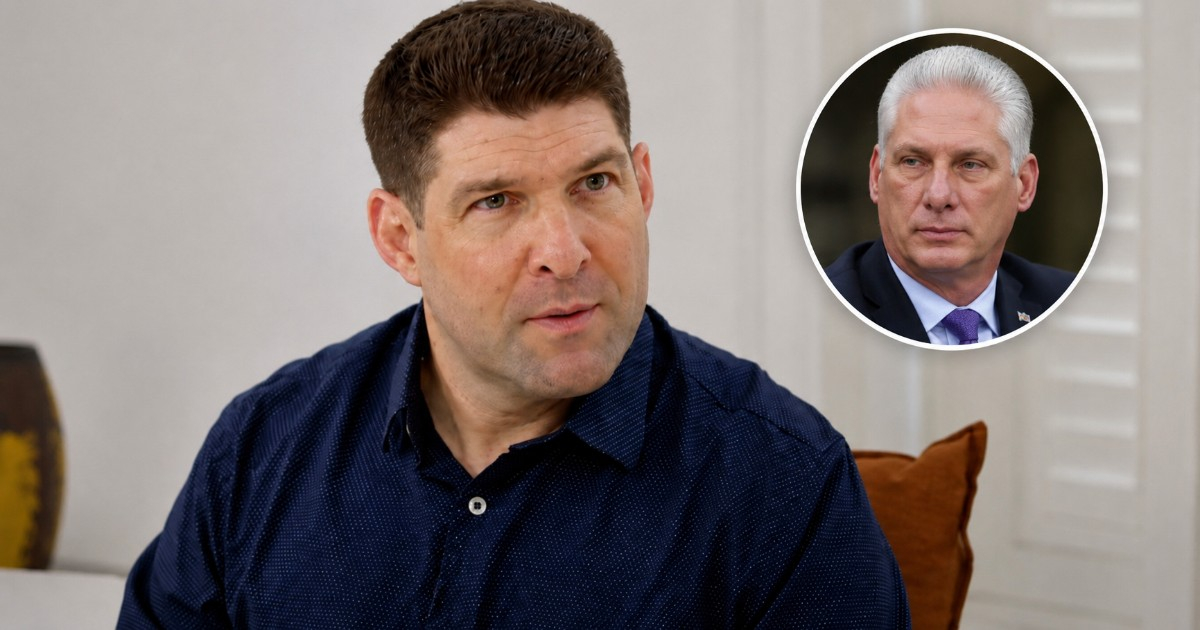
In an extensive exclusive interview granted to USA TODAY over two days in June, Raúl Guillermo Rodríguez Castro, the 42-year-old grandson of Raúl Castro known as "El Cangrejo," barely mentioned the formal president of Cuba, Miguel Díaz-Canel, three times, and when he did, he referred to him with a diminutive that says it all: "Miguelito."
The detail, captured in the published on Monday, does not appear to be a gesture of affection between equals, but rather an x-ray of the real power in Cuba: Díaz-Canel is a position appointed by the grandfather, and the grandson treats him accordingly.
Díaz-Canel was presented as the sole candidate for the presidency in April 2018 by the National Assembly, following the instructions of Raúl Castro, and he received 603 out of 604 votes without direct popular election. He is the first Cuban leader not to bear the Castro surname since 1959, but his real margin of power has been questioned from day one.
The interview with USA TODAY seems to confirm that hierarchy with concrete data: No member of the Trump administration has maintained direct dialogue with Díaz-Canel. Instead, it is Rodríguez Castro, who occupies his grandfather's former office in the Palace of Conventions in Havana, who reviews classified reports from the Ministries of Interior, Foreign Affairs, and Armed Forces every morning from five o'clock, and who offers to negotiate with Washington.
"If appointed, I can negotiate with anyone selected by the U.S. government. Given the opportunity, of course, with Trump," Rodríguez Castro stated in the interview.
In official documents, El Cangrejo is listed as responsible for the security of the main leaders of the regime. In practice, according to the same source, it "advises on investment opportunities, negotiations, and public policy decisions in any area that the leaders with official roles —such as President Miguel Díaz-Canel— deem necessary."
The formula is revealing: Díaz-Canel appears in parentheses, as an example of those who hold "official functions." El Cangrejo, without an official position, is the one who determines the scope of that advisory role.
Rodríguez Castro insists that he works "in harmony" with Díaz-Canel and that both "share the same vision." However, the dynamics he describes portray the president as an administrative manager, rather than as the decision-making center of the country.
Díaz-Canel himself publicly acknowledged in March 2026 that it is Raúl Castro who leads the dialogue with the United States, an admission that reinforces the picture drawn in the USA TODAY interview.
The Trump administration has sanctioned Díaz-Canel, but not Rodríguez Castro, a disparity that analysts interpret as a deliberate signal that Washington recognizes the grandson as a valid interlocutor. El Cangrejo held meetings with Secretary of State Marco Rubio in February 2026 and was present during the visit of CIA Director John Ratcliffe to Havana in May 2026.
"He is the favored grandson," summarized Frank Mora, professor of Politics and International Relations at the University of Florida International, in statements collected by USA TODAY.
The emerging pattern is that of a dynastic monarchy with republican vocabulary: the formal president is "Miguelito," while the real power is held by the one who carries the Castro surname.
Filed under: