
Related videos:
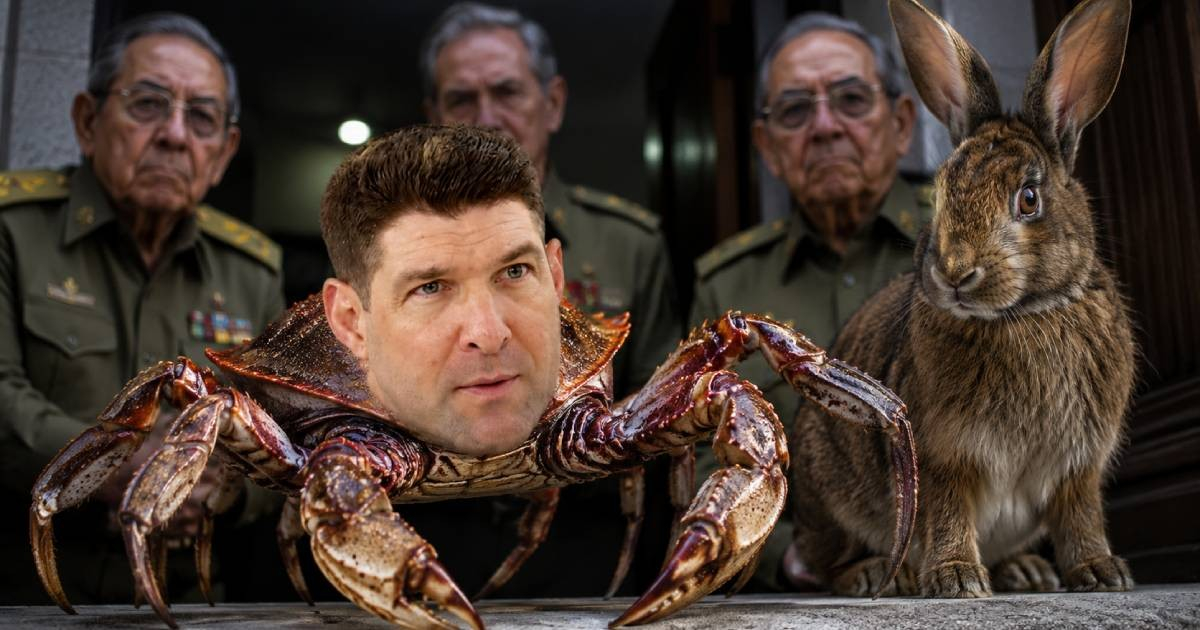
The Cuban playwright Irán Capote published a lengthy reflection this Monday on the interview granted by Raúl Guillermo Rodríguez Castro, the grandson of Raúl Castro and known as "El Cangrejo," to USA Today, questioning both the content of his statements and the role he plays within the power structure in Cuba.
The post, widely shared on social media, coincided with the third total collapse of the National Electric System (SEN) recorded this year, a contrast that Capote used to emphasize the gap between official rhetoric and the reality faced by millions of Cubans.
The writer assures that he read the interview "unprejudiced," but he ended up finding a series of contradictions that are hard to ignore.
He was particularly struck by Rodríguez Castro's claim that he has never been interested in politics, despite presenting himself as a figure capable of negotiating directly with the U.S. President Donald Trump and participating in decisions regarding the future of the country.
"He says it so lightly that he doesn't realize he hasn't involved himself in politics because he himself is the image of the politics that has led us to chaos," he wrote.
Capote also questioned the legitimacy with which the grandson of the former president is being portrayed as a decisive figure for the future of Cuba.
"The Crab, who was not voted for by the constituency, the municipal assembly, the provincial assembly, the National Assembly, or any other existing assembly, holds the future of our country in his hands," he stated.
The playwright defined this reality as a "silent monarchy," where—according to him—power and privileges are transmitted through family ties rather than by the decision of the citizens.
He also mocked the image that Rodríguez Castro projects in the interview, where he appears dressed in designer clothing and footwear, showcasing a gold chain with the initials of Fidel and Raúl Castro.
"The Crab, claiming its right to own the future of the country by belonging to the silent monarchy, emerges from the cave where it has been hidden its entire life to confirm, with the beauty of its blue eyes, its Hermès sneakers, and designer clothes, that this country is meant to enrich a privileged few," he wrote.
In that context, the image of an heir to power surrounded by privileges generated numerous reactions on social media.
Among them, Ulises Toirac, the comedian, stood out as he questioned the concept of "Revolution" used by Rodríguez Castro to justify a possible political role.
“Which Revolution decides who should step forward and who should step back?”, he wrote.
Thousands of users also commented on the interview with messages reflecting social discontent, including: "Let him live a month like us."
Capote, whom the UNEAC of Pinar del Río prevented from holding a teaching position in 2022 for reasons it described as ideological, concluded his reflection with the phrase that ultimately became the most shared from his publication: "Do not be surprised when they pass off crab as hare."
And he concluded, sarcastically: "So that all the children can have Hermès shoes."
Filed under: