One of the major fallacies of Cuban socialism was to make people believe that poverty was solely the result of the American embargo. However, history shows that economic deterioration began long before the sanctions reached their current level. The root of the problem lies in a model that subordinated all economic activity to a single objective: preserving political power.
From the early years of the 'Revolution', private initiative disappeared. Thousands of small merchants, farmers, industrialists, and independent professionals were absorbed by a state that promised to better manage the nation's wealth. What followed was exactly the opposite.
When the government becomes the sole employer, the only investor, the only exporter, and the only importer, competition disappears. Without competition, there is also no innovation. Without innovation, productivity declines. And when productivity vanishes, poverty stops being an accident and becomes a permanent system.
In Cuba, the salary no longer reflects the fruits of labor. It has become a political allocation. The citizen no longer thrives through their own effort, but rather through the permission of the State. This dependency transforms the worker into a subject.
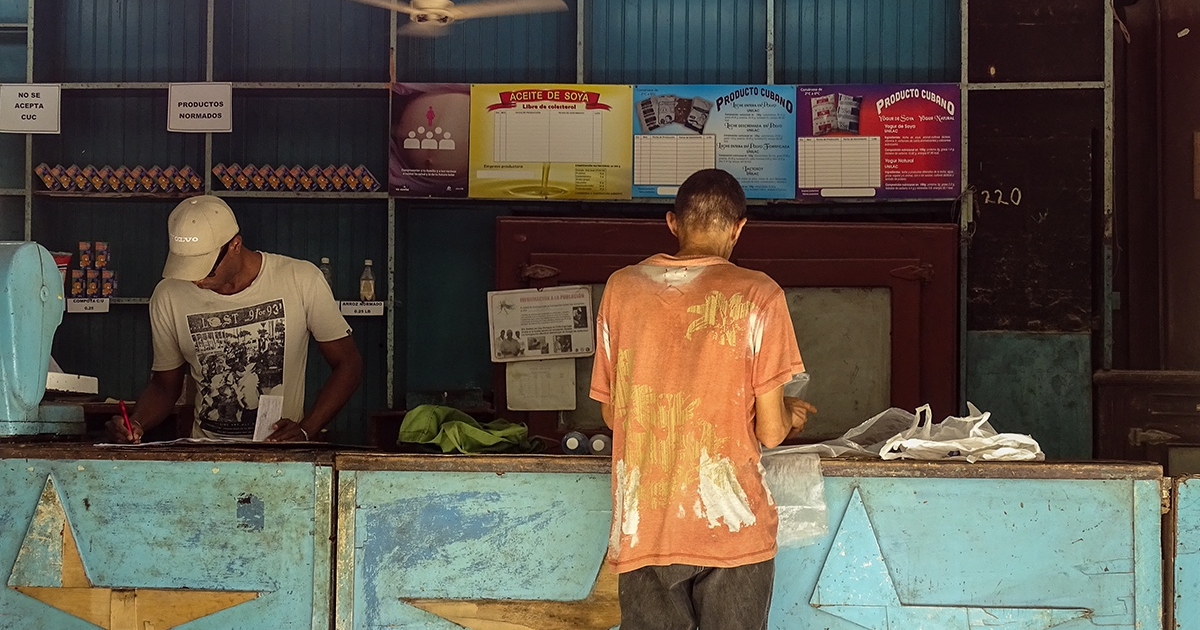
The ration book perhaps stands as the most evident symbol of that relationship. It was created as a temporary measure in 1962 and, more than six decades later, it still exists. What was meant to be an emergency solution has turned into a mechanism for managing scarcity.
To that food dependency was added an even deeper one: financial dependency. For years, the Cuban economy survived thanks to enormous foreign subsidies. First the Soviet Union; later Venezuela. Instead of using those resources to modernize national production, the regime consolidated an unproductive model sustained by external aid.
Every time an international benefactor disappeared, the Cuban economy entered a new crisis. This happened after the Soviet collapse and occurred again with the collapse of Venezuelan subsidies. History shows that a system unable to sustain itself inevitably ends up depending on others.
Centralized planning also devastated Cuban agriculture. A country that for decades was an exporter of sugar, coffee, and numerous agricultural products ended up importing a large portion of the food it consumes. The land did not cease to produce due to a lack of fertility; it stopped producing because those who worked it lost the incentive to do so.
The economy stopped responding to the needs of the citizens and began to cater exclusively to the priorities of the political apparatus. The result was a society where food, medicine, transportation, housing, and even hope are in short supply.
Mass emigration is now the most compelling evidence of economic failure. Millions of Cubans have left the island in search of what their own country has stopped providing them: opportunities.
Paradoxically, the very system that condemned private property for decades now relies on remittances sent by those who emigrated to market economies. It is precisely the Cubans who thrive under different economic models who support, through their efforts, a significant number of families that remain on the island.
The great lesson for Latin America is clear: when the State concentrates all economic power, it inevitably also concentrates political power. And when citizens depend on the government for employment, food, entrepreneurship, or prosperity, freedom begins to turn into a privilege rather than a right.
The Cuban experience demonstrates that no nation achieves social justice by destroying economic freedom. Prosperity does not stem from absolute control, but rather from strong institutions, stable rules, legal security, private initiative, and a citizenry capable of building its own destiny without seeking permission from those in power.
The economy should be a path to citizen independence, never a tool to ensure obedience. This is perhaps one of the most important lessons that Cuba offers to all of Latin America today.
Related videos:
Filed under:
Opinion article: Las declaraciones y opiniones expresadas en este artículo son de exclusiva responsabilidad de su autor y no representan necesariamente el punto de vista de CiberCuba.