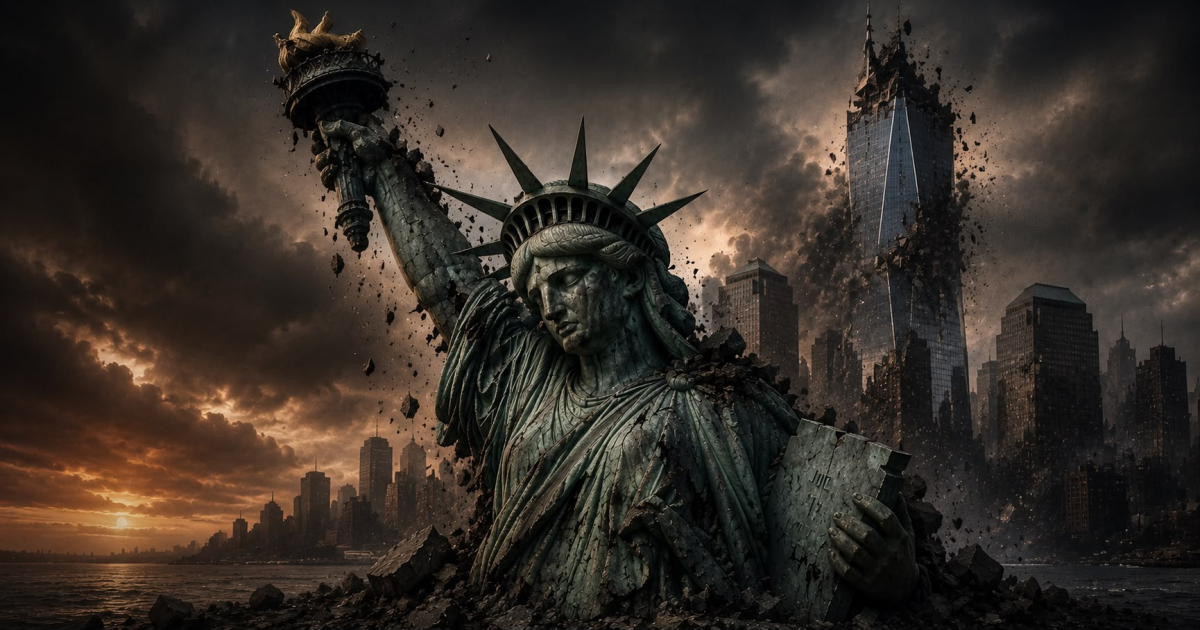
Sheikh Rashid bin Saeed Al Maktoum, one of the architects of Dubai's development, is attributed a quote that holds a profound historical warning: "My grandfather rode a camel; my father rode a camel; I drive a Mercedes; my son drives a Land Rover; my grandson will drive a Land Rover, but my great-grandson will ride a camel again." The lesson is clear: the prosperity earned by generations of sacrifice can be lost when their descendants forget the cost of achieving it.
Difficult times often produce strong men. Strong men create times of security and abundance. Easy times, when not accompanied by discipline and responsibility, produce weak men. And weak men allow difficult times to return. Then energetic, brave, and self-sacrificing individuals emerge once again. Thus the cycle repeats itself.
It is not a mathematical law. A prosperous society can educate strong citizens. However, history shows that comfort, when it becomes a value greater than freedom and dignity, weakens nations. Great nations and empires were built by resilient generations, capable of enduring hardship, taking risks, and thinking beyond their immediate well-being. They did not only ask how much it would cost to win; they also considered how much it would cost to be defeated.
These generations build strong institutions, cities, industries, and systems of protection. Life becomes easier. The children do not suffer the same shortcomings as their parents, and the grandchildren can hardly imagine their sacrifices. That progress is a victory, but it can also sow the seeds of decline. When a society forgets how it conquered its freedom and greatness, it begins to believe that freedom and well-being are eternal. When it forgets the price of its security, it deems it unnecessary to defend it.
Then there are citizens who are more alarmed by the rise in gasoline prices than by the growth of an enemy power; who reject any sacrifice, even if national survival depends on it; who wish for rights without responsibilities, peace without defense, and prosperity without effort. A nation that thinks this way may retain its wealth for some time, but it begins to lose its will.
This is the challenge that the United States and its Western allies face today. They must understand that the Iranian fundamentalist regime poses a threat that will not vanish through endless concessions. They must decisively dismantle its capacity for aggression, its terrorist expansion, and its projects for regional domination. This is not about attacking the Iranian people, who are also victims of the dictatorship, but rather about preventing a fanatical tyranny from amassing power to blackmail, destabilize, and destroy.
Washington and its NATO allies must also recognize the danger that Russia and China pose to their interests, their security, and the international order based on freedom. Authoritarian powers observe the divisions within democracies, study their fatigue, and calculate how far they can advance without encountering resistance. Against them, weakness does not produce peace; it produces temptation.
Western Europe must draw the same lesson. The countries of the European Union and the United Kingdom need to unite, increase their defense budgets, strengthen their military industries, and prepare their societies.
European security cannot indefinitely rely on American sacrifice. Free peoples must be able to defend their independence.
Therefore, supporting Ukraine is both a strategic and a moral obligation. Ukraine is fighting not only for its territory but for the principle that no powerful nation has the right to destroy another and alter its borders by force. Abandoning it out of fatigue, fear, or economic cost would send a dangerous message to Moscow and other dictatorships: that democracies can be defeated if aggression is prolonged.
The United States also has a decisive responsibility in the Western Hemisphere. It must help consolidate the democratization of Venezuela and not forget the need to make the democratization of Cuba possible. For more than six decades, the Cuban communist regime has been an ally of the main adversaries of the United States, has exported methods of political control and has contributed to regional destabilization. A hostile dictatorship located ninety miles from its shores can never be considered a minor or distant problem.
The American challenge is also internal. The advance of the far left and other movements opposed to freedom, democracy, and Western values threatens to erode the foundations that made the nation great. No power can overcome its external adversaries if it first loses confidence in its history, its institutions, and the right to defend its civilization.
The United States and Europe will retain their freedom only if they regain discipline, courage, and the willingness to make sacrifices. When a people fears sacrifice more than defeat; when they are more concerned about temporarily preserving their comforts than about defending their security and freedom, decline ceases to be a remote possibility and begins to loom on the horizon.
Difficult times will return, sooner or later. The decisive question is whether they will find weak and resigned people or new generations of strong men and women, ready to face them.
Related videos:
Filed under:
Opinion article: Las declaraciones y opiniones expresadas en este artículo son de exclusiva responsabilidad de su autor y no representan necesariamente el punto de vista de CiberCuba.