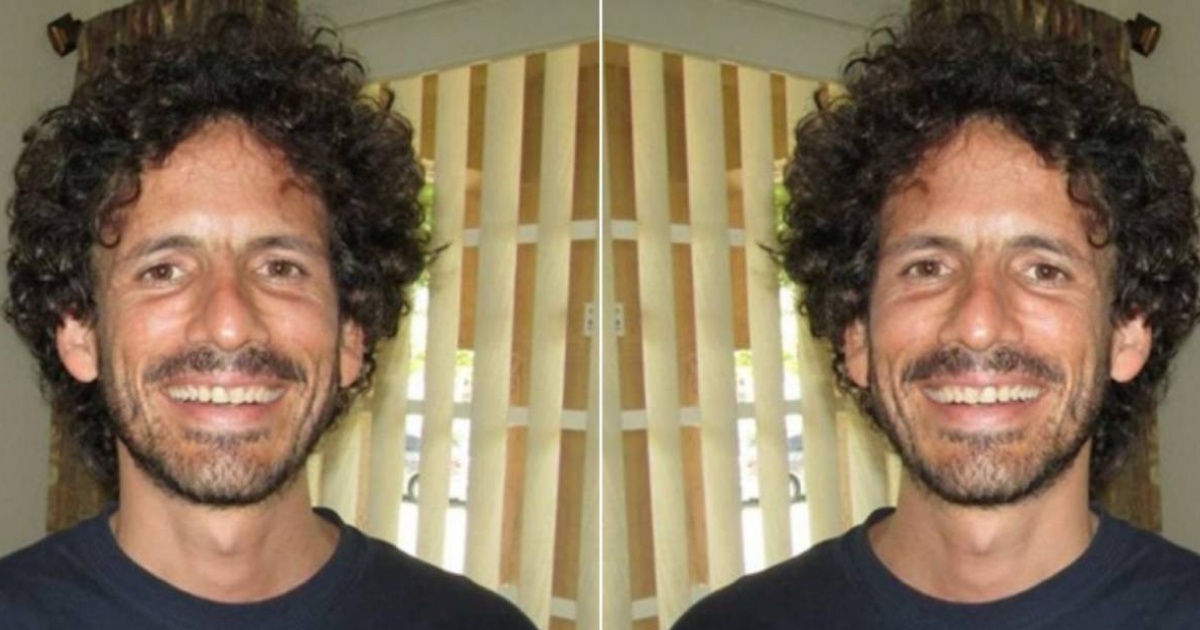
The journalist, film director, and Cuban activist Boris González Arenas asserts that the ecosystem of independent media developed over the last three decades already serves as the foundation upon which a free press will be built in a democratic Cuba. He outlined this in a detailed interview published by CubaNet, as part of the project "Cuba: rebuilding and reinventing," by Cuba Siglo 21.
González Arenas, an art historian, filmmaker, and independent journalist with over 16 years of experience, addressed issues ranging from the dismantling of the information monopoly held by the Communist Party of Cuba (PCC) to the ethical risks that the press will face in a potential transition process.
"I believe that the foundations for this dismantling have been in place for many years because Cuban society, both on and off the Island, has fortunately been able to create various ways to conduct journalism," he stated. He cited publications like El Toque, Diario de Cuba, 14yMedio, El Estornudo, Hipermedia, and CubaNet as examples. However, he specified that what is still lacking is legalization: "What is missing is the end of the communist monopoly so that these media can gain legitimacy."
That monopoly has constitutional and regulatory backing. Article 55 of the 2019 Cuban Constitution prohibits private ownership of mass media, a framework that the regime reinforced with the Decree 160/2026, published on July 28 and effective since this Monday, which prohibits non-state actors from engaging in journalism or operating news agencies.
Regarding the fate of state media —Granma, Cuban television, provincial broadcasters—, González Arenas was straightforward in his conversation with journalist Camila Acosta: "I believe that the extensive network of media developed by the PCC won't make much sense going forward." Nonetheless, he advocated for the existence of an impartial public television aimed at citizen oversight and civic education. "Cubans are unable to grasp the significant lack of education we have regarding democracy, its functioning and value," he pointed out. He added that thousands of workers from state media could be integrated into these new spaces, but with one non-negotiable condition: "Public media cannot be partisan; they must not lean left or right; they must be impartial."
Regarding the safety of journalists during the transition, González Arenas was emphatic: “The transition is a delicate moment, and it is doubly important that international organizations are observing because we are all on the regime's blacklist; in other words, eliminating us is undoubtedly one of the first actions they would like to take.” He mentioned Reporters Without Borders, Article 19, and the Inter-American Press Association as existing mechanisms.
According to the 2026 World Press Freedom Index, Cuba ranks 160th out of 180 countries, and the ICLEP documented 114 attacks against journalists just in January 2026, of which 69 were arbitrary detentions, an increase of 430.8% compared to the same month of the previous year.
González Arenas himself has firsthand experience of that repression. The regime prevented him from leaving the country last February when he was traveling to the United States to participate in the Edward R. Murrow/IVLP program on artificial intelligence and journalism, and he faced a permanent exit ban from 2019 to 2024.
When asked about the funding models that could sustain independent journalism in a democratic Cuba, González pointed out that while public support may be necessary, advertising will continue to be a fundamental source of income. In this context, he cited CiberCuba as an example, stating that it "is a reference media that operates based on online traffic, not on international funding."
Regarding internet access, González Arenas deemed its democratization "absolutely essential" and harshly criticized ETECSA: "ETECSA is a barracks disguised as a company […] those who control it are mere front men for the communist regime. And it is GAESA, that enterprise of the regime, that ultimately takes charge and dominates it." He recalled that mobile internet access through data in Cuba was only enabled on December 6, 2018, and that before that date, Cubans relied exclusively on Granma and Juventud Rebelde for information.
Regarding the files from independent journalism as a source for historical memory, González Arenas expressed that "these files will enrich both historians and future Truth Commissions. And, in that sense, there is a very significant danger because almost all our work is online and could be lost."
"The vice that Castroism could leave us as a consequence is to understand journalism as an activity aligned with power groups," warned González Arenas, also cautioning that journalists from official media could infiltrate independent journalism to corrupt it once democracy arrives.
In a future democratic Cuba, "it is important that the State is subject to oversight and is, by necessity, open to the scrutiny of the press," the interviewee concluded.
Related videos:
Filed under: