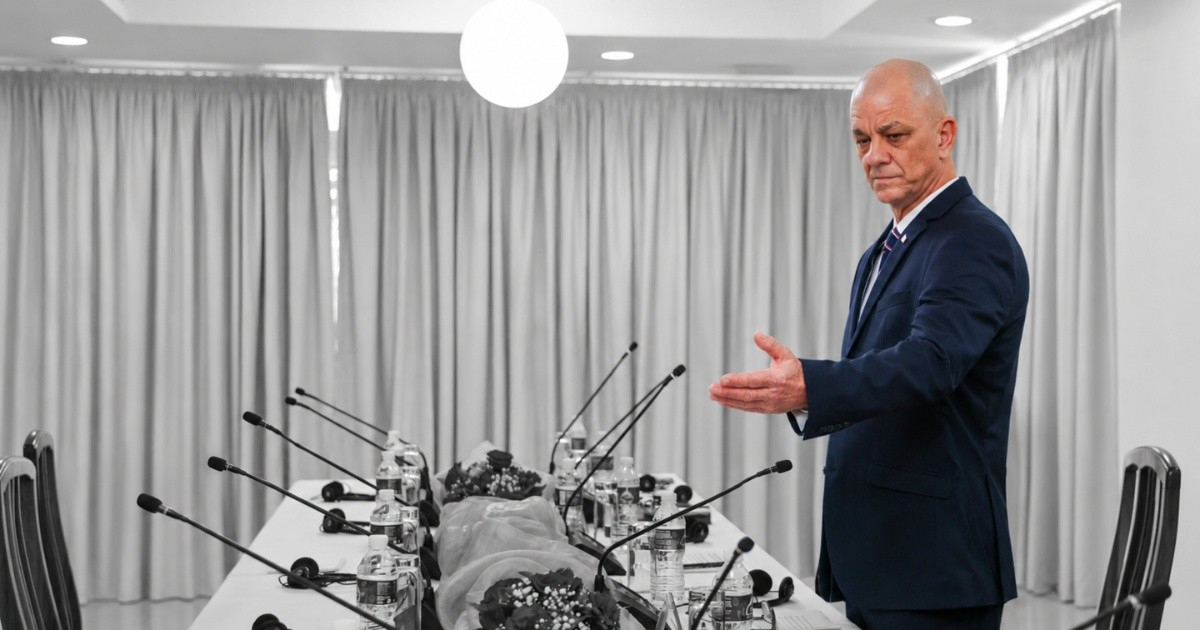
The CIA secretly established a task force dedicated exclusively to Cuba with the aim of coordinating a pressure campaign to force economic, political, and leadership changes on the island, according to a report on Wednesday by The New York Times, citing informed sources regarding the measure.
The group has already started to incorporate case officers specialized in recruiting and managing spies, intelligence analysts, cyber operations specialists, and experts in covert influence operations.
According to the same sources, its creation will allow the agency to "quickly direct more financial, human, and technical resources towards Cuba."
The group's mandate, according to the NYT, is more limited than that of its historical predecessor: "to create fractures within the Cuban political elite, hoping to pressure Cubans to replace the hardline anti-American leaders with more pragmatic ones who are willing to meet Trump's demands."
Unlike the task force that in 1961 oversaw the training and equipping of Brigade 2506—the roughly 1,400 Cuban exiles who launched the failed invasion at the Bay of Pigs—the current one does not have organized Cuban partners.
The revelation comes a day after Politico reported that the U.S. had strengthened its intelligence presence in Cuba with additional personnel and resources over the past few months.
One source described that movement as an expansion of the CIA's "presence" in Cuban territory, while another framed it as part of a broader strategy to compel the regime to concede, although it clarified that Trump "still prefers diplomacy."
The new structure is part of a sustained escalation that Washington has maintained against Havana throughout 2026. In May, the director of the CIA, John Ratcliffe, visited Havana and conveyed to the regime that the U.S. would only address economic and security issues if Cuba made “fundamental changes.”
The CIA posted images of that visit on its official X account with the location "Havana, Cuba," a gesture described as unusual for the agency.
Shortly thereafter, the Department of Justice filed federal criminal charges against Raúl Castro for the downing of two planes belonging to Brothers to the Rescue in 1996, resulting in the deaths of four American citizens.
That same day, Trump publicly declared: "We have the CIA there and Marco there," referring to Cuba and Secretary of State Marco Rubio.
Rubio, of Cuban-American descent, is identified as the main architect of this policy of maximum pressure. A source cited by Politico described him bluntly: Cuba is "a huge priority for Rubio."
Since February 2026, P-8A Poseidon aircraft, RC-135V Rivet Joint, and the MQ-4C Triton drone have accumulated over 150 hours of aerial surveillance around the island, in more than 20 flights, some within less than 64 km from the coast.
The backdrop to all this pressure is the capture of Nicolás Maduro by U.S. forces on January 3, 2026, which halted the flow of Venezuelan oil to Cuba and exacerbated an already severe energy crisis on the island.
The model applied in Venezuela has been identified as a direct reference for the strategy that Washington is now employing against the Cuban regime.
An anonymous source quoted by Politico warned that the intelligence deployment "represents a tactical step that could facilitate an operation of that nature," referring to a potential military action, although other sources emphasized that Washington will use "all conventional tools" before reaching that point.
Related videos:
Filed under: