The Minister of Transport, Eduardo Rodríguez Dávila, will appear this Wednesday on the Round Table to present the so-called "approved transformations for the transport sector," as announced by the official media Cubadebate on its Facebook page.
The popular reaction was swift. Dozens of Cubans flooded the post with irony, skepticism, and frustration, and one question echoed like a chorus: “With what current?”
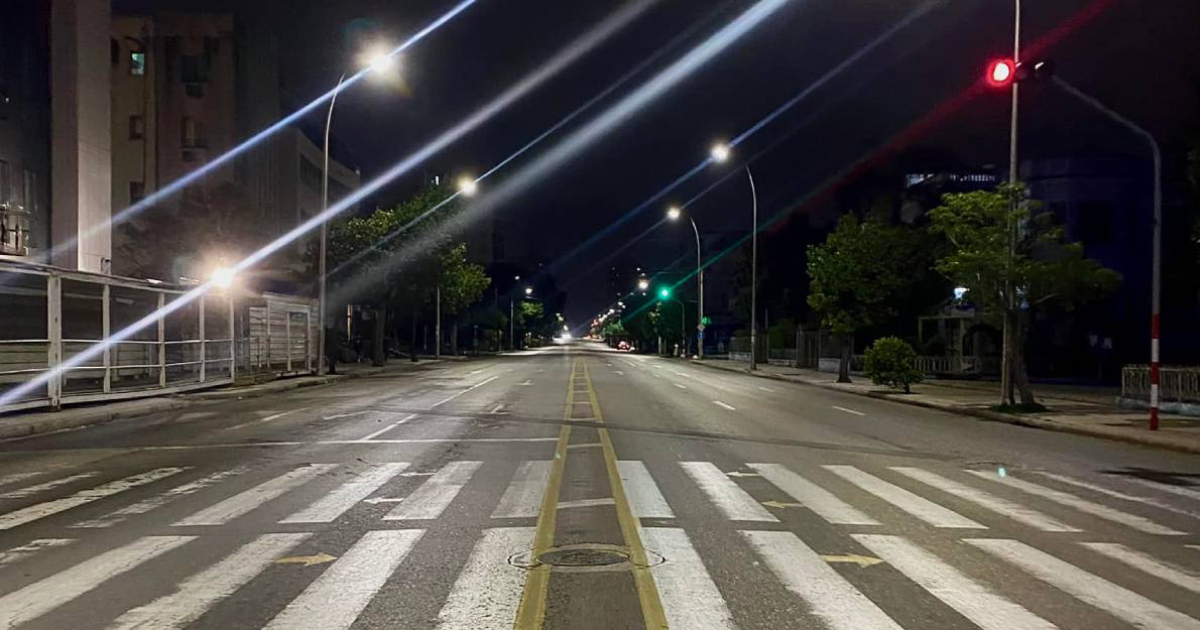
The announcement came on the same day that the electricity generation deficit reached 2,115 MW, with only 926 MW available against a demand of 3,210 MW. D
A few days earlier, Cuba had experienced its sixth total blackout of the National Electric System, with areas that went over 72 consecutive hours without electricity.
"They will see it, along with those who are watching the live filming, because the rest of us have the television as a decorative object in our homes," wrote a user.
Another one requested directly: "Then make a summary and publish it on social media, because when we have connection, we will read it, as there’s no electricity."
The measures to be presented by the minister are framed within transformations 146, 147, and 148 of the package of 176 measures approved by the National Assembly on June 18.
Among the announced changes are the removal of the limit of six vehicle purchases in five years, the doubling of the number of authorized dealerships, and the authorization for non-state entities to assemble and market electric vehicles.
Tax incentives were also established: the special tax for buses and minibuses decreased from 20% to 12%, with additional reductions if they are assembled in Cuba or are electric.
The contrast with everyday reality was hard to ignore. The regime acknowledged in January of this year that public transport only met 42% of the planned targets.
Since June 18, severe cuts to interprovincial routes are in effect: the connections between Havana and provincial capitals are now limited to three departures per week, while destinations such as Manzanillo and Baracoa have been reduced to just one departure per week.
In July, rail operations fell by 74%, and in Camagüey, state transport went from serving 350,000 passengers daily to just 15,000.
In that context, the chivichana —a handmade wooden cart without a motor, constructed from planks, bearings, and a rope as a steering mechanism— became the ironic symbol of the "transformation" that Cubans are hoping for.
"Will chivichanas be circulating? Main transformation: now we're moving on foot," wrote a user. Another was more specific: "The use of chivichanas is strongly approved; 20 boxes of balls will be provided per nucleus, along with the wooden planks."
Skepticism about concrete results was prevalent. "For there to be transformations, there has to be transportation. Is there any already?" asked a commentator.
Another pointed out a contradiction that many shared: "The embargo did not allow for these transformations, but isn't it now more severe? And yet they can make transformations. So, the obstacles were created by you, not the embargo."
A user summarized the accumulated exhaustion of years: "They have been saying for about five years that this is a temporary situation, but something temporary is a short period, not like this. Thank you very much."
Another person recounted their personal situation with concrete figures: "Let's see if the electricity allows us to see something. For the past three years, I haven't been able to travel to Las Tunas, as they charge me 18,000 pesos for the outbound trip and 18,000 for the return."
Related videos:
Filed under: