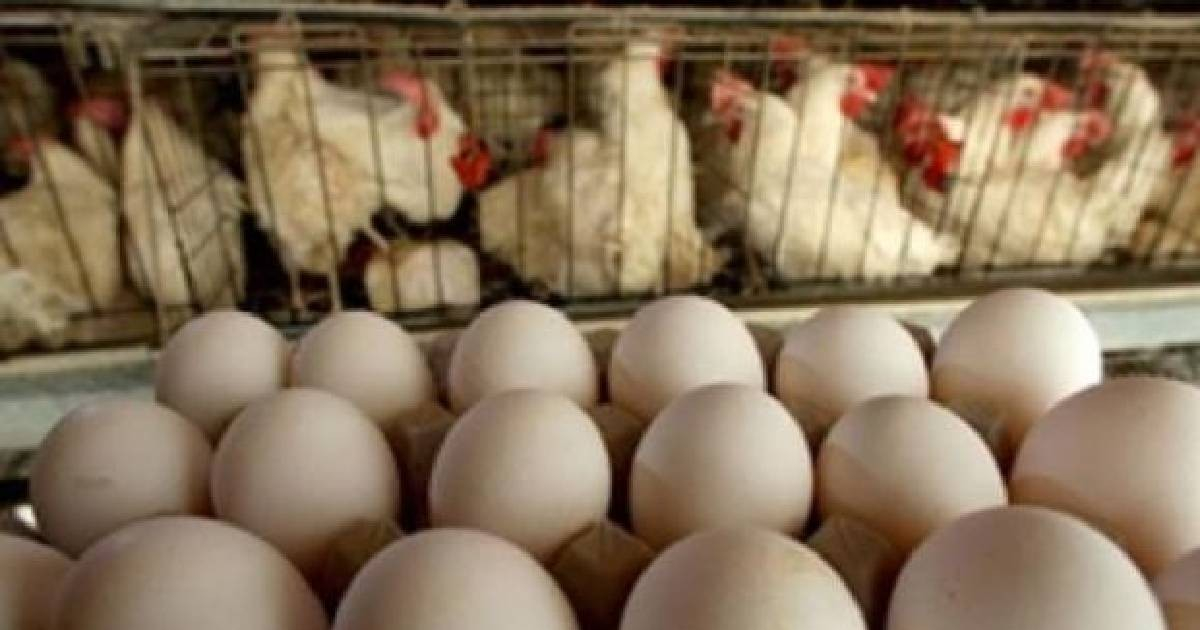
The Guantánamo Poultry Company claims that it is in a phase of "productive diversification" as a successful response to the crisis in the sector, but the images tell a different story.
In a report from the state channel Canal Caribe, alleged advancements were mentioned; however, what the report actually reveals is that the entity has stopped producing eggs.
According to the report, the company is no longer focusing its efforts on poultry production but rather on the breeding of sheep, rabbits, and pigs, the development of larger livestock, beekeeping, and the cultivation of vegetables, rice, and root crops.
A spokesperson for the entity, identified as Mejías Osorio, stated that "the poultry company in Guantánamo has been diversifying its production into other activities that do not require imports."
The same official detailed that "in small livestock we have sheep, we have rabbits, we have pigs, and today we are intentionally working with beekeeping."
In addition, he announced the recent inauguration of a mini industry for meat products aimed at social consumption—education and public health—a dedicated butcher shop, and an institutional restaurant, all presented as an achievement "in support of the population's nutrition."
What the official report omits is the extent of the collapse that explains this conversion. Cuba went from producing 5 million eggs daily in 2020 to barely 2.2 million in 2023, as acknowledged by the Minister of Agriculture, Ydael Pérez Brito.
In 2024, more than 1.3 million laying hens died across the country due to a lack of feed, and the official press admitted that "egg production is the most affected agricultural sector."
The drop is even more dramatic in historical figures: national production plummeted from 2.717 billion eggs in 1991 to just 385 million in 2024, with the loss of 5.4 million laying hens in just five years, according to data collected by the specialized publication Agrimidia.
In Ciego de Ávila, production fell from 120 million eggs in 2016 to just 16 million by the end of 2024, a decrease of 87%.
In Pinar del Río, poultry production in 2025 reached only 24% of the levels seen in 2019. And in August of that same year, egg production in Cuba hit historic lows.
To sustain the minimum social consumption—programs for health, education, and maternal and child care—Cuba imports around 16.5 million eggs per month from the Dominican Republic, Brazil, and the United States. In the informal market, an egg has reached prices between 90 and 120 Cuban pesos, and a carton of 30 units has exceeded 3,000 pesos, an amount that surpasses the monthly pension of a retiree.
The regime attributes the shortages to the U.S. embargo, but the crisis is a result of decades of structural dependency on a state model that never managed to ensure sufficient feed production to sustain the sector.
The "diversification" that Canal Caribe celebrates in Guantánamo is not a solution: it is a sign that the provincial poultry company is simply no longer poultry.
By 2026, the government has set a target of 690.7 million eggs to be produced throughout the year, a figure that alone illustrates the depth of the collapse of a sector that just three decades ago produced almost four times that amount.
Related videos:
Filed under: