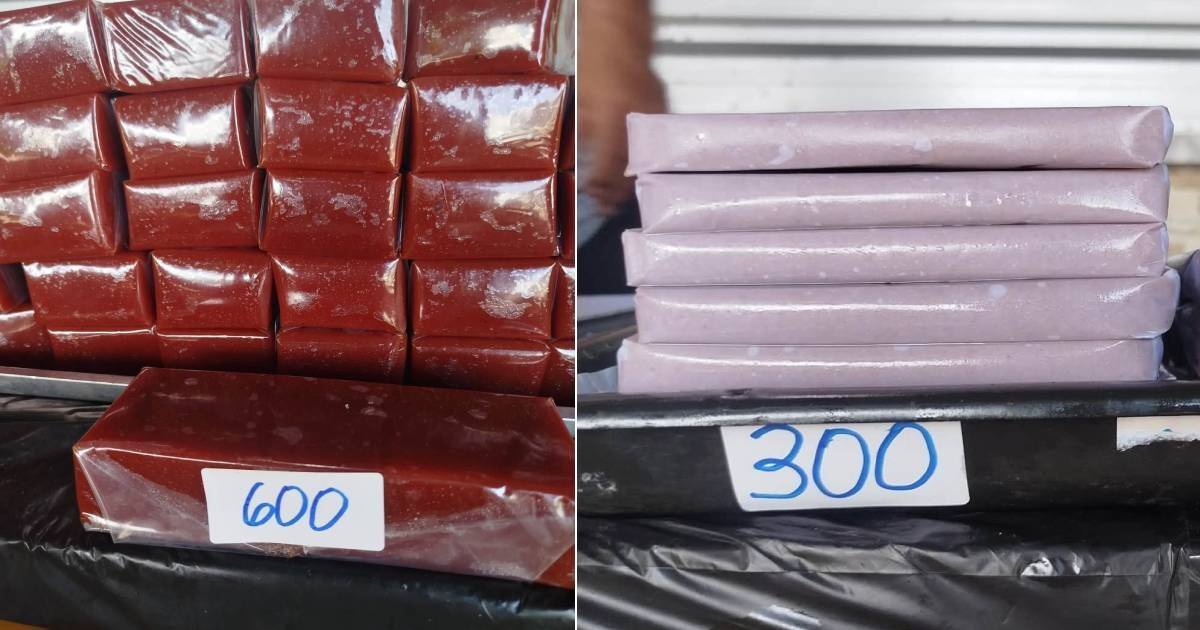
A bar of guava paste for 600 Cuban pesos. The price, displayed at a stand on the Havana highway, sparked a wave of outrage on social media and once again highlighted a reality that affects Cubans daily: traditional foods produced on the island have become difficult-to-afford items for those relying on a salary or pension.
Last Friday, the Havana resident Joshua Suárez shared on Facebook several images of typical products, including guava paste and peanut candies, with prices ranging from 300 to 500 and even up to 600 pesos.
Her reaction was immediate.
"They have to stop! Cubans against Cubans. The prices on the highway won't break the will to keep the tradition of Cuban gastronomy alive. But take it easy with the prices, as guava or peanuts are not imported," he wrote.
The post garnered dozens of comments reflecting a discontent that goes beyond the price of a sweet treat and touches on one of the most pressing issues for Cuban families: the widening gap between income and the cost of food.
"Cubans taking advantage of other Cubans. Abusers," summarized one user. Another commentator described the situation as "galloping financial speculation."
The testimonies shared in the publication also suggest that the price increases are not limited to Havana. One user claimed that in Santiago de Cuba a similar bar of guava paste sells for 800 pesos, while another person pointed out that a kilogram of sugar costs up to 1,200 pesos.
These figures are particularly difficult to accept for those who rely solely on a state salary or pension.
The minimum wage in Cuba has been set at 3,210 pesos per month since July 2026. At this income level, a single guava bar priced at 600 pesos represents nearly one-fifth of the minimum wage for an entire month.
The debate sparked by the publication also highlighted the various explanations that the Cubans themselves find for a price surge that seems to be unstoppable.
Some blamed vendors, intermediaries, and private businesses that take advantage of the scarcity to boost their profits. Others pointed directly at the Cuban government and questioned its inability to curb the decline of purchasing power.
"A beneficiary does not stop of their own free will; a steady hand that protects the people must apply the brakes," a commentator demanded.
Vilma Franco also questioned the regime's decision to eliminate price caps, a measure that she believed left consumers even more vulnerable.
"Although they were not respected, at least they somewhat curtailed speculation," he pointed out.
But behind the discussion about who sets the prices lies an even greater concern: who can afford to pay them.
"They do not think about the children, the elderly, mothers, workers, etc. who cannot afford any of those essential products for survival," lamented Ileana Álvarez.
Your comment describes a reality that particularly affects retirees, families with children, and workers whose incomes remain well below the rate at which prices are rising.
Discontent reaches even those who publicly express their support for the Cuban political system.
Silvia Téllez, who identifies as a Cuban of "Patria o Muerte," demanded direct intervention from the authorities.
"Only the government can put an end to these abuses. If they don't get involved, we will continue downhill, and the government will lose the trust of the people," he stated.
Another Cuban who uses the same slogan, Silvia Varela, highlighted the gap between prices and income. She mentioned salaries that in many cases do not exceed 5,000 pesos and retirements of around 3,200 pesos.
His diagnosis was unequivocal: "Cuba is mortally wounded."
The authorities have tried to address the price chaos through inspections and administrative measures. In Las Tunas, for example, over 4,000 inspections were carried out and 24 individuals were identified for alleged abusive pricing.
Matanzas, for its part, set reference prices for various basic food items.
However, the administrative measures clash with an economy marked by scarcity, the depreciation of the Cuban peso, and income that continues to lose purchasing power.
Related videos:
Filed under: