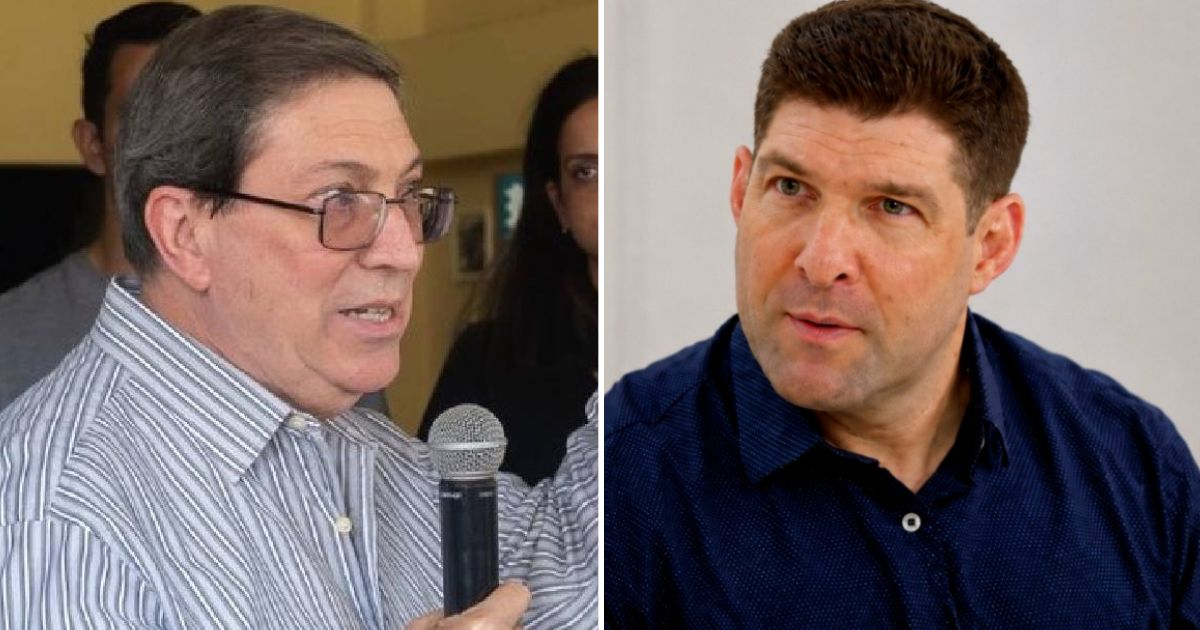
Cuban Minister Bruno Rodríguez rejected on Wednesday the explosive revelations linking Raúl Guillermo Rodríguez Castro, known as "El Cangrejo" and grandson of Raúl Castro, to a transnational criminal network under investigation by the FBI, and denied any involvement of the Cuban government in human trafficking operations.
Although he did not directly mention the grandson of the former ruler, his statement implies a defense of Havana's official position regarding the accusations.
Rodríguez described in a message published on X the report from The New York Times as a "new slanderous fabrication" against Cuba and accused the U.S. newspaper of acting "in service to the U.S. government."
"The Cuban government has no connection or involvement in human trafficking operations in Central America or Mexico," the Minister of Foreign Affairs stated.
The response comes after an investigation by The New York Times linked "El Cangrejo" to a criminal organization under investigation by the FBI that operated for years between Cuba, Mexico, and Florida, and was involved, among other activities, in the trafficking of Cuban migrants and smuggling.
The report relies, among other elements, on statements from two men convicted for their involvement in the so-called "Cuban Mafia in Quintana Roo".
One of them, José Miguel González Vidal, stated before U.S. authorities that Rodríguez allegedly collaborated with the organization and received bribes in exchange for facilitating their operations in Cuba.
According to that testimony, "El Cangrejo" allegedly received a high-performance Fountain 38 boat, a Rolex watch, a Suzuki motorcycle, and Louis Vuitton clothing.
Its supposed role would have been to help keep the Cuban Coast Guard and Customs at bay to allow the movement of people and goods.
The newspaper also noted that investigators obtained text messages and voice recordings from the phones of network members that would support part of the testimonies.
Rodríguez Castro has not been formally charged with any crime in the United States, and it is also unclear if he is currently a target of the ongoing federal investigation.
The criminal network described in the investigation operated for over a decade and is believed to have used stolen boats in Florida to secretly transport Cubans to Mexico.
Traffickers charged around 10,000 dollars per person and some migrants who could not pay were held, beaten, and subjected to electric shocks, according to the testimonies cited in the investigation. At least 21 people ended up convicted.
In response to those revelations, Bruno Rodríguez stated that it was precisely Cuba that alerted the United States about networks dedicated to human trafficking.
According to the chancellor, Cuban delegations repeatedly raised the issue during bilateral migration talks held between 2022 and 2024, involving officials from the Departments of State and Homeland Security.
Rodríguez stated that Cuba then warned of "one or several operations to traffic Cubans to the U.S." whose coordinating center was located in southern Florida.
"It was repeatedly recommended to the authorities of that country to investigate the matter, but they never provided a response," he stated. This version was presented by the chancellor as an argument to reject any responsibility of the Cuban government.
The reaction from Havana aligns with the position taken by Mexico. The Mexican Security Cabinet stated that it has no "information or evidence of its own" regarding the revelations related to the criminal organization and its alleged connections with foreign officials or their relatives.
The Mexican statement avoided directly mentioning "El Cangrejo" and asserted that the authorities in that country do not have their own data to corroborate the published claims.
Mexico reiterated, however, its commitment to international cooperation against organized crime and human trafficking.
Related videos:
Filed under: