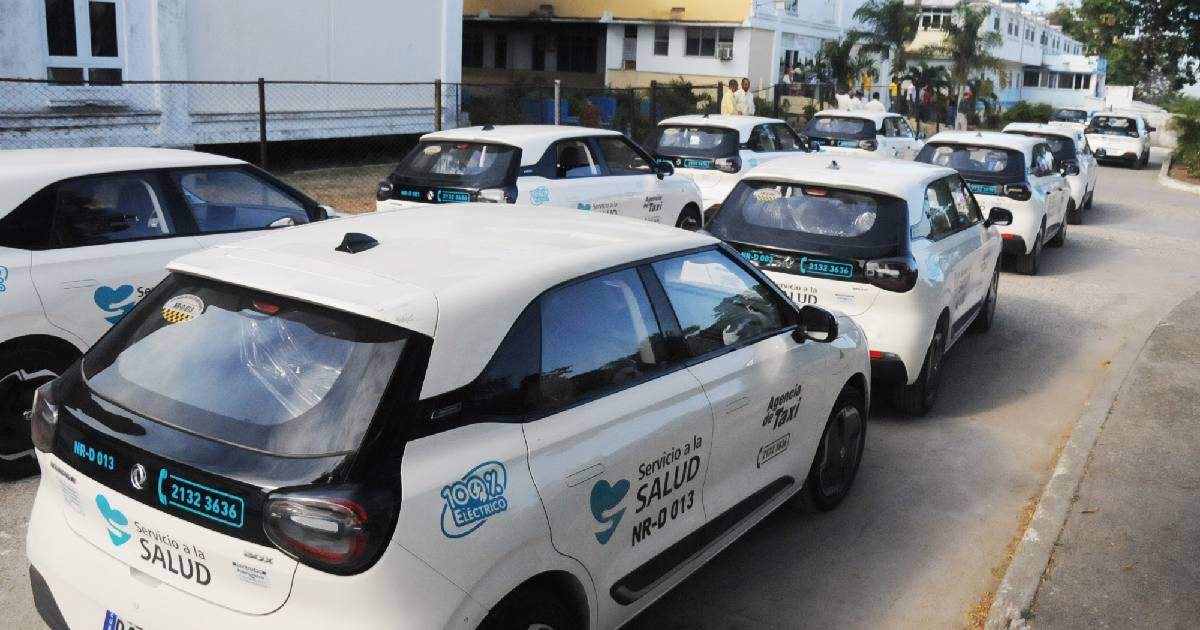
The province of Guantánamo received 20 electric cars manufactured in China, exclusively intended for the transportation of the 96 patients with renal failure who receive hemodialysis at the Dr. Agostinho Neto general teaching hospital, highlighted this Friday by the official newspaper Venceremos.
The vehicles are from the brand Dongfeng, model Box 430, with a range of up to 430 kilometers on a full charge, and were purchased through the Development Fund of the Ministry of Transportation.
The delivery is part of the celebrations for the centenary of the birth of the dictator Fidel Castro (1926-2016) and is part of a broader national plan that the regime announced in March.
That plan includes the distribution of a total of 400 Dongfeng electric cars for the transportation of kidney patients across the country.
The first 200 were put into circulation in May with an allocation that grants 40 units to Havana, 20 to Guantánamo, 15 to Granma, 10 to each of the remaining provinces, and five to the Isle of Youth.
The measure responds to a humanitarian crisis that intensified at the beginning of the year when the collapse of medical transportation left thousands of kidney patients without transport in multiple provinces.
More than 3,000 Cuban patients with chronic kidney failure rely on regular sessions, usually three times a week, at 57 hemodialysis units spread across the country.
In the absence of official transportation, many dialysis patients faced risk and were forced to pay up to 500 pesos per trip for informal taxis.
In Camagüey, patients went almost a week without treatment in June due to a lack of chemical supplies.
The distribution is progressing province by province. Villa Clara received 10 units in mid-June; Las Tunas incorporated 10 electric taxis at the beginning of July, and then Matanzas received another 10.
This Friday, Santiago de Cuba also received 10 vehicles of the same type to serve 106 kidney patients in five health centers in that province.
In Guantánamo, the province has a total of 124 patients who require hemodialysis, 96 of whom are treated at Agostinho Neto and the rest at the hospital in Baracoa.
According to Venceremos, the rollout of the vehicles has a "significant impact on patients, families, and the population as a whole."
Alongside electric cars, local authorities inaugurated a desalination plant in the municipality of San Antonio del Sur, funded by the United Nations Children's Fund (Unicef), the Italian organization Cospe, and the government of Germany as aid for those affected by Hurricane Oscar in October 2024.
Additionally, the El Framboyán community charging center was opened, where electric vehicles and equipment can be charged using solar photovoltaic energy, amidst the deepest energy crisis that Cuba has experienced in decades.
Related videos:
Filed under: