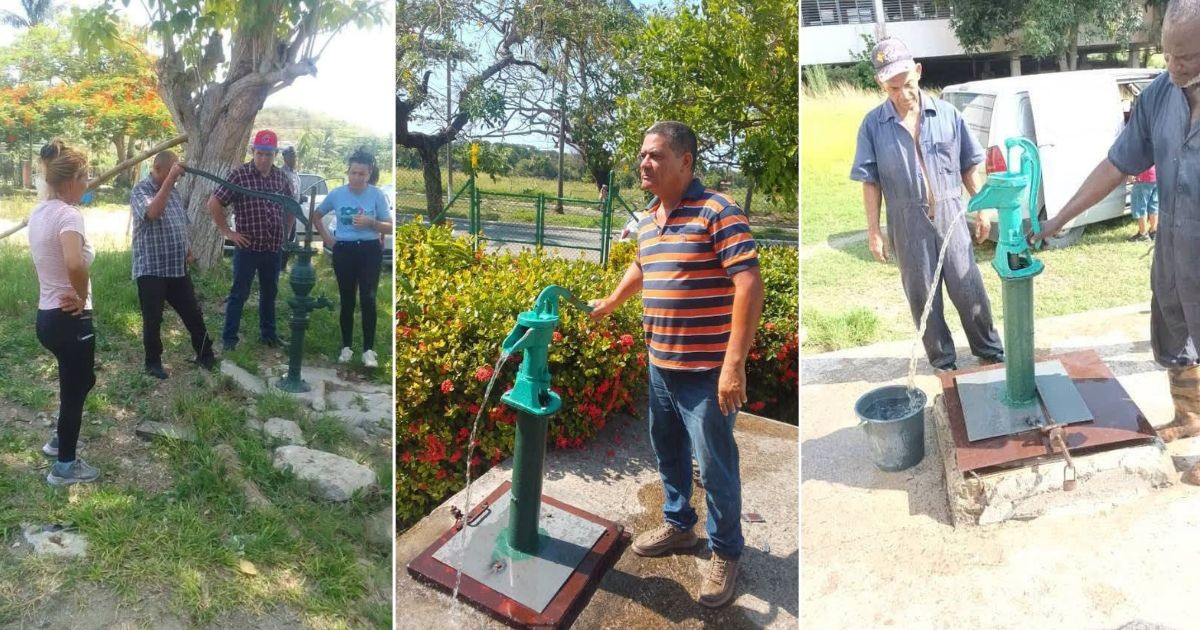
The authorities of Havana del Este began installing 20 hand water pumps as part of a project aimed at alleviating the supply issues in that municipality of the Cuban capital, benefiting, in the first phase, over 3,000 people.
The initiative was announced by the municipal administration of Habana del Este on Facebook, where this technology was introduced as a "novel manual pumping system" and the information was prefaced with the message: "News from La Habana del Este We continue to move forward!".
"As part of the search for solutions to minimize the impact on water supply for our population, we are pleased to announce that a new manual pumping system is being installed in the municipality of La Habana del Este," the post stated.
According to the authorities, "in this first phase, there will be 20 pumps that will be part of this project, directly benefiting more than 3,000 people who will see their daily situation alleviated."
The municipal government also described the installation as a "firm step" in its commitment to provide solutions to the communities and concluded: "We do not stop, we continue to work to ensure the well-being of our people."
The presentation of the pumps as a "novel" system generated numerous criticisms and ironic comments among residents of the municipality and social media users, many of whom questioned why a manually operated mechanism that has been used worldwide for centuries is being showcased as a sign of progress.
“We’ve returned to the Stone Age to fetch water by hand,” wrote one person. Another questioned: “And what’s the solution? Go to the place with two buckets and keep carrying water? Or did I misunderstand?”
The situation of the tall buildings in Havana del Este also emerged as one of the main concerns. Some pointed out that, after manually extracting the water, neighbors would have to carry it in buckets to their homes, a task particularly challenging for the elderly and other vulnerable individuals amidst the blackouts that also render the elevators inoperable.
"That fills the bucket and then you climb FIVE floors up the stairs; they are training people from East Havana to climb Everest," one of the comments joked.
Others directed their criticisms specifically at the term used by the authorities. "What great mediocrity it is to call manual pumps a novel system, when they were used by the mambises and settlers during the colonial era," expressed one individual.
«Today I am 64 years old, and when I was a child at my grandparents' house in the countryside, that 'novel invention' already existed.....speechless,» commented another.
There were also those who acknowledged that bombs can serve as an emergency measure, but rejected presenting them as a definitive solution.
"It's good, it's a temporary solution to the current problem, but it's not novel. We need to find definitive solutions for the supply of both potable and brackish water in Habana del Este," noted a user.
Other comments used the post to report specific supply issues in areas like Alamar, Cojímar, La Cabaña, and Villa Panamericana, while some residents called for permanent solutions to breakdowns, leaks, and interruptions in pumping.
Hand pumps had already emerged as an alternative in response to the water crisis in other parts of the capital. At the end of July, the authorities announced the shipment of six hand pumps to Cotorro, along with the mobilization of tank trucks and the use of school cisterns as reservoirs.
The problems have continued throughout August. A recent breakdown in the Gato System has once again impacted the water supply in East Havana and other municipalities in the capital, in a situation where carrying water in buckets has become part of the routine for many families.
On the other hand, the announcement comes in the context of a water crisis in Havana. In May, the National Institute of Hydraulic Resources (INRH) confirmed that 376,055 people in the capital lacked regular access to water, more than 309,000 of them due to power outages that paralyze the electric pumps.
By July, specialists from the company raised that figure to more than 500,000 Habaneros affected.
Related videos:
Filed under: