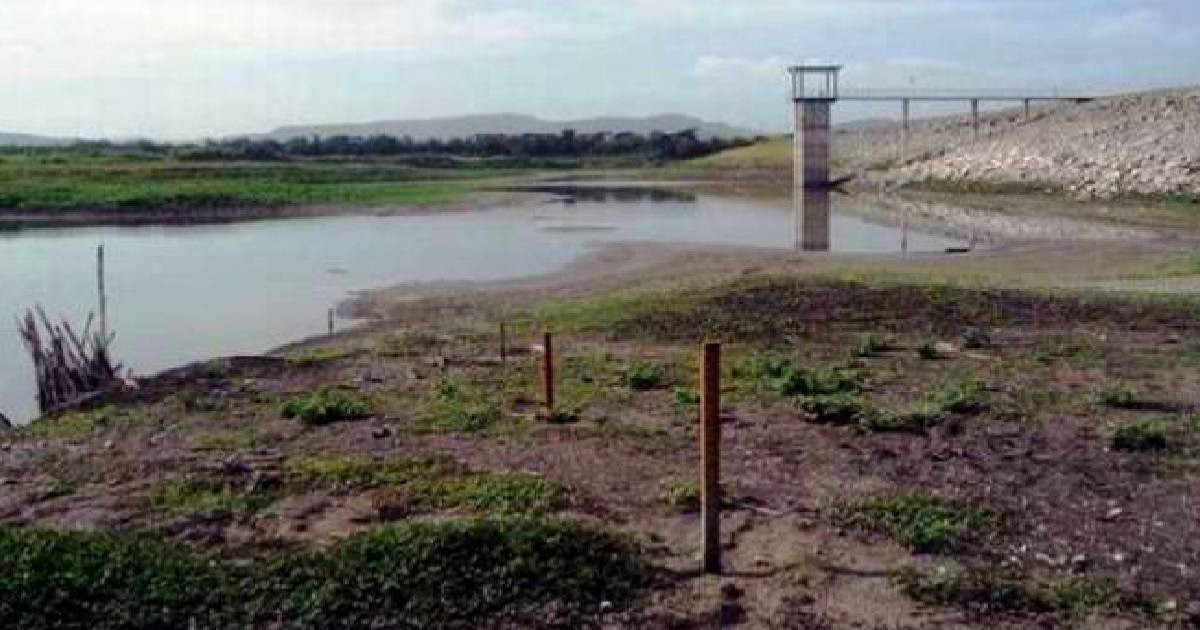
The Applied Meteorology Department of the Camagüey Meteorological Center classified the drought situation in the province as "complex", where the prolonged absence of rainfall and the rise in temperatures have led to a noticeable decline in soil moisture reserves during August.
"The latest report on this issue, shared on the institution's social media profiles and groups, indicates that in July, 100% of the area experienced a deficit in accumulated rainfall, categorized as severe to extreme," revealed this Saturday the official newspaper Adelante.
Beatriz Martínez Pérez, director of the Meteorological Center of Camagüey, specified that between May and July, 100% of the areas experienced a rainfall deficit; only 0.2% was classified as moderate drought, while 99.8% fell into the severe-extreme category.
The long-term outlook is equally alarming. During the period from August 2025 to July 2026, drought affected 88.2% of the geographical area of the province: 27.6% was mild, 23.0% moderate, and 37.6% severe to extreme. This "evidences how insufficient rainfall accumulation has caused the gradual expansion of drought processes," noted Martínez.
The meteorology specialist Ibriany Arredondo Arencibia warned that the water supply index is "insufficient," which seriously jeopardizes planting efforts and the well-being of livestock.
Experts also warned of an imminent danger of wildfires, particularly in the northern areas of the region, where drought is at its most intense.
In light of this situation, specialists from the Agrometeorology Group of the Camagüey Meteorological Center urge authorities and producers to optimize the available water resources, forecasting that the scarcity will persist in the coming weeks.
The water crisis in the city of Camagüey worsened further after a severe breakdown at the pumping station of the Amistad Cubano-Búlgara dam, the main source of urban supply, which reduced the water supply to the population and whose consequences extended into July.
In June, the authorities came to request that the people of Camagüey boil water due to the shortage of basic supplies for purifying it.
Until March, the drought affected 62% of Cuban territory and water reserves were at 38% of their capacity, the lowest level since 2015. Almost 2.7 million Cubans lacked regular access to drinking water in May.
The global climate context worsens the forecast. The World Meteorological Organization estimates a more than 90% probability that the El Niño phenomenon will remain active until November, which according to researcher Luis Lecha Estela from the Cuban Meteorology Institute, "could lead to conditions of meteorological drought and water stress in the country, with summers that are warmer than usual."
Related videos:
Filed under: