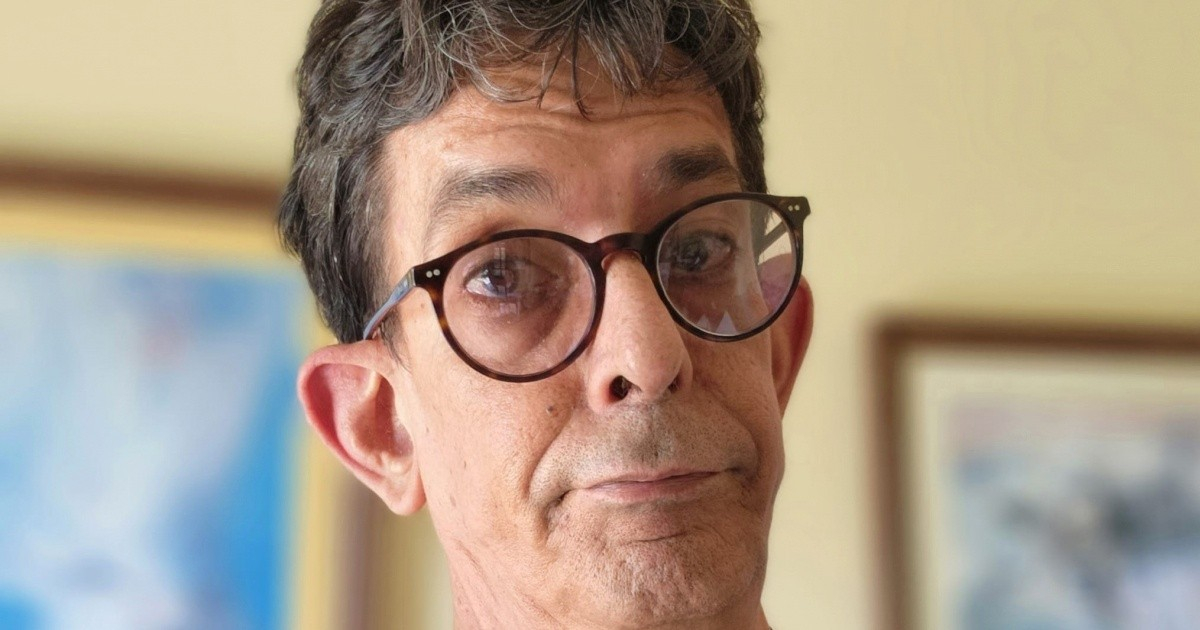
The Cuban comedian and actor Ulises Toirac published a reflection on Facebook this week that accurately summarizes the nature of power in Cuba: "Sixty-some years of secrets, decisions made without consultation, unaccountable budgets, and the privileges that all of this entails, do not just fade away."
The phrase, short yet full of meaning, sparked an avalanche of responses from internet users who supported the assessment and added their own interpretations regarding the ruling elite's clinging to privileges accumulated over more than six decades.
Toirac, who describes himself as "a person whose work is that of a comedian and who has a political opinion," has turned his social media into a platform for sustained criticism against the regime's leadership. This week's post is not an isolated incident but the most recent link in a chain of statements that has intensified throughout 2026.
On July 17, Toirac challenged Cuban leaders to live like the people: to move to impoverished neighborhoods, forgo official vehicles, and get around on riquimbili, without access to prioritized circuits for electricity, water, or food.
In June, he questioned the existence of two parallel governments in Cuba —the State and the Communist Party— and demanded that members of the PCC and military be prohibited from holding positions in state enterprises. In July, he also addressed caudillismo as one of the worst legacies of the system.
The underlying context that lends weight to his words is concrete. In January 2024, the regime approved a Code of Ethics for Cuban Revolution Leaders, solemnly signed on February 24 of that year, which formally obliges leaders to reject privileges and complacency. On July 30, Miguel Díaz-Canel himself called for "elevated ethical conduct" from the leaders, seemingly in contrast to public complaints about the privileges of the top echelon.
GAESA, the business conglomerate controlled by the Cuban Armed Forces, operates with a notable lack of public transparency: it does not publish consolidated financial statements or external audits accessible to the public and is not subject to the ordinary oversight of the General Comptroller. In May 2026, U.S. Secretary of State Marco Rubio stated that the group had accumulated around $18 billion in assets and that its revenues were approximately three times greater than the budget of the Cuban government.
The figures seem to be based on internal financial documents from GAESA previously obtained by the Miami Herald. The further strengthened the exceptional treatment of the armed institutions: the MINFAR and MININT are primarily governed by their own internal rules regarding prevention and control and must report their results to the President of the Republic at least once a year.
In March 2026, the NGO Food Monitor Program reported a "double Cuba": hunger and shortages for the populace contrasted with privileges and access to resources for officials and political leaders.
The comments on the post by the comedian reflected a broad consensus among his followers. An internet user retrieved a quote from José Martí that many found perfectly applicable to the current moment: "All power exercised extensively and for a long time degenerates into a caste. With the caste come interests, high positions, the fears of losing them, and the intrigues to maintain them."...
Other comments appealed to colloquial language to describe the same reality. "These aren’t riches accumulated in four years of leadership; they’ve been built over almost 70 years, and that’s defended tooth and nail," wrote one follower. Another was more direct: "They won't let go of that power willingly. It only ends due to force majeure." A third voice turned to culinary metaphor: "It's hard to let go of the frying pan when they have a grip on it [...] but if it gets too hot... THEY BURN."
Toirac, born in Havana in 1963 and known for television programs such as Sabadazo and ¿Jura decir la verdad?, remains in Cuba despite the intensity of his criticisms.
Related videos:
Filed under: