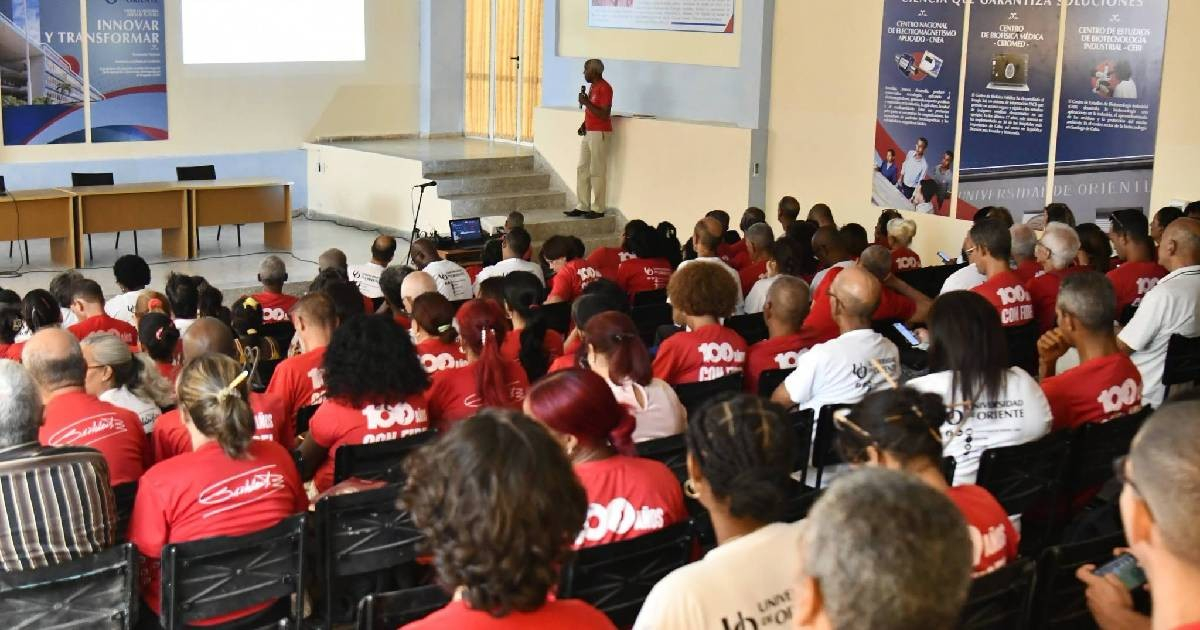
Amid the severe fuel crisis on the island, the University of Oriente (UO), based in Santiago de Cuba, announced that the first period of the 2026-2027 academic year will be carried out in a decentralized manner, with each student linked to the educational settings of their municipality of residence, instead of attending the central campus.
According to a statement from the institution, the Municipal University Centers (CUM), the university facilities in the provincial capitals, the workplaces, and the popular councils will be the venues where teaching will take place, "in conditions of semi-presential and distance education."
The Daytime and Distance Courses will begin on September 1. On that day, first to fourth-year students of the Daytime Course (CD) must report to their respective faculties, CUM, or main campuses of other universities at 9:00 a.m. for initial orientation.
The Course by Meetings (CPE) will begin on Saturday, September 5, at 9:00 a.m. in the faculties and CUM, with in-person attendance being reduced to once a month for this new course.
The measure is not new for the institution. Since mid-February, UO had already adopted the semi-in-person emergency modality and closed its student residence, except for exceptions for foreign students or those with specific needs.
During the second term of the 2025-2026 academic year, that modality was in effect from March 2 until the end of the academic year on June 27.
The fuel crisis that forces the regime to limit assistance to university campuses impacts the entire higher education system in Cuba.
The students had also stated that if they had to pay for transportation to the university, they wouldn't have any money left for food.
The Ministry of Education confirmed that the 2026-2027 academic year will begin on September 1 in all universities across the country, following hybrid and remote learning models, which will depend on the availability of fuel and resources in each region.
In February of this year, the University of Havana also changed to a semi-presential format for the same reason, in a trend that reflects the structural deterioration of the Cuban educational system after decades of accumulated crisis.
The regime also exceptionally suspended the university entrance exams for the 2026-2027 academic year and replaced them with an allocation system based on the accumulated academic index from pre-university studies, another unprecedented measure that highlights the challenges in maintaining the normal operation of educational institutions on the island.
Related videos:
Filed under: