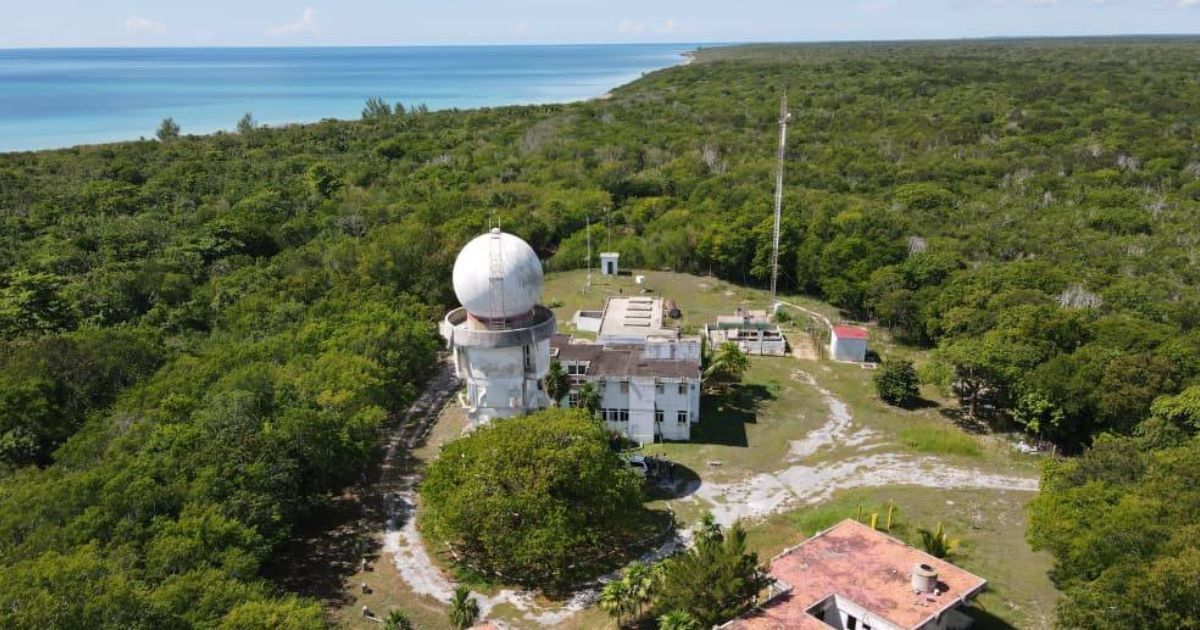
The crisis facing Cuba is also affecting its meteorological surveillance system: the eight radars in the country have been turned off 24 hours a day, as reported by a Cuban meteorologist, while their images are also unavailable to the public on the official website of the Institute of Meteorology (INSMET), right in the middle of hurricane season.
The meteorologist Yosmelvi Páez reported this Tuesday on Facebook about the deterioration of digital services at INSMET and paid special attention to the situation of the radars, which are essential for real-time observation of rain, storms, and other weather phenomena.
All radars are off 24x24, stated Páez, who regretted that it is no longer possible to consult their images during summer afternoons to track storms and observe their evolution.
The national network is made up of eight meteorological radars that, according to official information, cover the Cuban archipelago and the surrounding seas.
Its function is particularly important for locating precipitation and monitoring the evolution of storms and tropical cyclones.
This Tuesday, the images from those eight radars were not loading on the official INSMET website, so the public could not access that monitoring through the institutional portal.
The lack of public images coincides with Páez's complaint, although the inability to access them online alone does not allow us to determine if each radar is physically turned off.
The issue is particularly significant because Cuba is currently in the height of the hurricane season, which began on June 1 and extends until the end of November, a time when the risk of tropical storms and hurricanes in the Caribbean increases.
However, Páez extended his criticisms to the overall state of the Institute's website, stating that users encounter outdated information and difficulties accessing weather data.
"There's no information about anything, nothing is updated, there are no data from the weather stations," he lamented.
He also questioned the quality and frequency of the information disseminated by INSMET on platforms such as WhatsApp, Telegram, and Facebook, and highlighted the role that groups of enthusiasts and specialists in meteorology have assumed on social media.
"What would the Cuban population be without the meteorology groups on social media," he stated, before affirming that many of these spaces provide information that citizens do not find as easily in institutional channels.
The meteorologist used an even stronger expression to question the official information capacity regarding dangerous phenomena: "While waiting for good information from the Meteorology Institute, the hurricane will pass over us and we won't even notice."
Páez also linked the difficulties in accessing televised weather reports to the prolonged blackouts experienced by the Cuban population.
"I don't know why the meteorologist goes on television to give the weather report because without power, no one sees him," he joked.
The situation contrasts with the plans announced months ago to strengthen the country's observation capabilities.
In February, Cuba announced the modernization of its network of meteorological stations with funding from the United Nations, through a project aimed at improving data quality and preparedness for extreme events.
This program includes the installation of a new surface weather station and two radiosonde stations, in addition to modernizing and updating eight existing stations.
The new alert comes in a particularly delicate context: Cuba entered the 2026 cyclone season amid prolonged power outages, water and medicine shortages, and a deep economic crisis, factors that increase the vulnerability of the population to a high-intensity weather phenomenon.
Related videos:
Filed under: