A post from the page on Facebook Preserving Heritage described this week the case of a 72-year-old woman who, after waiting between three and five hours to collect her pension at the bank branch on Los Maceos Street in the city of Guantánamo, had to resort to the ruins of an old stable due to the lack of nearby public restrooms.
According to the text published on Monday, the woman left before dawn and stayed under the sun alongside other elderly men and women who are facing the same difficulty.
The publication questioned why a basic physiological need should be addressed in abandoned spaces and pointed out that the problem lies not with those seeking a place to relieve themselves, but with the lack of infrastructure in the city.
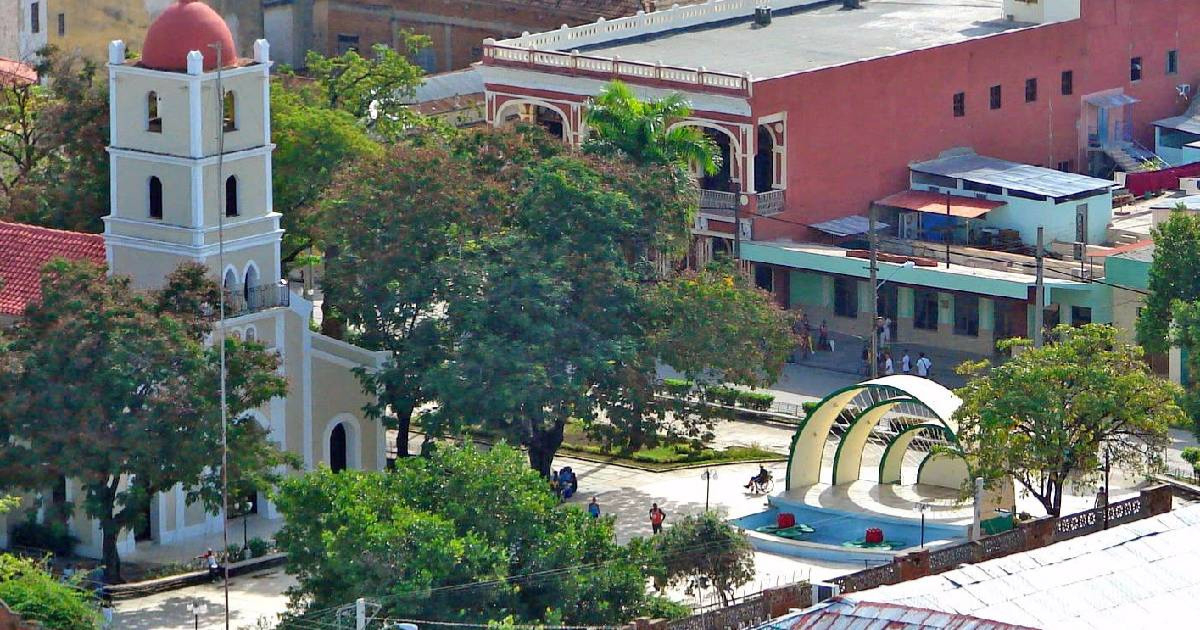
Citizens' comments identified other places where, according to their testimonies, people resort to corners to relieve themselves, among them the walls of the 11th of April square, various spots in Antonio Maceo park, La Guantanamera park, and the surroundings of the Santa Catalina de Ricci Cathedral.
Regarding the 11 de Abril square, a user expressed outrage that a significant spot for visitors is affected by a persistent bad odor.
The situation takes on greater significance because Guantánamo also receives daily visitors from the municipalities of Manuel Tames, Yateras, San Antonio del Sur, Imías, and Maisí, who travel to the provincial capital to carry out banking transactions, purchase medications, or visit hospitals. Many of them are forced to wait for hours in lines without any available sanitary services in the vicinity.
The province has around 68,000 retirees who rely on an ineffective banking system to receive their pensions, which extends wait times to several hours, and even days.
The situation unfolds amid cycles of up to 25 days without water in some areas and daily blackouts lasting over 20 hours, conditions that further complicate the functioning of any healthcare service.
The comments also reflected the skepticism of the population regarding a potential solution. A local resident questioned the feasibility of having public restrooms when even the sanitation facilities in hospitals are in deplorable condition and there are water supply issues.
Another citizen linked the lack of sanitation facilities to the shortages of electricity, medicines, food, and cash that the population is facing.
The lack of public restrooms is not an issue exclusive to Guantánamo. Santiago de Cuba acknowledged in 2020 that it had only two public restrooms for a city of nearly half a million inhabitants.
In Nueva Gerona, Isle of Youth, a 2025 report similarly highlighted the poor conditions of the only restroom available on the boulevard, which remained without light and locked during the night.
In light of this situation, Preservando el patrimonio proposed the creation of a network of Friendly Sanitary Points by utilizing the restrooms of cafeterias, restaurants, rental homes, and other private businesses.
The proposal suggests agreements with the Municipal Government, tax incentives, and official signage to identify establishments that allow access to their sanitary services.
The initiative also includes a physical and digital map of the available locations and proposes starting with a pilot project in the Los Maceos area, the markets, the Bus Terminal, and José Martí Park. The proposal was supported by citizens who requested that it be presented to the municipal authorities.
"Public restrooms are not a luxury. They are urban infrastructure. They are public health. They are accessibility. They are equity. They are, above all, a fundamental matter of human dignity," the text concluded, which several citizens requested to be sent to the municipal authorities.
Related videos:
Filed under: