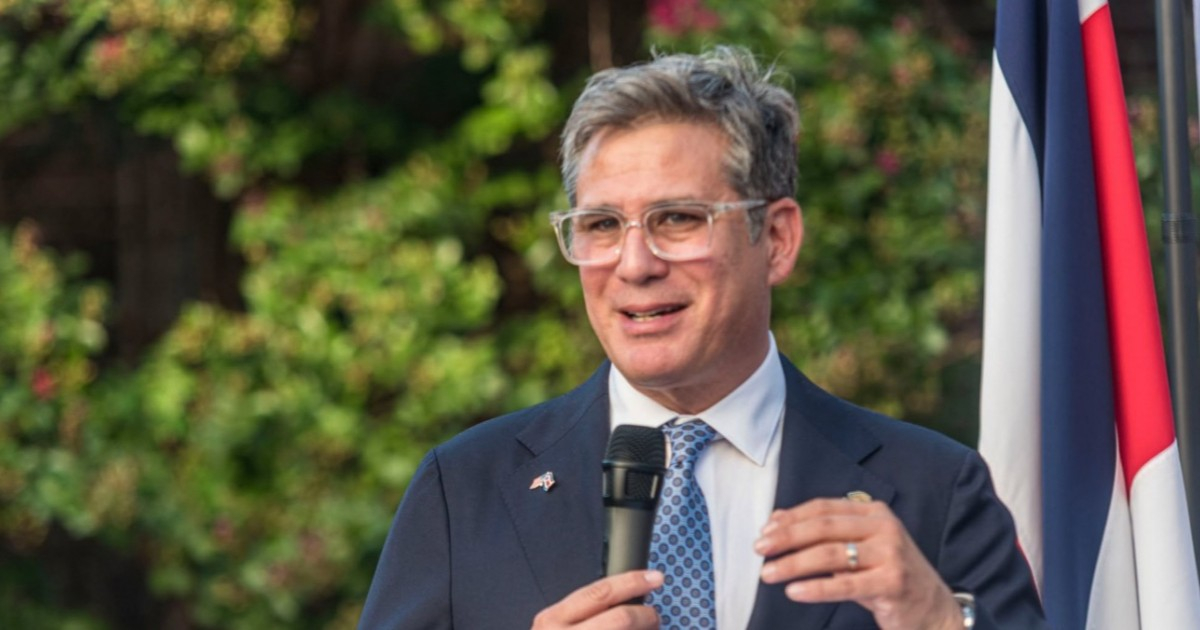
The Minister of Foreign Relations of Costa Rica, Manuel Tovar Rivera, reaffirmed on Thursday that his country remains open to those fleeing oppressive regimes, while also confirming the complete diplomatic break with Cuba.
The statements came a day after Tovar met with Secretary of State Marco Rubio at the State Department, where both officials discussed economic cooperation and the fight against narco-terrorism in the hemisphere.
In statements to Telemundo 51, the official referred to the possibility of Costa Rica receiving Cuban citizens deported from the United States.
"We have always been a country that has had open doors for the persecuted, the refugees, and the exiled. We are a country that has provided shelter to many people of various nationalities because we are a country of peace, a country that has been a refuge and continues to keep its doors open for those fleeing repression, for those escaping tyranny, and for those at risk or facing threats to their lives," he affirmed.
"So we are ready to collaborate, to continue being that kind of country we have been, of brothers in just causes, of refuge for those who seek freedom and for those who feel any kind of threat against their integrity and their lives," he concluded.
Tovar was emphatic in stating that the break with Havana is not limited to the closure of embassies or the withdrawal of diplomatic personnel: "We have severed diplomatic relations with the Cuban regime until freedom returns," he emphasized, dismissing any ambiguity about the extent of the measure.
The chancellor also outright rejected the version from Havana, which attributed the breakdown to pressures from Washington and accused San José of "servilism" towards the Trump administration.
"It is a sovereign decision that we have made; we do not receive instructions from any government regarding our foreign policy actions, there is simply a condition with the United States government," he clarified.
In an interview granted to the Miami Herald, Tovar revealed that the return to democratic paths in Cuba and Nicaragua was part of the dialogue he held with Secretary of State Marco Rubio. He noted that both topics will be discussed at a high-level meeting of the Shield of the Americas that will take place next week in New York, within the framework of the United Nations General Assembly.
The process of break between Costa Rica and Cuba has its roots in the government of former president Rodrigo Chaves, who announced in March the closure of the Costa Rican embassy in Havana and demanded that the Island withdraw its diplomatic staff from San José.
The current president Laura Fernández endorsed and continued this policy as her own, thereby consolidating a state position that transcends changes in government.
In July, Costa Rica voted against opening the debate at the UN on the U.S. embargo against Cuba - alongside the United States, Argentina, and Israel, among others - in a vote that ended with 136 in favor, nine against, and 30 abstentions. In 2025, the Central American nation abstained.
The Costa Rican break aligns with a regional pattern of diplomatic isolation towards the dictatorship: Ecuador expelled all Cuban diplomatic staff in Quito on March 4, and the Dominican Republic issued an ultimatum to nine Cuban diplomats last August.
Related videos:
Filed under: