Cancún has established itself as the primary operations base for Russian espionage in the Western Hemisphere, according to a report from El Confidencial published this week, based on testimonies from security experts.
The tourist city offers Kremlin operatives a hard-to-match advantage: it allows them to meet with agents and informants recruited in the United States without raising suspicion, given that travel by Americans to the Riviera Maya is completely routine.
The journalist Dolia Estévez, who has researched this topic the most, summarizes it clearly: "I maintain that Mexico is the center of Russian espionage operations in Latin America. The main attractions Mexico offers are, first, the undeniable geographical proximity, and second, the impunity with which Russian spies can operate in Mexico."
In Cancun, there is a Russian community centered around the so-called Residencial Aqua, featuring supermarkets and businesses where services are provided in Russian. Among its residents are emigrants who fled the mobilization decreed by the Kremlin in 2022, as well as active intelligence operatives.
The Russian presence in Mexico surged following the invasion of Ukraine. Hundreds of spies expelled from Europe were relocated to Mexican territory, according to a report by The New York Times at the end of 2025.
In March 2022, General Glen VanHerck, then head of the U.S. Northern Command, testified before the Senate that Mexico had "the largest proportion of GRU members in the world" at that time.
The Russian embassy in Mexico City has expanded its staff to double that of the American legation, with the addition of 36 new diplomats, a number that former diplomat John Feeley deemed inexplicable for economic or cultural reasons.
The Robert Lansing Institute, based in Delaware, documented that Moscow uses Mexican territory for "clandestine meetings, data transfers, recruitment activities, and disinformation operations" against the U.S. and its allies. The report highlights that Mexican counterintelligence services prioritize cartels, "creating a permissive operational environment" for the Russians.
The government of Andrés Manuel López Obrador rejected the expulsion of more than two dozen supposed Russian diplomats identified by Washington as intelligence operatives.
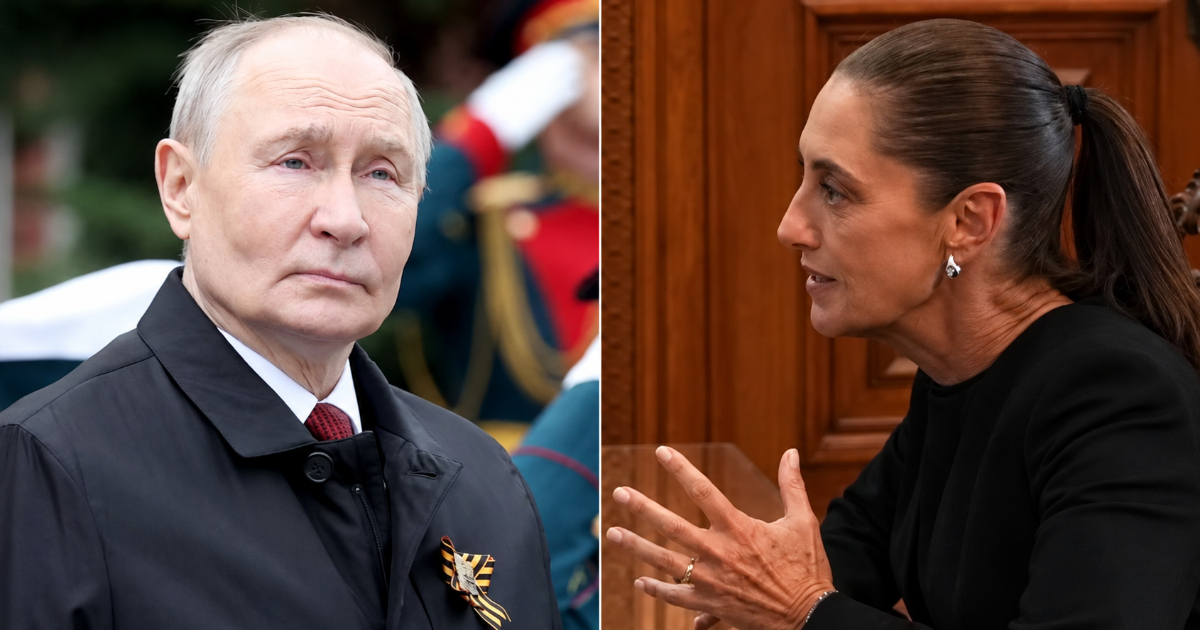
The current president Claudia Sheinbaum maintains the same stance. Last week, Mexico refused to join the joint declaration of 51 countries at the UN, which demanded a ceasefire from Russia in Ukraine.
This ecosystem of impunity has a Cuban dimension that cannot be ignored.
In mid-September, the Southern District of New York Attorney's Office formally charged two Cubans —Oemis Romagoza Durruthy and Yaidel Delgado Suárez, also known as "Vikingo"— with operating within the so-called RIS Network, a structure of the Russian GRU that planned sabotage in Europe and the assassination of Russian dissidents on U.S. soil, including the chess player Garry Kasparov.
The Cuban connection in Quintana Roo also has a criminal aspect. In August 2026, the New York Times revealed the links of Raúl Guillermo Rodríguez Castro, known as "El Cangrejo" and grandson of Raúl Castro, to a transnational Cuban criminal network that operated in Cancún and Playa del Carmen for over a decade, focused on human trafficking, boat theft, and extortion, with at least 25 documented deaths.
A convicted individual declared having given a stolen vessel to Rodríguez Castro among other luxurious gifts, as part of the payment for facilitating the activities of the plot.
To all this, it is added that the State Department published a report on foreign intelligence in Cuba in July 2026, which indicates that the number of Russian and Chinese intelligence personnel on the island has tripled since 2023, and that Cuba hosts facilities to intercept communications from the southeastern United States.
The alliance between Havana and Moscow is not new, but it has deepened: both countries signed a military cooperation agreement ratified by Putin months later in March 2025.
Estévez warns that until President Sheinbaum orders her intelligence services to map the Russian presence in the country, little will change: "They are unlikely to invest more resources in monitoring them. And I have no information that this is the case."
Related videos:
Filed under: