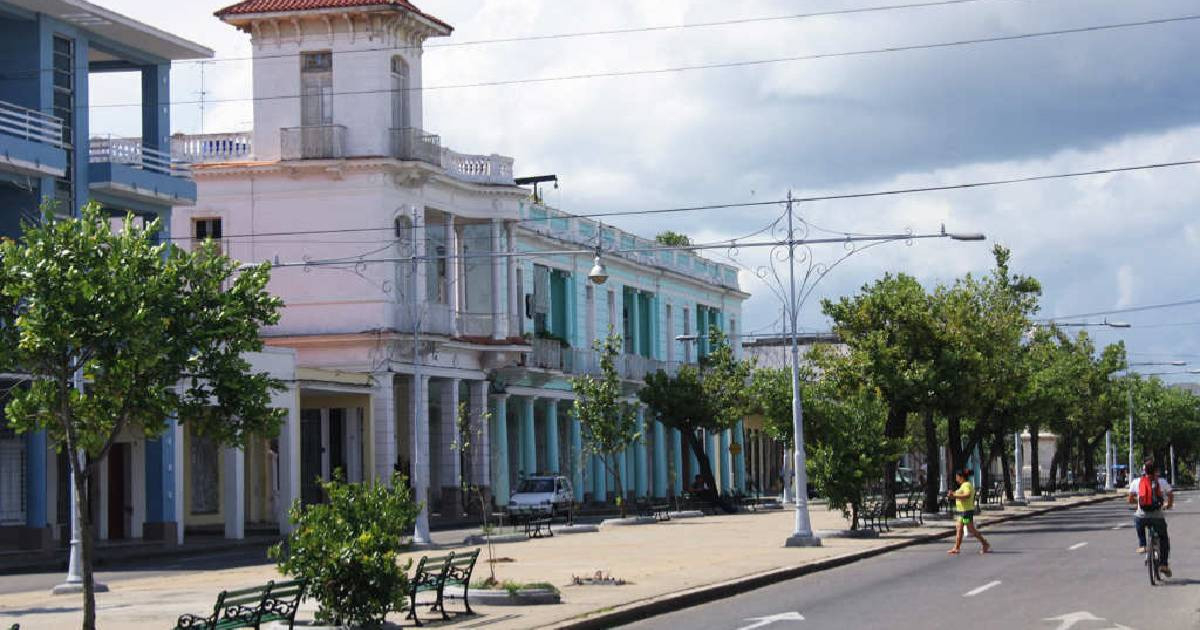
The authorities in Cienfuegos will adjust the water service schedules in the provincial capital to align with the rotation scheme for power outages, a measure aimed at making the most of the periods when electricity and water supply coincide.
Water supply will maintain its usual frequency, every three days, but its schedule will be organized according to the electrical programming so that residents can know when they will have both services simultaneously.
The announcement was made on the radio program Aquí el pueblo, from the Provincial Committee of the Communist Party of Cuba, reported this Saturday the official newspaper 5 de Septiembre.
The governor Yolexis Rodríguez Armada explained that the decision responds to one of the most frequent complaints from the public, related to the lack of alignment between both services.
Germán Suárez Pérez, deputy director of the Provincial Water and Sewer Company, asserted that the change was the result of a joint study with the Electric Company. He explained that the period between noon and 4:00 p.m. allows for the protection of the greatest number of circuits.
On his part, Airobis Otero Martín, head of the Provincial Cargo Office, acknowledged that Cienfuegos has the highest levels of electrical deficit in the country.
Among the measures adopted, he mentioned the connection of the Palmira aqueduct to a 33 kV line without interruptions, the 24-hour operation of the Aguada de Pasajeros aqueduct, and the power supply through a double circuit for the Cumanayagua pumping system.
The Provincial and Pediatric hospitals have certified generators and fuel to withstand up to 18 hours of power outages.
In addition, the water pumping from those facilities has been modified to receive supply from inside the centers, eliminating the need to depend on circuit 17.
However, the scheme will not be extended to the other municipalities of the province. Otero Martín specified that the rotation applies only in the provincial capital, because it utilizes the load corresponding to the circuits that supply hospitals and other protected facilities.
The programming itself faces ongoing challenges. Circuit five, which includes the main commercial arteries and banking institutions of the city, experiences disruptions every morning, while the Perlavisión telecenter has reduced its broadcasts to just one day a week due to power outages.
The authorities indicated that one of the main challenges is precisely to align the supply of water and electricity, a task that is conditioned by the amount of megawatts required to keep certain circuits protected.
The announcement comes against a backdrop of a national water and energy crisis. The government admitted that 2.7 million Cubans have total or partial access issues to drinking water, a figure that is identical to that recorded in May.
The situation has been particularly severe in the central southern province of Cuba. In August, there were reported power outages lasting between 50 and 60 consecutive hours, and in June, the area of Real Campiña experienced 27 days without potable water and barely three hours of electricity daily.
In August, dozens of residents from Cienfuegos protested in front of the provincial government office and demanded answers regarding the prolonged blackouts and food loss, in one of the most visible expressions of discontent this year in the province.
The long-term solution proposed by the government, to install 200 MW of solar photovoltaic generation for water pumping in Havana, aims for the first months of 2027, indicating that the crisis will continue to impact the population for several more months.
Related videos:
Filed under: