The Supreme Court opens its 2026-27 term this Monday with two key cases for Cubans: deportations to third countries and immigration detention without automatic access to bail.
The two disputes are among the main immigration issues that the highest court will address during its new judicial term, reported CBS News.
The first case, DHS v. D.V.D., will be debated on December 9, 2026. The second case, Rhoney v. Barbosa da Cunha, case number 26-104, was accepted by the Court on October 1 and does not yet have a date for oral arguments.
The final decisions could be known before the Court's summer recess, presumably by the end of June 2027.
Deportations to countries with which the immigrant has no ties
In DHS v. D.V.D., which arises from a class action lawsuit filed in 2025 by D.V.D. —a Cuban immigrant identified by a pseudonym authorized by the court— and three other plaintiffs seeking to prevent their deportation to countries not specified in their removal orders without the opportunity to argue the risks they would face there, the judges will need to examine the Trump administration's policy that allows for the deportation of immigrants to third countries, even when they have no ties to the chosen destination.
One of the central points is to determine what guarantees the immigrant should receive before relocation, particularly whether they should be informed in a timely manner and have the opportunity to claim that they would face persecution, torture, or other dangers in the receiving country.
For Cubans, the issue is particularly significant due to the challenges that the United States has faced for years in executing certain deportation orders to Cuba.
A report from Human Rights Watch documented that 4,353 Cubans were deported to Mexico between January 2025 and March 2026, making them the largest group of foreigners sent by the United States to that country despite not being Mexican.
Cases like those of Arístides Fernández García, deported to the Central African Republic in July, and Yasmany Moreno de Armas, sent to the same country after arriving in Florida by raft in 2016, have highlighted the impact that these relocations can have on individuals sent to places where they have no family or social connections.
"The life lived here is quite horrible and very sad, with all the work and hunger experienced in this country," stated Moreno de Armas in a video released in September.
On September 29, the Supreme Court temporarily suspended a lower court decision that had imposed additional safeguards prior to deportations to third countries.
The decision allows those transfers to continue while the highest court examines the merits of the case, but it does not mean that the Court has declared the policy legal.
Since Trump's return to the White House, more than 25,000 people have been deported to third countries, primarily Mexico, but also to nations in Africa, Latin America, and other regions.
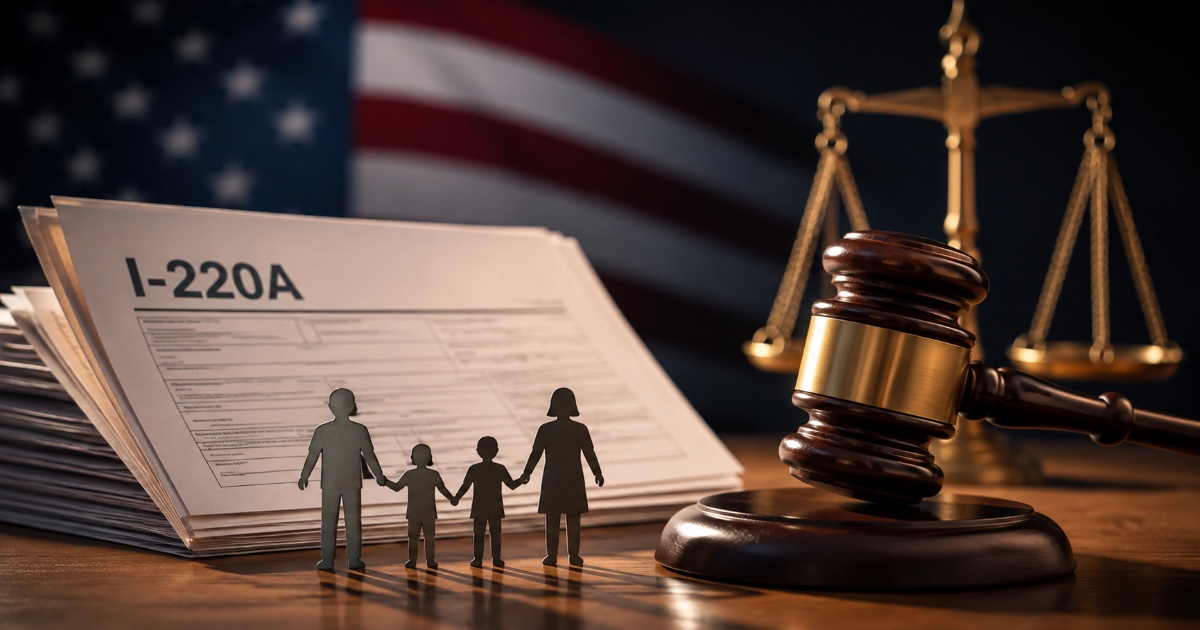
Detention without bail: a case that may affect Cubans with I-220A
The second dispute, Rhoney v. Barbosa da Cunha, addresses another issue of significant impact: whether certain immigrants who entered the United States without being formally admitted can be mandatorily detained during their deportation proceedings, with no opportunity to request bail before an immigration judge.
The case arose after the Trump administration modified its interpretation of immigration law in 2025 and began to consider individuals who entered without inspection as "applicants for admission," even if they had been living in the country for years.
Under that interpretation, they would be subject to a provision that requires their detention during the immigration process.
The ACLU, which represents Brazilian immigrant Ricardo Aparecido Barbosa da Cunha, argues that this interpretation could impact millions of people living in the United States without having been formally admitted.
The case may be particularly important for certain Cubans who entered without being formally admitted and were subsequently placed in the custody of ICE, including some who received documents such as the I-220A.
The arrests of Cuban citizens by the immigration agency
In May, the Eleventh Circuit Court of Appeals, which has jurisdiction over Florida, Georgia, and Alabama, rejected the government's interpretation in two consolidated cases and determined that immigrants who are undocumented and are arrested after already being present in the United States are generally eligible for bail, except for those subject to other mandatory detention rules.
This precedent is particularly important for Florida, where one of the largest Cuban immigrant communities in the country resides, and it could be confirmed or altered by the decision now made by the Supreme Court.
Other federal courts have also rejected the administration's new interpretation, while the Fifth and Eighth Circuits have sided with the government position, creating a divide among the courts that the Supreme Court will need to resolve.
The decision will essentially determine whether a person who has been in the United States for years but was never formally admitted should remain in detention during their immigration process or can request a judge to evaluate whether they should be released on bail.
For thousands of Cubans undergoing deportation processes, the difference can mean spending months in ICE custody or having the opportunity to continue their immigration case while free.
These cases before the Supreme Court could redefine the rules of deportation and detention for thousands of migrants. Follow all the details in our section on .
Related videos:
Filed under: