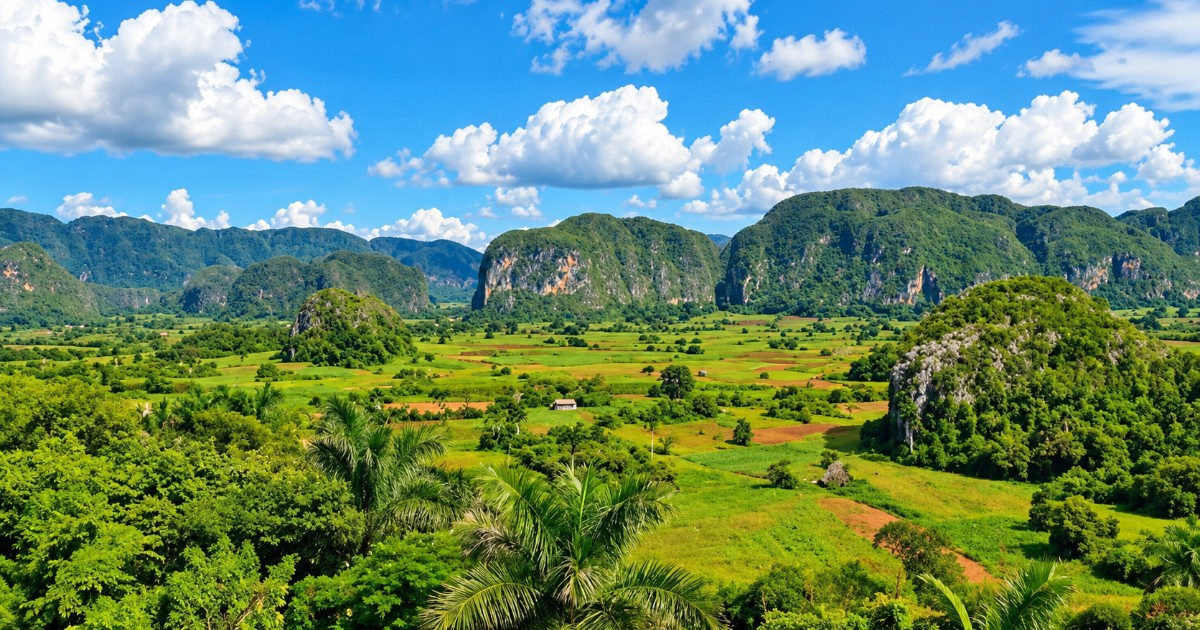
Two specialists from Unesco began their visit to Valle de Viñales in the Pinar del Río province this Tuesday to assess the area's candidacy for the Global Geoparks Network, a mission that will continue until October 10.
If the candidacy succeeds, Viñales would become the first UNESCO Global Geopark in the Caribbean, a distinction that no territory in the region has achieved so far.
The evaluators will review the preservation of geological heritage, education and research programs, the involvement of local communities, and sustainable tourism initiatives, according to reports from Cuban state media.
Enrique Castellanos, General Director of Geology at the Ministry of Energy and Mines, is overseeing the evaluation process on behalf of the government.
The Council of Ministers approved the application in May 2025 and the to UNESCO in November of that year. The on-site inspection is one of the decisive stages of the process. Following the evaluators' report, the application will need to be reviewed by the World Geoparks Council and, if it receives a favorable recommendation, will advance to the Executive Council of UNESCO for final approval.
Viñales has accumulated several recognitions. It was registered as a Cultural Landscape on the UNESCO World Heritage List in 1999, designated a National Park in 2001, and the first national geopark in Cuba in 2021.
The territory is home to 57 geosites—10 of international significance—unique karst formations known as mogotes, the longest caves on the island, and a great endemic biodiversity.
While the regime seeks a new international showcase, the reality faced by the residents of the valley contrasts sharply with that international façade.
The EFE agency visited the town in early October and found no foreign tourists during their visit. About 80% of the approximately 28,000 residents of Viñales depend directly or indirectly on tourism. Private businesses have been without income for months.
Lázaro Mena, head of the private venture Mogote Adventure, stated that his business has not generated income for more than six months and that "Viñales is practically the destination with the cheapest prices in all of Cuba."
Elieser Duarte, a 41-year-old former kitchen chief who lost his job due to the decline in tourism and had to transition to farming, summed it up bluntly: "The working class, like us, who earned just enough to survive, now have nothing."
The crisis in Viñales reflects the collapse of Cuban tourism on a national scale. Between January and August 2026, only 450,353 international visitors arrived on the island, a 64.4% decrease compared to the same period in 2025.
This drop is compounded by the exit of the three major Spanish hotel chains —Meliá, Iberostar, and Barceló— which completed their withdrawal from Cuba in July 2026 following the sanctions imposed by the Trump administration against companies linked to the military conglomerate GAESA.
Viñales is also suffering from a crisis in basic services, similar to the rest of Cuba. In May, residents reported that Viñales had gone more than six months without a regular supply of drinking water, in addition to blackouts lasting up to 30 hours.
Related videos:
Filed under: