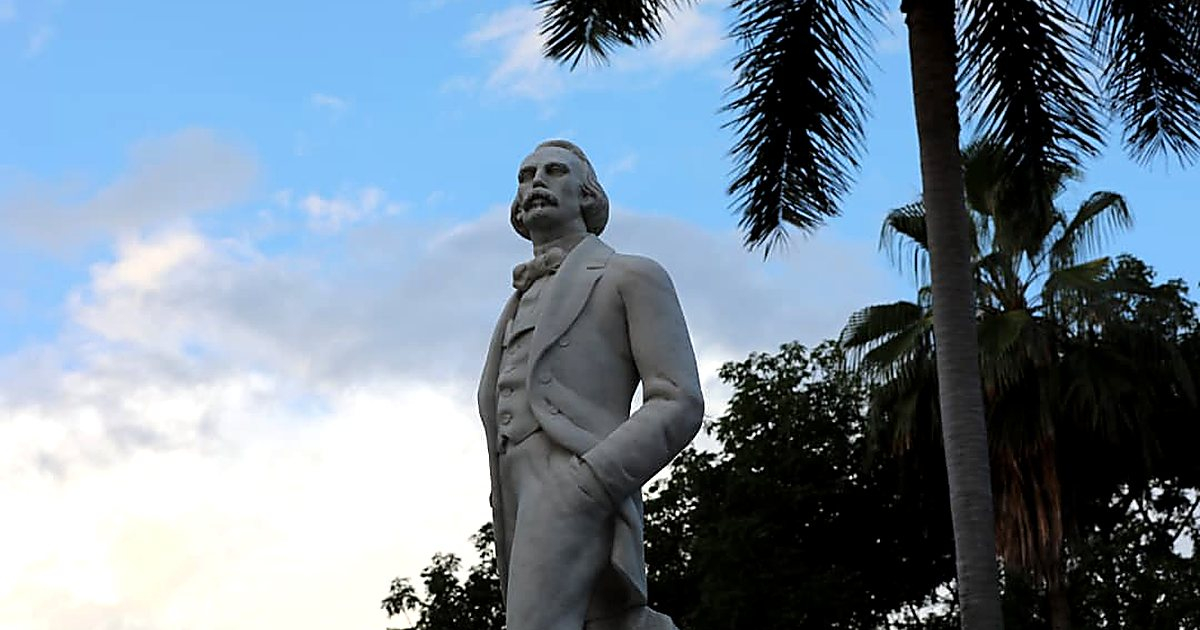
Historiography also has its flaws: it can either glorify characters to the point of making them untouchable figures or diminish them by seeking out aspects of their lives that allow for discrediting them. So where does historical reality fit into this?
No Cuban patriot was perfect. Casting them in marble to present them as impeccable individuals is just as harmful to understanding the past as seeking out every flaw in their character in order to undermine their contribution to history.
The greatness of a work does not prevent us from examining the limitations of a thought. Recognizing a man's merits does not compel us to silence his mistakes. It is precisely in that ability to distinguish, weigh, and understand that the true practice of the historian begins.
There is, moreover, an issue that we must not overlook: the era. Political circumstances, moral conceptions, and prevailing ideas shape human decisions. We cannot evaluate the events of the 19th century solely through the lens of the 21st century. This does not mean abandoning critical judgment, but rather placing the facts in their context to better understand them.
A reading of the work of historian Emilio Martínez Paula brings us closer to one of the episodes that allows us to appreciate the patriotic dimension of Carlos Manuel de Céspedes.
Upon receiving the communication informing him that his son Oscar's freedom depended on his laying down arms, Céspedes responded with words that revealed the strength of his commitment to independence: "Sir, you announce in your letter that the freedom of my son Oscar is in my hands and that the price for his rescue is for me to lay down the arms I once wielded against the enemies of my country. In other words, you propose that I betray the solemn oath I took for his freedom and that I disappoint the hopes of the men who have placed their trust in me."
The episode warrants attention. A father faced with the possibility of losing his son had to choose between a deeply human motivation and the commitment he had made to the independence cause. Céspedes refused to abandon the struggle in exchange for his freedom.
It is not about claiming that a single event can completely encapsulate the value of an entire career, but rather about recognizing its significance. That response reflects conviction, a sense of duty, and the willingness to uphold a commitment even when the personal cost may be unbearable.
Is this enough to consider Céspedes a man without contradictions? Of course not. No document, no matter how eloquent, can replace a comprehensive examination of a life. However, it would also be unfair to underestimate the significance of such a decision when evaluating his behavior as a patriot.
His trajectory was marked by tensions, disagreements, questionable decisions, and contradictions typical of a challenging war, where conflicting interests, political conceptions, and diverse aspirations converged. All of this deserves examination, not concealment. Historical criticism loses its rigor when it selectively chooses only the facts that confirm a preconceived image.
My position is clear: the merits of Carlos Manuel de Céspedes in the forging of the Cuban nation are of extraordinary magnitude. His decision to initiate the independence struggle in 1868, his proclamation of freedom for the slaves under his authority, and his willingness to subordinate personal interests to the cause he embraced are part of a trajectory whose historical significance cannot be overlooked.
Recognizing it does not mean accepting every one of its decisions without scrutiny. It means understanding that the history of a nation is also built by real men, subject to the limitations of their time, capable of performing extraordinary acts and, at the same time, making mistakes.
Céspedes does not need us to turn him into a perfect figure to occupy a fundamental place in the history of Cuba. He does not require his critics to silence his merits in order to point out his contradictions.
The historian's task is to examine the evidence, establish the contexts, and distinguish between documented facts and the interpretations we make of them.
Carlos Manuel de Céspedes undoubtedly belongs to the foundational history of the Cuban nation. His greatness does not require us to turn a blind eye to his limitations; it demands that we study both with honesty.
Because understanding man in his contradictions does not necessarily diminish his greatness: it helps us to understand it.
And that is precisely the difference between history as a cult and history as knowledge.
Related videos:
Filed under:
Opinion article: Las declaraciones y opiniones expresadas en este artículo son de exclusiva responsabilidad de su autor y no representan necesariamente el punto de vista de CiberCuba.