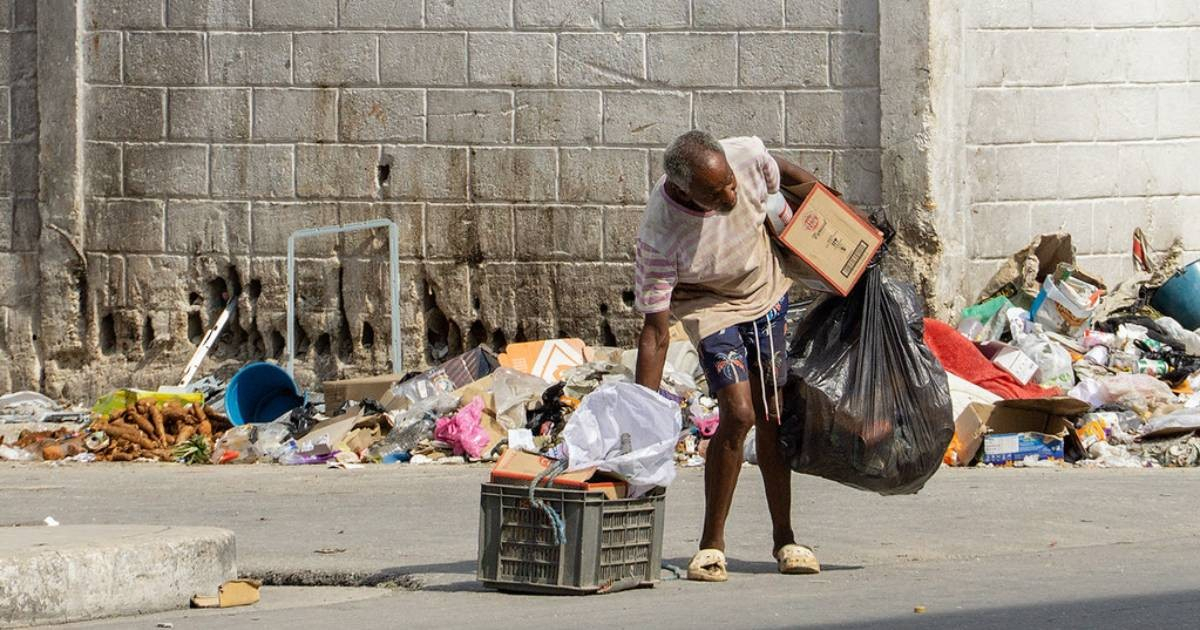
A team of three Italians from the OnBorders association in Turin traveled through parts of Cuba from September 19 to October 14, and published a firsthand account this Thursday in the Turin outlet Civico20 News that describes a country on the brink: heritage cities devoid of tourists, streets littered with garbage, power outages lasting nearly all day, and salaries that barely reach 13 euros per month.
Journalist Claudio Cravero, anthropologist Piero Gorza, and photographer Enrico Carpegna visited Baracoa, Santiago de Cuba, Trinidad, Santa Clara, and Cienfuegos, and what they found was devastation.
"There were the three of us and a few other tourists wandering through deserted streets and empty, metaphysical squares," wrote Cravero, who notes that hotels and restaurants remain closed or nearly empty in destinations that, until before the pandemic, welcomed visitors year-round.
The statistics confirm travelers' perceptions: between January and August 2026, Cuba received only 450,353 international visitors, a decrease of 64.4% compared to the same period in 2025, and in August, the contraction exceeded 77%.
The electricity crisis serves as the backdrop for the entire narrative. Cravero notes that even Old Havana, the "privileged" neighborhood of the capital, receives only two or three hours of electricity a day.
Without electricity, the water pumps fail, garbage collection comes to a halt due to lack of fuel, and residents take to the streets at night with flashlights because of the sweltering heat. During the day, on the other hand, long lines to buy bread and at the banks are the most common sights.
"The shortage of gasoline, available on the black market at exorbitant prices, affects businesses and public services," the text states.
The report warns that in hospitals "the lack of electricity has even deadly consequences for those in need of therapies," a reality that became evident on October 17 when the Cárdenas hospital had to transfer intensive care patients to Faustino Pérez due to an electrical failure.
Salaries are another stark reflection of the crisis. The report highlights that a nurse with 30 years of experience earns 8,000 pesos a month, equivalent to about nine euros; a university vice-rector earns 9,000 pesos (ten euros); and a doctor earns between 10,000 and 12,000 pesos, that is, between 11 and 13 euros.
"There is a widespread discontent with the extremely low wages, which have not kept pace with the rising inflation, partly driven by the embargo; in fact, in August, inflation was at 25%," the article states.
The pharmacies are depicted in the report with "desolate empty shelves, without medications," which can only be found on the black market at inflated prices.
In general, the Italian team noted that "there is widespread discontent with a government that, over the years, has done nothing to prevent or mitigate this enormous inequality that, before the Trump administration, caused the displacement of more than 2 million people from the country."
Related videos:
Filed under: