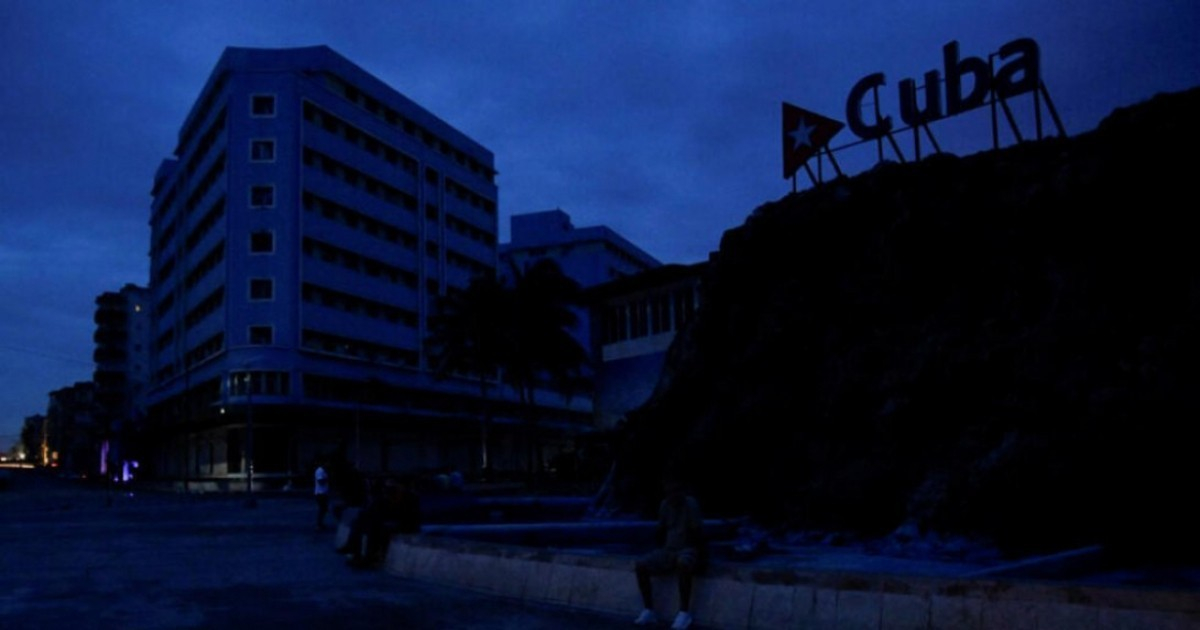
The Chargé d'Affaires of the United States Embassy in Barbados, the Eastern Caribbean, and the OECS, Karin Sullivan, published an op-ed on Thursday explicitly addressed to the Eastern Caribbean governments, urging them to reject Cuba's annual resolution against the embargo at the UN, with the voting scheduled for next Wednesday, October 28.
The text, titled "The Truth Behind the Darkness of Havana," is the latest piece in a diplomatic offensive that Washington has launched in recent weeks, which according to Miguel Díaz-Canel, will lead to some countries changing their votes because "they are intimidated by the pressures from the United States".
Sullivan points directly to the regime's central argument: that the blackouts and the health crisis are a consequence of the U.S. embargo.
"Why are the lights going out? Because the incompetent regime puts itself first," he points out, backing up this claim with a battery of figures that the Cuban government never publicizes.
The first dismantles the narrative of "total blockade": in 2025, the United States exported products to Cuba worth over 810 million dollars. U.S. legislation explicitly allows the export of food, medicines, and medical equipment to the island.
The second figure highlights the regime's priorities: in 2024, the Cuban regime spent 11 times more on sustaining its tourism industry—controlled by the military conglomerate GAESA—than on health and education combined, while hospitals remain dark and children wait for medical care.
The third reveals the fate of Venezuelan oil: between the end of 2024 and the end of 2025, Venezuela supplied Cuba with about 70,000 barrels daily, but the regime resold about 60% of that crude to Asia in exchange for foreign currency, instead of allocating it for domestic consumption.
The article also highlights the Cuban medical brigades in the Caribbean, portrayed by Havana as humanitarian cooperation and historically used as a diplomatic lever with the small states of the region.
Sullivan describes it outright as forced labor: host countries pay large sums for each physician, but the regime confiscates between 50% and 95% of their salaries, withholds their identification documents, and restricts their freedom of movement. "That's not humanitarian work. It's forced labor," he emphasizes.
The diplomat recalls a phrase from Secretary of State Marco Rubio: "The suffering in rural areas of Cuba is acute and profound. It is not due to the embargo. It is because they do not know how to manage an economy."
Sullivan also contrasts the repression of the regime — more than 800 political prisoners — with U.S. humanitarian aid: nine million dollars through the Catholic Church after Hurricane Melissa and another 100 million intended for an assistance program through Catholic Relief Services and Samaritan's Purse, without Cuban government mediation.
The final message is directed unequivocally to the Caribbean allies of the regime: "The partners or allies who vote in favor of the regime's resolution support a dictatorship that violently represses its own people, exports violence and radicalism, and threatens the stability of our hemisphere."
And he urges them to publicly stand against the Cuban dictatorship and "demand real changes, instead of continuing to blame others for their own failures. The Cuban people deserve a future free from the regime that has let them down, not another year of excuses."
The government of Donald Trump has also intensified its efforts to reduce support for the Cuban resolution against the embargo.
It was recently announced that Germany is considering breaking 24 years of favorable votes for Havana, marking the first time in 24 years.
In 2024, the Cuban initiative received 187 favorable votes. However, in 2025, support dropped to 165 countries, with seven votes against and 12 abstentions. Hungary then became the first member of the European Union to vote against it, while Poland, the Czech Republic, and the three Baltic countries chose to abstain.
In July, a different vote aimed at authorizing an extraordinary debate on Cuba garnered only 136 favorable votes, nine against, and 30 abstentions.
Related videos:
Filed under: