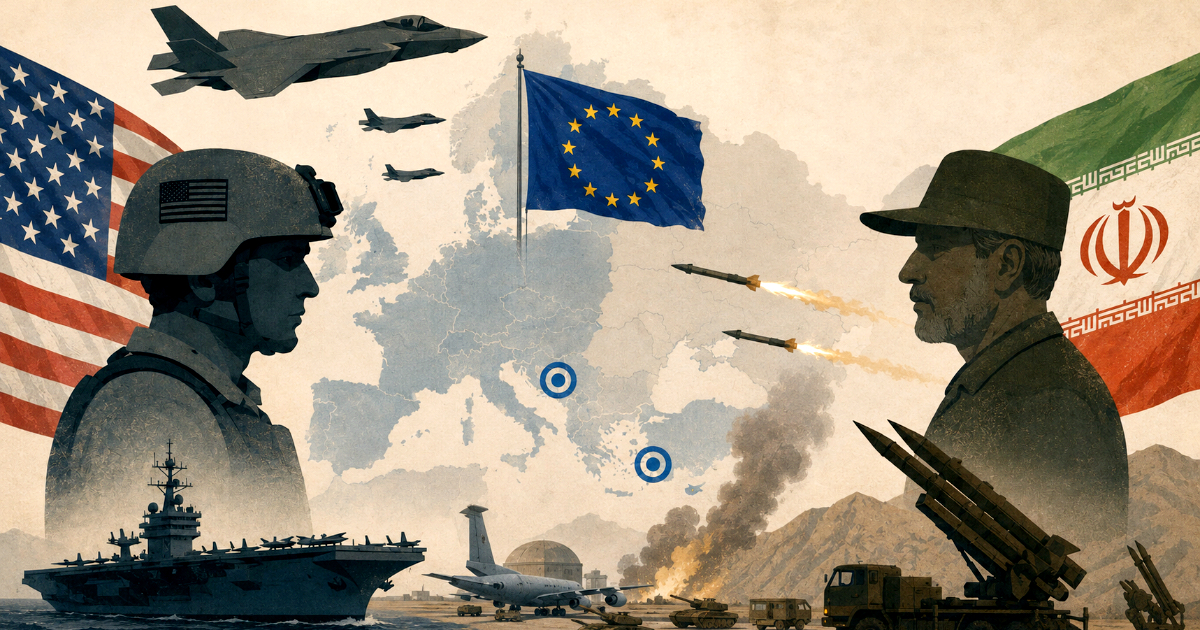
The Director of National Intelligence of the United States, Jay Clayton, sent an unclassified memorandum this Friday to Secretary of State Marco Rubio, warning that Iran has "substantially" increased its efforts to target U.S. personnel abroad, with lethal plans in "advanced phases" in the Middle East and other unidentifiable countries.
The document, obtained by CBS News and also sent in copy to the CIA director, John Ratcliffe, does not specify concrete targets or expected methods, nor does it indicate that the attacks are imminent.
Clayton justified the declassification of the memo by arguing that the information was relevant to a larger number of people than those authorized to receive it, in order to alert potential targets among the U.S. diplomatic and security personnel deployed in the region.
The warning coincided with a series of discreet movements by the State Department: between October 21 and 22, it ordered the departure of non-essential personnel and their families from the embassy in Riyadh and the consulates in Jeddah and Dhahran, in Saudi Arabia.
In the following days, Washington also reduced its presence in the embassies of Jordan, Lebanon, Qatar, and the United Arab Emirates, which began operating under a regime of "restricted operations."
The spokesperson for the State Department, Tommy Pigott, clarified that the formal exit order applied only to Saudi Arabia and described as inaccurate some reports suggesting a broader regional evacuation.
The Pentagon, for its part, quietly relocated troops and military assets from various posts in the Middle East in response to direct threats from Iran and the Iran-backed Houthi movement in Yemen.
All of this takes place within an ongoing conflict between Washington and Tehran that began on February 28, 2026, when U.S. and Israeli forces attacked Iranian military and nuclear facilities in an operation called "Epic Fury."
Iran responded with attacks against Israel and U.S. bases in the Persian Gulf, and since then, tensions have not eased.
The Houthis have intensified their offensives against Saudi Arabia: the deadliest attack, recorded on October 10 at Riyadh airport, left 12 dead and 309 injured, including one American citizen.
A new attack on the Dammam airport on October 21 resulted in at least two additional deaths.
Iranian General Ali Abdolahi declared this Saturday that Iran will not allow the return of U.S. military ships to the Persian Gulf "under any circumstances," while Iranian security officials quoted by Reuters stated that Tehran has prepared plans to attack up to seven underwater communication cables in the Strait of Hormuz if Washington resumes bombings.
Iran has a documented history of plots against American officials: in 2022, it attempted to hire hitmen to eliminate former National Security Advisor John Bolton, and in 2024, a plan to attack Donald Trump before the presidential elections was thwarted.
In July 2026, Israel alerted the U.S. about a new alleged Iranian plan to eliminate the president.
Trump himself warned on Thursday at a rally in Fort Myers, Florida, that the United States "could make another little Epic Fury" if a negotiated agreement with Tehran is not reached, indicating that military pressure remains on the table as the intelligence community raises the alert level.
Related videos:
Filed under: